SR Darapuri I.P.S.(Retd)
Introduction
(Asian independent) The Bhakti Movement occupies an important place in the social and religious history of India. Emerging between the seventh and seventeenth centuries in different parts of the country, it emphasized personal devotion (bhakti) to God, rejected excessive ritualism, and sought to establish a direct relationship between the devotee and the divine. Several Bhakti saints, including Kabir, Ravidas, Chokhamela, Namdev, Tukaram and Nandanar, condemned social discrimination and proclaimed the equality of all human beings before God. Because many of these saints came from marginalized communities or openly criticized caste prejudice, the Bhakti Movement is often celebrated as a movement of social equality and Dalit emancipation.
Dr. B. R. Ambedkar, however, offered a far more critical and historically grounded assessment. While acknowledging the moral courage and egalitarian spirit of several Bhakti saints, he argued that the movement failed to dismantle the caste system or bring about the social, economic and political liberation of the Dalits. In his view, the Bhakti Movement represented an ethical protest against caste discrimination but not a programme for structural social transformation. The distinction between spiritual equality and social equality lies at the heart of Ambedkar’s critique.
Ambedkar’s Appreciation of the Bhakti Saints
Ambedkar did not dismiss the Bhakti tradition in its entirety. He recognized that many saints challenged the religious orthodoxy of their time and gave voice to the aspirations of the oppressed. Saints such as Ravidas and Chokhamela, themselves born into communities regarded as “untouchable,” exposed the inhumanity of caste discrimination through their poetry and personal experiences. Kabir boldly attacked Brahminical ritualism as well as Islamic orthodoxy, emphasizing morality, reason and the unity of humanity over religious formalism.
These saints questioned hereditary privilege, criticized priestly domination and insisted that devotion, rather than birth, was the true basis of religious worth. They affirmed the dignity of labour and rejected the idea that spiritual status depended upon caste. Their teachings inspired generations of oppressed people and enriched India’s ethical and literary traditions. Ambedkar acknowledged these contributions and regarded them as important voices of dissent within Indian society.
Bhakti as a Spiritual Rather Than Social Revolution
Despite recognizing these achievements, Ambedkar argued that the Bhakti Movement remained essentially a spiritual movement rather than a social revolution. Its central concern was the individual’s relationship with God rather than the reconstruction of society. While Bhakti saints preached equality before God, they rarely developed a systematic programme for abolishing caste, redistributing economic power or transforming social institutions.
For Ambedkar, this constituted the fundamental limitation of the movement. A religion that teaches spiritual equality while accepting social inequality cannot produce genuine human emancipation. Equality before God has little practical significance if people continue to suffer discrimination in everyday life. A Dalit who is denied entry into a temple, prevented from drawing water from a public well, excluded from education or deprived of economic opportunities cannot be considered equal merely because religion declares all souls to be equal before God.
Ambedkar therefore insisted that social equality must precede or accompany spiritual equality. Without changes in the structure of society, devotional teachings remain largely symbolic.
Failure to Destroy the Caste System
Ambedkar’s most significant criticism was that the Bhakti Movement failed to destroy the caste system. Although many saints condemned untouchability and emphasized human brotherhood, caste hierarchy continued to dominate Hindu society long after the movement had spread across India.
He pointed to a striking contradiction in Hindu society. Upper-caste Hindus often revered saints like Ravidas and Chokhamela as holy men while simultaneously refusing to treat ordinary Dalits as equals. Temples celebrated Dalit saints, but living Dalits remained excluded from temples, schools, public wells and positions of dignity. This paradox demonstrated, according to Ambedkar, that admiration for exceptional individuals did not translate into equality for the oppressed community as a whole.
The Bhakti Movement produced revered saints but failed to eliminate the social practices that degraded millions of ordinary Dalits. Consequently, caste survived largely intact despite centuries of devotional preaching.
Individual Salvation Versus Collective Liberation
Ambedkar also criticized the movement for emphasizing individual salvation instead of collective social struggle. Bhakti encouraged devotees to seek liberation through prayer, surrender and devotion to God. While such devotion might provide spiritual consolation, it did not equip oppressed communities with the political organization or social consciousness necessary to challenge systems of exploitation.
Ambedkar believed that no oppressed community could secure justice merely through moral persuasion or religious devotion. Real emancipation required education, political representation, legal rights, economic resources and organized social movements. His famous call to “Educate, Agitate and Organize” reflected this conviction. Liberation could only be achieved through collective action and democratic struggle, not through individual acts of devotion.
Bhakti and the Absence of Social Democracy
For Ambedkar, democracy was not simply a political system but a way of life founded upon liberty, equality and fraternity. Although Bhakti occasionally promoted the ideal of fraternity, it failed to establish liberty and equality within the social order. Hereditary occupations remained unchanged, caste endogamy continued, Brahminical authority survived, and untouchability persisted.
As a result, the movement did not create the social conditions necessary for democracy. Ambedkar argued that political democracy cannot endure where society itself remains deeply unequal. Social democracy requires equal opportunities, equal dignity and equal citizenship—objectives that devotional reform alone could not achieve.
Critique of Saint Worship
Ambedkar was also skeptical of the tendency to rely upon saints as agents of social transformation. He argued that history is changed not by isolated holy individuals but by organized and conscious masses. Saints may awaken moral awareness, but lasting social change depends upon institutions, laws, political movements and collective action.
He believed that excessive reverence for saints often encouraged passive acceptance of injustice rather than active resistance against it. The oppressed, he argued, must become the makers of their own history instead of waiting for moral reform from privileged sections of society.
Ambedkar’s Alternative Vision
Unlike the Bhakti saints, Ambedkar proposed a comprehensive programme for the emancipation of Dalits. This programme included the annihilation of caste, universal education, economic justice, constitutional safeguards, political representation, land reforms, labour rights and democratic participation. He insisted that the struggle against caste required institutional transformation rather than merely spiritual reform.
This conviction ultimately led him to embrace Buddhism in 1956. Through the establishment of Navayana Buddhism, Ambedkar sought to create a religion based upon liberty, equality, fraternity, rationality and compassion. Unlike the caste-based social order that had developed within Hinduism, he believed Buddhism offered an ethical foundation for a genuinely democratic society.
Conclusion
Dr. B. R. Ambedkar’s evaluation of the Bhakti Movement is both balanced and profound. He appreciated the courage of saints such as Kabir, Ravidas and Chokhamela for challenging ritualism, priestly authority and social discrimination. Their teachings affirmed the dignity of marginalized people and represented an important moral protest against caste prejudice.
However, Ambedkar concluded that the Bhakti Movement did not fundamentally transform Indian society. It emphasized spiritual equality but failed to establish social, economic and political equality. It produced revered saints but did not abolish untouchability, dismantle caste hierarchy or empower Dalits through education, political representation and economic justice. For Ambedkar, the movement remained ethically significant but socially inadequate.
His own vision of Dalit emancipation therefore rested not on devotional reform but on constitutional democracy, organized social struggle, education, political power and the creation of a society based upon liberty, equality and fraternity. In this sense, Ambedkar transformed the discourse on social justice by shifting the focus from individual salvation to collective human liberation. His critique of the Bhakti Movement continues to provide a powerful framework for understanding both the achievements and the limitations of religious reform movements in the struggle against caste oppression.
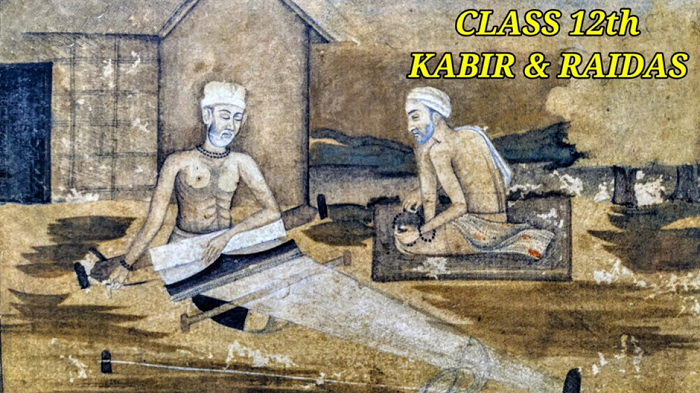
images of Raidas, Kabir and Guru Nanak