THE ASIAN INDEPENDENT UK

Dr. Ramjilal, Social Scientist,
Former Principal,Dyal Singh College,
Karnal (Haryana – India)
Email: [email protected]
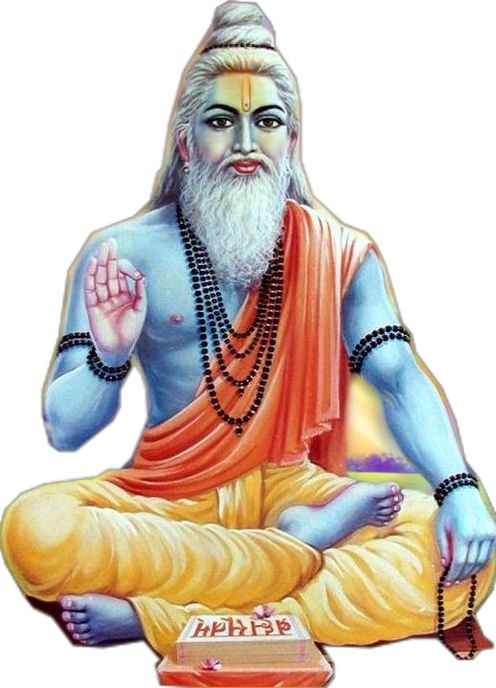
Maharishi Kashyap stands as an extraordinary luminary within the Vedic tradition, celebrated as one of the revered Saptarishis—seven great sages whose wisdom has profoundly shaped the trajectory of Indian thought and culture. His philosophical insights, steeped in the millennia-old teachings of the Rig Veda and Puranas, extend well beyond the realm of rituals and genealogical explorations. Instead, they unfold a rich tapestry of ideas anchored in unity, ecological equilibrium, harmony, and an unwavering moral commitment to the welfare of all creation.
Core Principles of Kashyap’s Philosophy
Central to Maharishi Kashyap’s philosophical framework is the powerful, far-reaching principle of “Vasudhaiva Kutumbakam”, a Sanskrit phrase that envisions the entire world as an interconnected family. This timeless concept, articulated thousands of years ago, highlights the intricate relationships among all life forms—humans, animals, birds, and even the elemental forces of nature. Revered as ‘Prajapati’, or the ‘father of all creatures’, Kashyap eloquently conveyed the idea that the stunning diversity of life arises from a singular, divine source. This foundational notion nurtures a profound kinship that binds all beings together. In today’s context, this perspective resonates harmoniously with contemporary principles of deep ecology, asserting that the exploitation of any single entity threatens the integrity of the entire ecological web and advocating for a model of co-existence, rather than a hierarchy among species.
The Concept of Responsibility Over Ownership
Maharishi Kashyap’s remarkable contributions to land reclamation are beautifully noted in Kalhana’s illustrious work, Rajatarangini, where the picturesque region of Kashmir is affectionately dubbed ‘Kashyapa-Mar’ or ‘Kashyapapura’. Through a blend of remarkable ingenuity ,and a deep reverence for nature, he converted this area by draining the expansive Satisar Lake, demonstrating an unwavering commitment to ecological restoration rather than the traditional notion of territorial conquest through warfare. His philosophy stands in stark opposition to the brutality of war, which he viewed as a disastrous force that wreaks havoc on both humanity and the environment.
Kashyap envisioned a paradigm where humans are seen not as conquerors of the Earth but as its stewards or guardians—akin to skilled gardeners nurturing a garden. He fervently contended that ownership, devoid of accountability and empathy, inevitably leads to ecological degradation. As our world grapples with critical issues such as environmental crises, rampant wealth disparity, and the unyielding exploitation of natural resources, his teachings serve as a seamless amalgamation of power and wisdom—an essential harmony for addressing the multifaceted challenges of contemporary life.
Kashyap’s Medical Philosophy
In addition to his notable environmental stewardship, Maharishi Kashyap is celebrated for his monumental contributions to the field of Ayurvedic medicine, particularly through the esteemed *Kashyap Samhita*. This seminal work emphasises the importance of empirical observation and holistic healing, with a special focus on the health and well-being of children. He is widely regarded as the pioneer of ‘Kaumarbhritya’, or paediatrics, advocating passionately that medical knowledge should prioritise efforts to uplift society’s most vulnerable segments. His holistic approach presents a stark contrast to modern medical practices, which often tend to compartmentalise knowledge. Kashyap argued for a synthesis that recognises the intricate interrelationships among the body, mind, environment, and cosmos.
Relevance Today
In today’s rapidly evolving landscape, Maharishi Kashyap’s geo-ethical perspective emerges as increasingly crucial, especially in light of pressing challenges such as climate change, rampant deforestation, and escalating socio-economic inequalities. His call for responsible stewardship—rather than mere ownership—strikes a profound chord, particularly as industries often prioritise short-term profits over the long-lasting health of our ecological systems.
Ultimately, Maharishi Kashyap’s timeless teachings provide invaluable insights into addressing the myriad environmental and social issues that confront us today. He compels us to recognise that all living beings are inextricably interconnected, advocating for a transformative shift in how we perceive nature—from viewing it solely as a repository of resources to understanding it as a vibrant, intricate communal family. His philosophy champions the spirit of coexistence, broadening the traditional definition of family to encompass all forms of life. By integrating these profound principles into our lives, we can play a pivotal role in preventing social fragmentation while nurturing ecological harmony in our dynamic and interwoven world.