THE ASIAN INDEPENDENT UK

Bal Ram Sampla
Geopolitics
A Political Analysis
On May 7th, the Labour Party faces what many expect to be a brutal night at the council elections. Polling suggests the party could lose up to 1,850 seats — three in every four they are defending.
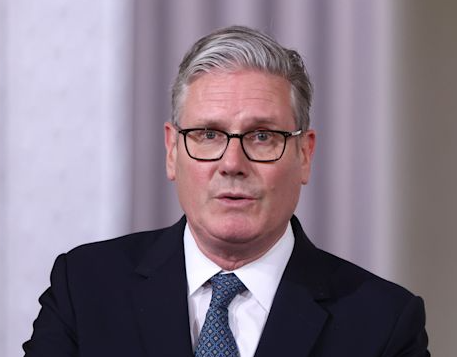
Reform UK looks set to hoover up the lion’s share, with the Green Party making significant gains in urban areas. For Keir Starmer, already deeply unpopular with the public and increasingly mistrusted by his own party, such a result may prove to be the beginning of the end.
The question is no longer whether Starmer will go. Increasingly, it is who will push him — and when.
The cruel irony facing Labour is that at the very moment they need a credible successor, they have a collection of contenders who are each, in their own way, deeply compromised.
Possible Contenders
1. Angela Rayner is the most popular figure among Labour’s grassroots membership. She has charisma, working class authenticity and a genuine connection with the party faithful that Starmer has never managed.
But popularity with members is not the same as being ready for high office. She resigned from the Cabinet over an HMRC investigation into whether she underpaid stamp duty on her council house sale — an investigation that remains ongoing. She has been photographed in an embarrassing state of intoxication in the Commons bar, having reportedly pledged to go sober specifically to boost her leadership credentials.
A significant bloc of Labour MPs have made clear privately that there is an “anyone but Angela” sentiment running through the parliamentary party. They fear she would win a membership ballot, yet believe she would be a disaster as Prime Minister.
She is nonetheless actively laying the groundwork for a challenge, meeting Andy Burnham in secret, and watching the May 7th results very carefully.
2. Wes Streeting, the Health Secretary, is said to have the numbers among MPs, but is loathed by the left of the party and Labour’s wider membership. He represents exactly the kind of right-leaning, metropolitan professional politician that many Labour voters feel has taken the party away from its roots. He could win among MPs. He would struggle badly in a wider membership vote.
3. Ed Miliband, the Energy Secretary, is genuinely popular with Labour members — more so than almost anyone else in the Cabinet. But the press and public have a very different view. He has been branded a hypocrite for mandating solar panels on new homes while having none on his own £1.6 million house. He is pushing expensive green policies on ordinary households at a time when the cost of living remains a serious concern. He may be better placed as Chancellor — a role he is reportedly eyeing — than as the face of a Labour revival.
4. Shabana Mahmood, the Home Secretary, talks a tough game on immigration and crime but has managed to alienate virtually everyone in the process. She is the least popular Cabinet minister among Labour members, having fallen 15 points in a matter of weeks. She has threatened to resign if her own reforms are watered down. She caused a fresh scandal by swearing at hecklers on a live podcast. Whatever credibility she might have claimed as a tough, no-nonsense operator has been undermined by the fact that her policies produce headlines but precious few results.
5. David Lammy, Deputy Prime Minister, is tarnished by his association with the deeply controversial move towards courts without juries — a policy that has alarmed civil liberties groups and given his opponents an easy target
5. Andy Burnham. The Greater Manchester mayor is, by some distance, the most popular of all the potential successors. Polling shows that over a quarter of the British public think he would make a good or great Prime Minister — far ahead of anyone else. Among Labour voters, the figure rises to over 40%. He is untainted by the failures of the current government, has a genuine record of delivery in Manchester, and represents the kind of authentic, plain-speaking Labour politics that the party desperately needs. Reports now suggest he is actively exploring by-elections as a route back into Parliament, and could make his move within weeks.
The problem is timing. By-elections take time. Parliament needs to be in session. And the wolves are already circling inside Westminster.
So who blinks first? The most likely scenario is that May 7th delivers the catastrophe that polling predicts, and within days the Labour parliamentary party erupts. Rayner will be under pressure from her allies to strike quickly before rivals consolidate support. Streeting’s backers may move simultaneously. The result could be a chaotic, messy and deeply damaging public brawl for the soul of a party that the public already views with deep scepticism.
Starmer may try to survive by offering Rayner a Cabinet return, reshuffling his top team and promising renewal. He has done it before. But the arithmetic is becoming impossible. A Prime Minister with approval ratings in freefall, a party haemorrhaging council seats to Nigel Farage, and a Cabinet full of people with one eye already on his job — this is not a stable situation.
Labour came to power in 2024 with a landslide and a promise of change. Less than two years later, it faces the possibility of tearing itself apart before it has even found its footing. The only person who could unite the party and restore its standing with the public — Andy Burnham — is standing on the outside looking in, not yet a Member of Parliament.
Britain may be about to witness one of the most chaotic and self-destructive leadership crises a governing party has inflicted upon itself in modern political history.