THE ASIAN INDEPENDENT UK

Bal Ram Sampla
Geopolitics
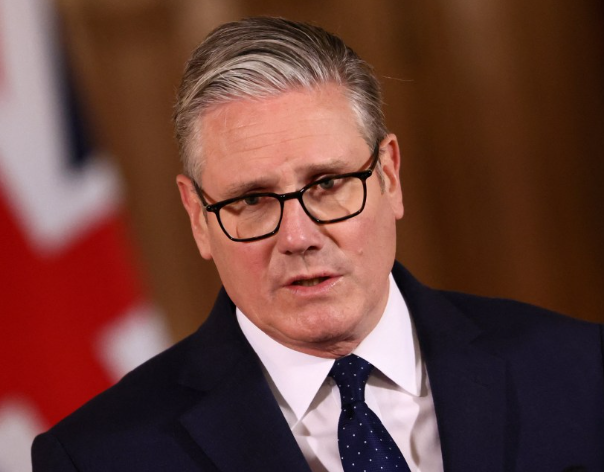
On 30 April 2026, Prime Minister Keir Starmer made his way to Golders Green, north London, in the aftermath of a terror attack that had left two Jewish men seriously injured. It was meant to be a show of solidarity. Instead, it became one of the most damaging and revealing moments of his premiership.
As his motorcade arrived at an ambulance depot, he was met not with gratitude but with fury. Around a hundred protesters lined the streets, waving placards bearing the words “Keir Starmer, Jew Harmer.” Chants of “Traitor!” and “Shame on you!” rang out.
The scene was raw, visceral and deeply uncomfortable — not because the protesters were hostile extremists, but because they were ordinary members of the British Jewish community, people who had simply had enough.
The stabbing in Golders Green was not, as Starmer himself acknowledged, a one-off. It was the latest in a mounting series of antisemitic attacks across Britain. An arson attack earlier in April had targeted Hatzola ambulances outside a synagogue. In October 2025, a man drove his car into worshippers outside a Manchester synagogue on Yom Kippur and fatally stabbed one person.
The Community Security Trust had been recording a soaring number of antisemitic incidents ever since the Hamas attacks of October 7, 2023. The warning signs were there for over two years. Yet it took a politically unmissable terror attack in one of the country’s most recognisable Jewish neighbourhoods for the government to finally declare antisemitism an “emergency.”
That word — emergency — is telling. Emergencies, by definition, are not things that arrive without warning. Britain’s Jewish community had been raising the alarm for months, if not years. What they received in return was hesitation, political calculation and, at times, what they perceived as outright indifference.
In August 2024, Jewish Labour members wrote to Starmer directly, accusing him and his party of actions that were actively worsening antisemitism. The letter cited the government’s decision to drop objections to the International Criminal Court case against Benjamin Netanyahu and plans to formally recognise Palestinian statehood. These were not fringe concerns — they came from within his own party.
Starmer’s handling of Gaza-related parliamentary debates added further insult. When faced with a potential rebellion of up to a hundred Labour MPs over a ceasefire vote in early 2024, he manoeuvred to have a watered-down Labour motion replace the original SNP wording, effectively preventing his MPs from voting on the stronger text. Critics accused him of protecting his own political position rather than showing moral leadership. The Jewish community watched on, noting that the same prime minister who struggled to take a clear moral stance in Parliament was now standing in Golders Green pledging to use “the full power of the state” against antisemitism.
His address to the nation following the visit contained strong words. He said that those who march alongside people using the phrase “Globalise the Intifada” are “calling for terrorism against Jews” and should be prosecuted. He pledged £25 million for greater police protection around synagogues, schools and community centres. The terrorism threat level was raised to “severe.”
These were not trivial gestures. But they prompted a single, unavoidable question from many in the Jewish community: why now? Why, after two years of escalating attacks, marches through London streets, and community warnings largely unheeded, did it require a broad daylight stabbing of a 34-year-old and a 76-year-old man in broad daylight in one of Britain’s most Jewish neighbourhoods before the machinery of government finally lurched into gear?
The protesters outside the ambulance depot were not interested in Starmer’s press conference pledges. They had heard words before. What they felt, standing on those north London streets, was something more profound — the sense that their community had been deprioritised, managed and ultimately let down by a government that spent more energy containing internal Labour dissent over Gaza than it did protecting British Jews from a tide of hatred that had been building for years.
Starmer told reporters he “absolutely understood the high levels of anxiety” in the Jewish community. But understanding anxiety and doing something about it before it reaches crisis point are two very different things.
The visit to Golders Green was supposed to show leadership. Instead, it exposed its absence — not in the words spoken, but in the years of silence and political caution that preceded them.
References
1.https://www.npr.org/2026/04/30/nx-s1-5805890/uk-stabbing-jewish-community-attacks-antisemitism
2.https://jewishcurrents.org/pro-palestine-politics-hit-a-wall-in-keir-starmers-labour-party
3.https://www.opendemocracy.net/en/labour-keir-starmer-ceasefire-vote-gaza-hoyle-protect-image-endanger-mp-security/
4.https://www.bloomberg.com/news/articles/2026-04-30/uk-to-fast-track-terrorism-law-after-wave-of-antisemetic-attacks
5.https://youtu.be/GafRDPOemzo?si=Lrko9R6muJ5Hd0tv
6.https://en.wikipedia.org/wiki/Antisemitism_in_the_British_Labour_Party