
THE ASIAN INDEPENDENT UK

Dr. Ramjilal, Social Scientist,
Former Principal, Dyal Singh College,
Karnal (Haryana, India).
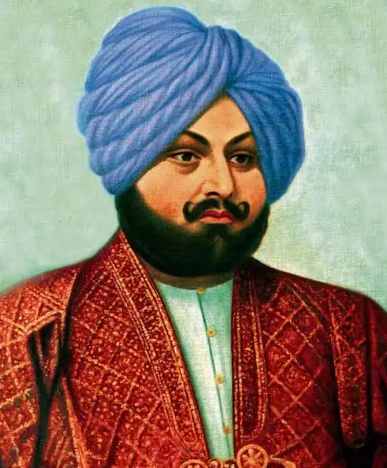
Sardar Dyal Singh Majithia (1848-1898), a great son of Majitha village in Punjab, was a great philanthropist, national hero, and a lover of equality, freedom, fraternity, liberalism, and humanity. He was an editor, journalist, educationist, economist, renowned Congress leader, writer, Brahmo Samajist, rationalist, eloquent speaker, secular liberal nationalist leader, and possessed an ideal and magnetic personality. In fact, he was a talented man of his time, a messenger and visionary of his era, a great visionary, a pioneer of public awareness, a champion of intellectual freedom, and a social worker.
To dispel the darkness of ignorance prevalent in society, Dyal Singh Majithia established three trusts—the Tribune Trust, the College Trust, and the Library Trust. Due to his tireless efforts, Punjab University, Lahore, was established in 1882. Dyal Singh Majithia was also the founder of ‘The Tribune’ (February 2, 1881) and ‘Punjab National Bank’ (May 1894).
Dyal Singh College, Lahore, was established in 1910 by the Dyal Singh College Trust Society, as per the instructions in Article 8 of Dyal Singh Majithia’s will. Currently, it is known as Government Dyal Singh College, Lahore, and is among the best colleges in Pakistan.
 India gained independence on August 15, 1947. Most of the assets of the Dyal Singh College Trust Society remained in Lahore. Despite the partition, the Trust faithfully carried forward Dyal Singh’s legacy, will, and ideology, establishing Dyal Singh College, Karnal (September 9, 1949), Dyal Singh Public Library, Delhi (1954-55), and Dyal Singh Evening College, Delhi (1958). However, the academic session began in 1959.
Diwan Anand Kumar, the founding Vice-Chancellor of Punjab University, Chandigarh, played a crucial role in establishing these educational institutions. His father, Diwan Bahadur Raja Narendra Nath (- A landlord in Punjab, member of the Statutory Civil Service; Deputy Commissioner, and Acting Commissioner, member of the Punjab Legislative Council Committee and the Assistant Education Committee), was an associate of Dyal Singh Majithia. Diwan Anand Kumar was a renowned educationist and is also considered one of the founders of the University Grants Commission. He had close ties with India’s first Prime Minister, Jawaharlal Nehru.
The members of the Dyal Singh College Trust Society have been highly educated and respected in different walks of life. After Dewan Anand Kumar, his son, Dewan Gajendra Kumar, was the president, and now his grandson, D.K. Raina, is the president of the Dyal Singh College Trust Society. The trustees include prominent figures such as Justice Ashok Bhan (Supreme Court) and Justices Dilip Kumar Kapoor, P.N. Khanna, and S.K. Mishra (High Court), administrative and police officers (P.N. Kripal – ICS, R.C. Sharma – IPS – Director CBI, Arvind Kaul – IAS, K.N. Channa – IAS, C.K. Sahni – IPS), diplomat and governor ( BK Nehru – cousin of erstwhile Prime Minister of India, Executive Director of world Bank, envoy of India in many countries and governor of more than half dozen states in India),and Satish Soni (Vice Admiral, Retd.),politician (Lala Brish Bhan, former Chief Minister, PEPSU), among others.
To establish Dyal Singh College, Delhi, and to overcome the financial crisis, the Trust had to sell the land of Dyal Singh College, Karnal, and establish Dyal Singh Colony. However, the financial crisis deepened. As a result, in 1978, due to the financial crisis, Dyal Singh College (Morning and Evening) was transferred to Delhi University through an agreement, and the Trust Society did not receive any compensation in return. It is very important to clarify that, according to Clause 12 of the agreement, ‘the institution will continue to be known as Dyal Singh College.’ Therefore, it is clear that no individual or government has the right to forcibly violate the terms of the agreement.
Although the members of the Dyal Singh College Trust Society were far-sighted, they could not have anticipated that a time would come when ‘fake nationalists’ would try to erase the name of Dyal Singh and his legacy.
According to the data for the academic session 2025-2026, more than 9300 students (6354 in the Morning College + 3000 in the Evening College) are studying in the college. Due to its quality education and scholarly and talented teachers, Dyal Singh College is among the top 10 colleges of Delhi University.
The name change controversy: Started in November 2017
On December 26, 2025, the Vice-Chancellor of Delhi University stated that they wanted to change the name of Dyal Singh Evening College.
The controversy surrounding the name change is not new, as in November 2017, Amitabh Sinha, the then Chairman of the Dyal Singh College Governing Body, a member of the Bharatiya Janata Party and a lawyer in the Supreme Court of India, had long been determined to change the college’s name. He had openly announced that Dyal Singh Evening College would be renamed “Pandit Madan Mohan Malviya College.” However, this proposal failed. On November 17, 2017, he succeeded in getting a proposal passed by the College Governing Body to rename Dyal Singh College as ‘Vande Mataram College’ and shift it to the morning shift, and its final approval was to be given by the Vice-Chancellor of the university. Immediately afterwards, a public controversy erupted. The move was sharply criticised on social media, in newspapers, and on television channels. It was seen not only as an insult to the great patriot, philanthropist, and secular leader Dyal Singh Majithia, but also as a dangerous attack on the autonomy of educational institutions.
The move was criticised not only in India but also abroad. Leaders of the Shiromani Akali Dal, an ally of the Bharatiya Janata Party, as well as Congress leaders, expressed concern and criticised the decision. Manjit Singh Sirsa (then a BJP MLA), General Secretary of the Delhi Sikh Gurdwara Management Committee, and Trilochan Singh, former Member of Parliament and former Chairman of the National Commission for Minorities, demanded that the proposal be withdrawn. Shiromani Gurdwara Parbandhak Committee (SGPC) President Sardar Avtar Singh Makkar also opposed it and advocated for the restoration of the original name. Harsimrat Kaur Badal (Akali Dal), then a minister in the BJP-led NDA government, said the proposed name was “unacceptable and detrimental.” Former Punjab Deputy Chief Minister Sukhbir Singh Badal (Akali Dal) called it “unnecessary and mischievous” and urged the Prime Minister to intervene.
Targeted by Academics and Journalists:
This decision was also targeted by academics and journalists. A meeting of academics and scholars was convened on November 27, 2017, at the Rakab Ganj Gurdwara in Delhi, chaired by the renowned and senior Indian journalist, Kuldip Nayar. The main objective of this meeting was to strategise on how to pressure the Indian government to prevent the renaming of Dyal Singh Evening College in Delhi. I was also invited to this meeting by Manjinder Singh Sirsa, but due to unavoidable circumstances, I could not attend. I considered this a fatal attack on the autonomy of educational institutions. Such steps promote communal polarisation.
On December 8, 2017, we held a press conference, and considered this step an insult to a great personality – Dyal Singh Majithia. This was published in several newspapers, including The Tribune, on December 9, 2017. The then Union Minister, S.S. Ahluwalia, had a detailed telephone conversation with me regarding Dyal Singh College and assured me that he would take the matter to a higher level.
Announcement of a stay on the Governing Body’s decision:
On December 19, 2017, during Zero Hour in the Rajya Sabha, several Members of Parliament, including Congress MPs Anand Sharma, Ambika Soni, Oscar Fernandes, S.S. Dhindsa, and B.K. Hariprasad supported Naresh Kumar Gujral’s proposal. The then Union Minister of Human Resource Development, Prakash Javadekar, told the MPs that the decision to rename Dyal Singh Evening College, Delhi, was not a decision of the central government. Therefore, he announced a stay on the Governing Body’s decision.
On December 26, 2025, on the occasion of ‘Veer Bal Diwas’, Delhi University Vice-Chancellor Yogesh Singh once again raised the issue of renaming Dyal Singh Evening College. He said, “We want to rename Dyal Singh Evening College after Banda Singh Bahadur.” The word “we” has been used by him. This implies that he is not the only player in this name-changing game. Delhi University officials argue that having two colleges named Dyal Singh confuses students. We would like to inform our readers that Dyal Singh College’s academic session began in 1959, and this confusion has allegedly arisen 67 years later, in 2026. Despite the alleged confusion among students, according to the 2025-2026 academic session data, more than 9300 students (6354 in the morning and 3000 in the evening) are studying in the morning and evening colleges. Due to its quality education and scholarly and talented teachers, Dayal Singh College is among the top 10 colleges of Delhi University.
Difference between the situation in 2017 and 2025:
The current situation is completely different from 2017. At that time, the proposal to change the name came from the Governing Body of Dyal Singh Evening College, but the 2025 proposal is from the Vice-Chancellor, and its approval will be sought from the Delhi University Executive Council. Based on my extensive experience in the field of education, I have observed that most members of college and university executive councils are often yes-men who prioritise their own interests.
Strong Criticism:
The Dyal Singh Evening College Staff Association unanimously passed a resolution opposing the Vice-Chancellor’s proposal. According to the resolution, ‘This college has long been associated with the esteemed Sardar Dyal Singh Majithia and his memory. All teachers, non-teaching staff, and students are deeply attached to this name. We must acknowledge that such a significant decision was made without prior consultation with the stakeholders. This matter was neither discussed in the Staff Council nor shared with the Staff Association.’
According to N.N. Vohra, former Governor of Jammu – Kashmir and Chairman of The Tribune Trust, any move to change the college’s name would be ‘extremely inappropriate and ill-advised’.
Our opinion is that the Indian government should establish a central university in the name of Banda Singh Bahadur, but changing the name of Dyal Singh Evening College would be an insult to his legacy. We appeal to all those associated with the Dyal Singh institutions to mobilise public opinion and pressure the government to put an end to this name-changing exercise once and for all. This would be a true tribute to the great man, Dyal Singh Majithia.