THE ASIAN INDEPENDENT UK

Bal Ram Sampla
Geopolitics
The Attack on Birendra Kumar Dey
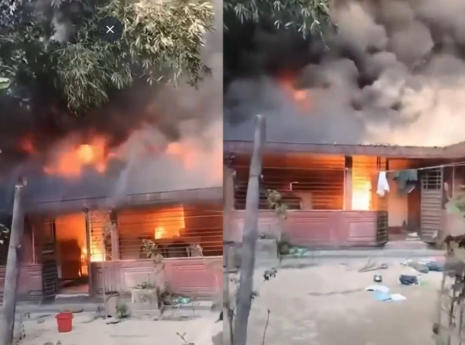
In mid-January 2026, a disturbing incident occurred in the quiet village of Bahor in Sylhet district, Bangladesh. Birendra Kumar Dey, a Hindu schoolteacher affectionately known as “Jhunu Sir” by his students, watched as an angry mob set fire to his home. While he and his family managed to escape without physical injury, their house was severely damaged. This attack was reportedly carried out by Islamist groups, though local police offered conflicting accounts, with one officer claiming the fire resulted from an electrical short circuit.
The burning of the teacher’s house was not an isolated incident. It formed part of a disturbing pattern that has emerged in Bangladesh in recent months. According to human rights organizations, at least 51 documented incidents of violence against Hindus have occurred in recent weeks alone. These attacks have included killings, arson, destruction of temples, and assaults on Hindu individuals and their properties across multiple districts of the country.
The surge in violence against minorities coincides with significant political upheaval in Bangladesh. Following the ouster of Prime Minister Sheikh Hasina’s government, the country has been governed by an interim administration while preparing for elections scheduled for February 2026. During this transitional period, religious minorities, particularly Hindus who comprise roughly eight percent of Bangladesh’s population, have found themselves increasingly vulnerable.
The violence has not been limited to Hindu communities alone. Other religious minorities, including Buddhists and Christians, as well as secular activists and human rights defenders, have also faced threats and attacks. Places of worship have been vandalized, homes burned, and individuals killed simply because of their religious or ethnic identity.
International Response
The international community has responded to these atrocities with varying degrees of concern and action, though critics argue that concrete measures have been insufficient.
- United Kingdom
British parliamentarians have been particularly vocal about the situation. Conservative MP Bob Blackman raised the issue in Parliament in January 2026, painting a stark picture of the violence: Hindu men being murdered in the streets, houses and temples being burned, and other religious minorities suffering similar fates. He called on the UK government to take meaningful action to protect minorities and ensure free and fair elections.
The UK government responded by condemning all acts of religious and ethnic violence and welcomed commitments from Bangladesh’s interim government to protect minorities. Shadow Foreign Secretary Priti Patel sent a letter describing the situation as “very concerning” and urged stronger UK engagement to help bring stability and ensure the safety of Hindus and other minorities.
2. European Union
The European Union has also expressed concern, though its response has been primarily diplomatic. EU heads of mission in Bangladesh issued statements in August 2024 expressing deep concern about attacks on places of worship and members of religious minorities. EU Ambassador Charles Whiteley made an urgent appeal for all parties to exercise restraint, reject communal violence, and uphold human rights.
The European Parliament later passed a resolution expressing deep concern at the deteriorating human rights situation in Bangladesh and calling for the restoration of a safe environment for NGOs, human rights defenders, activists, and religious minorities. The EU Election Observation Mission, led by Chief Observer Ivars Ijabs, has called for inclusive and participatory elections that involve all ethnic and religious minority groups.
However, beyond statements and resolutions, the EU’s concrete actions have been limited. European organizations have sent open letters to EU leaders calling for stronger measures, including diplomatic pressure, independent investigations, and potential consequences for continued violations, but implementation of such measures remains unclear.
India
India, which shares both a border and cultural ties with Bangladesh’s Hindu population, has expressed serious concerns about the violence. The Indian government has raised the issue through diplomatic channels and has been monitoring the situation closely, though specific actions taken have not been widely publicized.
The Gap Between Words and Action
While the international response demonstrates awareness of the crisis facing minorities in Bangladesh, there remains a significant gap between expressions of concern and concrete action to protect vulnerable communities. Statements and resolutions, while important for raising awareness, have not translated into effective measures to prevent attacks or hold perpetrators accountable.
The case of Birendra Kumar Dey, the teacher whose house was burned, illustrates the human cost of this gap. Despite international attention to the broader pattern of violence, he and thousands like him continue to live in fear, uncertain whether their government or the international community will provide meaningful protection.
As Bangladesh approaches its February 2026 elections, the situation remains precarious. The interim government’s commitment to protecting minorities will be tested, as will the international community’s willingness to move beyond rhetoric and take substantive action to ensure that all Bangladeshis, regardless of their religion or ethnicity, can live in safety and dignity.
The world is watching, but watching alone has proven insufficient to protect teachers like Birendra Kumar Dey and the countless other minorities who face daily threats simply because of who they are.
References
1.https://www.indiablooms.com/world/another-attack-hindu-teachers-home-burnt-in-bangladesh-amid-minority-violence-fears/details
2.https://www.freepressjournal.in/world/bangladesh-unrest-house-of-hindu-teacher-set-on-fire-in-sylhet-as-violence-against-minorities-continue-dramatic-video
3.https://theprint.in/opinion/eu-calling-out-bangladesh-violence-is-a-start-now-recognise-historic-hindu-genocides/2525112/
4.https://www.socialnews.xyz/2026/01/15/rights-group-alleges-killing-of-15-minority-hindus-in-bangladesh-in-45-days/
5.https://thelogicalindian.com/mob-sets-ablaze-home-of-beloved-hindu-teacher-in-sylhet-as-minority-violence-intensifies-ahead-of-bangladesh-elections/