THE ASIAN INDEPENDENT UK
 Dr. Ramjilal,
Social Scientist, Former Principal,
Dyal Singh College, Karnal (Haryana)
Email: [email protected]
Background:
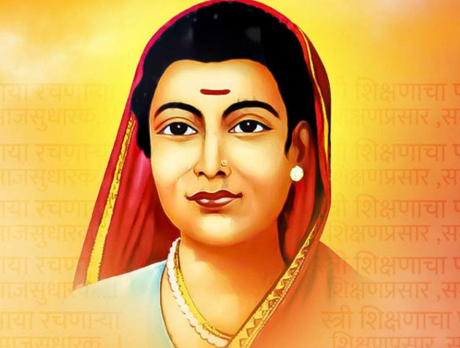
Savitribai Phule (January 3, 1831 – March 10, 1897) was the first female teacher, headmistress, pioneering poetess of the Marathi language, women’s social reformer, scholar, egalitarian thinker, philanthropist, and a staunch advocate for women’s empowerment. She symbolizes the struggle of women, Dalits, and the oppressed classes. Born on January 3, 1831, in Naigaon (present-day Satara district, Maharashtra), about 50 km from Pune, Savitribai was the daughter of Khandoji Naiveshe (father) and Lakshmibai (mother) and belonged to the Mali caste (now known as Saini). The Mali caste is considered one of the original inhabitants of Maharashtra. Some scholars argue that Savitribai Phule belonged to the Mahar caste, which has led people in North India, particularly from the Chamar caste, to believe she belonged to their community. We firmly uphold that Savitribai Phule transcends narrow social identities.
In Detail:
Marriage and Education:
In 1841, at around the age of 10, Savitribai was married to Jyotirao Phule, who was 11 at the time. Savitribai was initially uneducated, as society considered the education of girls a sin. This societal norm greatly contributed to the backwardness of women. Jyotiba Phule began educating Savitribai at home, alongside his sister, Sagunabai. After receiving primary education from Jyotiba and further instruction from his friends—Sukhram Yashwant Rai Paranjpe and Keshav Shivram Bhavalkar—Savitribai Phule attended the American Missionary School in Ahmednagar and the Normal School in Pune for teacher training. With Jyotiba’s encouragement, Savitribai and Sagunabai began teaching girls in their home, marking a revolutionary step in a deeply conservative society.
Though the word ‘Phule’ literally means ‘flower,’ the journey of the Phule couple was laden with challenges. They encountered significant opposition and criticism from regressive elements in their own community. The couple faced ostracism when Jyotiba’s father, holding conservative views, expelled them from their ancestral home. They found refuge in the house of their Muslim friend, Usman Sheikh. With the support of Usman Sheikh and his cousin Begum Fatima Sheikh, they established a school in their home, exemplifying Hindu-Muslim harmony. Savitribai, recognised as the first female teacher of India, worked alongside Begum Fatima Sheikh, who is honoured as the first Muslim female teacher of India.
Why is She Called the First Female Teacher?
In the Rigvedic period, women were revered as sages, known as Rishikas. Despite this historical context, Savitribai Phule is recognised as the first female teacher due to the prevalent restrictions on women in her time. Educating girls was viewed as a sin, and in such an atmosphere, the Phule couple founded a girls’ school at Bhide Wada (Pune) on January 3, 1848, coinciding with Savitribai’s birthday. Initially, the school admitted just nine students. With the assistance of Jyotiba and Begum Fatima Sheikh, Savitribai Phule opened five schools for girls in Pune. Unlike traditional schools run by Brahmins, these institutions provided a curriculum that included mathematics, science, and social studies, employing far superior teaching methods.
The Phule couple founded the first school for Dalits and the first school for farmers. Savitribai was proficient in Devanagari, English, and Marathi scripts, teaching subjects such as mathematics, Marathi, Sanskrit, geography, and history. Her contributions included writing compositions in Hindi. The schools established by Savitribai educated widows and girls from various communities, including the Mang, Mahar, Kurmi, Maratha, Teli, Tamboli, Brahmin, Hindu, Muslim, and Jain communities. This inclusive approach is why Savitribai Phule is celebrated as the first female teacher in India. Ultimately, the education provided in her schools represented a symbol of inter-caste and inter-religious harmony.
Savitribai Phule’s efforts constituted a bloodless revolution and a remarkable achievement. Despite facing constant insults and threats from narrow-minded individuals, who hurled abuses, cow dung, mud, and stones at her, the Phule couple was honoured on November 16, 1852, by the British government for their extraordinary contributions to education, with Savitribai being recognised as the best female teacher. The oppression and insults they endured did not weaken her resolve; she continued her work with the support of her husband, Begum Fatima Sheikh, and Sagunabai (Jyotiba’s cousin). Throughout her life, she established multiple schools, significantly advancing the cause of education for women and marginalized groups.
Social Reformer:
Savitribai Phule was a significant social reformer in India, renowned for her opposition to various social evils, such as child marriage, the dowry system, Sati (the practice of widow immolation), female infanticide, and untouchability. She was a strong advocate for widow remarriage and underscored the importance of girls’ education in fostering social change.
Alongside her reformative efforts, Savitribai was an accomplished poetess, recognised as the first ‘Adikavitri’ (pioneer poetess) of the Marathi language. Her literary contributions include her first collection of poems, “Kavya Phule” (Flowers of Poetry), published in 1854, and another important work, “Bhavan Kashi Subodh Ratnakar,” released in 1892. Among her most impactful poems is “Go, Get Education,” which expresses the belief that without knowledge, human beings are similar to animals. This poem encourages individuals to actively seek education as a means to liberate themselves from oppression.
Savitribai’s life was marked by personal sacrifices, including her untimely death from the plague on March 10, 1897, while attempting to save a 10-year-old boy affected by the disease. Despite facing numerous challenges throughout her life, including ostracism from her family and community, she remained unwavering in her mission to combat social injustices.
Her enduring legacy serves as a guiding light in the history of women’s rights in India. In recognition of her contributions, it is proposed that Savitribai Phule and her associate, Begum Fatima Sheikh, be awarded the Bharat Ratna, the nation’s highest civilian honour. Furthermore, the suggestion is made to commemorate Savitribai Phule’s birthday as “Girl Child Day” and Begum Fatima Sheikh’s birthday as “Women’s Empowerment Day” across the country, reflecting the continued relevance of their ideals in contemporary society.