
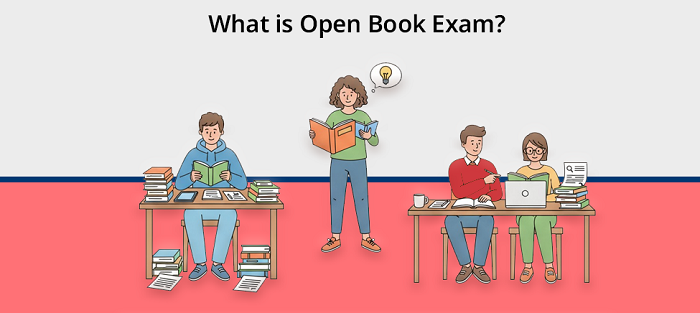

(Asian independent) The Open Book Examination System (OBES) has gained renewed attention in medical, scientific and higher education due to evolving philosophies, digital access to information and the need for higher-order cognitive skills. The
traditional closed-book examinations emphasize memory recall under time constraints. However, in an era where information is instantly accessible and professional success depends more on critical thinking, clinical reasoning and decision-making, the relevance of rote memorization is increasingly questioned particularly in medicine, life sciences and engineering. The Open Book Examination System represents a paradigm shift from memory-based assessment to competency-based evaluation.
DEFINITION OF THE OPEN BOOK SYSTEM
An Open Book Examination System allows students to consult approved reference materials textbooks, notes, or digital resources during an examination. The core objective is not to test information retention, but to assess Conceptual understanding, Analytical and interpretative ability, Application of knowledge to novel problems, Clinical or scientific reasoning.
SCIENTIFIC AND COGNITIVE RATIONALE
From a neuroscientific perspective learning is most effective when it strengthens conceptual networks rather than isolated facts. Medical science, for example, demands the integration of anatomy, physiology, pathology and clinical judgment skills poorly evaluated through recall-based tests alone.
Studies in cognitive psychology show that
Reduced emphasis on memorization lowers exam-related anxiety.
Students engage in deeper learning strategies.
Knowledge retention improves when learning is contextual and problem-based
ADVANTAGES OF OPEN BOOK EXAMINATIONS FOR STUDENTS
PROMOTION OF HIGHER-ORDER THINKING
Students focus on understanding principles rather than memorizing facts.
REAL-WORLD SKILL SIMULATION
In medicine and science, professionals routinely consult references; OBES mirrors real clinical and research environments.
REDUCED EXAM STRESS
Lower cortisol responses during assessment can enhance performance and mental well-being.
ENCOURAGEMENT OF ETHICAL LEARNING
Reduced incentive for cheating as access to materials is permitted.
IMPROVED LIFELONG LEARNING HABITS
Students learn how to search, evaluate and apply information efficiently.
DISADVANTAGES AND LIMITATIONS
FALSE SENSE OF SECURITY
Poorly prepared students may over-rely on materials and underperform.
INADEQUATE QUESTION DESIGN
If questions test factual recall, OBES becomes meaningless.
TIME MANAGEMENT CHALLENGES
Excessive reference-checking can reduce effective answer time.
UNEQUAL ACCESS TO RESOURCES
Digital disparities may disadvantage some students.
FACULTY RESISTANCE AND SKILL GAP
Designing high-quality analytical questions requires training and effort.
IMPACT ON SOCIETY
The long-term societal impact of OBES is potentially profound
It Produces competent professionals, not just high scorers.
It encourages evidence-based decision-making in healthcare and science.
Reduces rote-learning culture and promotes innovation.
Aligns education with societal needs rather than examination rankings.
In medical education, this could translate into safer clinical practices and improved patient outcomes.
CONDITIONS FOR YIELDING EXPECTED RESULTS
For OBES to be effective, the following conditions are essential:
ASSESSMENT REFORM
Questions must be case-based, problem-oriented, and integrative.
FACULTY DEVELOPMENT PROGRAMS
Teachers must be trained in assessment science and curriculum alignment.
CLEAR GUIDELINES FOR PERMITTED MATERIALS
Standardization avoids confusion and inequity.
BLENDED ASSESSMENT MODELS
OBES should complement—not entirely replace—other forms of evaluation such as practical exams, viva voce and continuous assessment.
NEED FOR A SPECIAL CURRICULUM
Yes, a special curriculum framework is essential. OBES cannot function effectively within a traditional syllabus designed for memorization.
Such a curriculum should include Problem-based learning (PBL),Case discussions and clinical correlations, Research literacy and data interpretation, Formative assessments emphasizing feedback. Medical and science curricula should explicitly map learning outcomes to analytical competencies.
ANNUAL vs. SEMESTER SYSTEM AND Time REDUCTION
The implementation of OBES does not automatically justify a reduction of the academic year by three months. However:
A semester system is more compatible with OBES due to continuous evaluation.
Reduced dependence on revision-heavy exam preparation may allow more efficient academic calendars.
Any time reduction must be based on learning outcomes, not administrative convenience.
A premature shortening of academic duration risks compromising skill acquisition, especially in clinical disciplines.
PRACTICAL HINDRANCES IN IMPLEMENTATION
INFRASTRUCTURE LIMITATIONS
Digital OBES requires secure platforms and reliable connectivity.
ASSESSMENT STANDARDIZATION
Ensuring fairness across institutions is challenging.
STUDENT ADAPTATION PERIOD
Learners accustomed to rote methods need guidance and transition time.
EVALUATION LOAD
Analytical answers require more time and expertise to assess.
POLICY AND REGULATORY BARRIERS
Accreditation bodies may resist rapid systemic change.
The Open Book Examination System represents a scientifically sound and socially relevant approach to assessment, particularly in medicine and science education. However, it is not a simple policy switch but a comprehensive reform requiring curricular redesign, faculty training and cultural change. When thoughtfully implemented, OBES can cultivate professionals who think critically, act ethically and learn continuously—qualities urgently needed in modern society.
SURINDERPAL SINGH
FACULTY IN SCIENCE DEPARTMENT
SRI AMRITSAR SAHIB PUNJAB.
click on the link below to download ‘The Asian Independent App’
https://play.google.com/store/apps/details?id=in.yourhost.theasianindependent
https://play.google.com/store/apps/details?id=in.yourhost.theasianindependent