

THE ASIAN INDEPENDENT UK

Bal Ram Sampla
Geopolitics
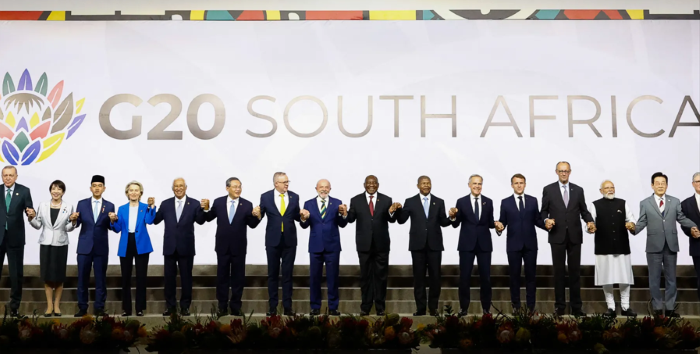
The recent G20 summit in Johannesburg, South Africa marked a turning point in global diplomacy. While the United States chose to boycott the meeting, India’s Prime Minister Narendra Modi seized the opportunity to strengthen his country’s position on the world stage.
The G20 summit in South Africa was historic for what was missing as much as what was present. The United States, traditionally a dominant voice in global economic discussions, was notably absent. This left a gap that other nations were quick to fill.
Modi’s Diplomatic Success
While South Africa rightfully celebrated hosting the first G20 summit on African soil, Modi was remarkably active throughout the event. He participated in all three sessions and held numerous bilateral meetings with world leaders.
The highlight of Modi’s diplomacy came with the announcement of a new trilateral partnership. India, Canada, and Australia formed the Australia-Canada-India Technology and Innovation Partnership, known as ACITI. This agreement brings together three democratic nations across three continents to work on emerging technologies, supply chain diversification, clean energy, and artificial intelligence.
What the US is Missing
By staying away from the G20, the United States missed more than just a meeting. It lost the chance to shape how three important democracies cooperate on critical issues.
The ACITI Partnership focuses on exactly the areas where America has traditionally led: technology, innovation, and supply chains. Now India is positioning itself as the central player connecting Canada and Australia, two close U.S. allies.
India’s Rising Role
India is taking advantage of America’s retreat from multilateral diplomacy. By creating partnerships like ACITI, India is becoming an essential bridge between different democratic powers. This is a role the United States might have played in the past.
The message from Johannesburg is clear: when major players step back, others step forward. India is showing it can gather allies, broker agreements, and lead on global issues. As the economic centre of gravity shifts toward emerging economies, India is positioning itself not just as a participant in the global order, but as one of its architects.
References
1.https://www.newsweek.com/mark-carney-barb-us-g20-summit-global-economy-shifting-11095665
2.https://thenewsmill.com/2025/11/australia-canada-india-technology-and-innovation-partnership-to-deepen-collaboration-pm-modi/
3.https://theprint.in/diplomacy/pm-modi-meets-australian-canadian-pms-on-g20-sidelines-announces-tech-innovation-partnership/2790126/