THE ASIAN INDEPENDENT UK

Dr. Ramjilal, Social Scientist and Former Principal,
Dayal Singh College, Karnal (Haryana, India)
Email: [email protected]
Within the backdrop of a predominantly male-national revolutionary movement, numerous women revolutionaries have played pivotal roles in shaping the history of India’s struggle for freedom. Yet, regrettably, the current generation oftentimes remains unaware of their vital contributions or overlooks them entirely, relegating these remarkable women to the annals of unsung heroes. It is crucial to highlight the extraordinary efforts made by countless young women who dared to defy societal norms and take on exceptional roles in the struggle for independence. For instance, Suniti Choudhury, just 16 years old, and Shanti Ghosh executed a daring assassination of Charles Jeffrey Buckland Slaves, the British District Magistrate in Comilla. Similarly, Prem Lata and Bina Das conducted bold attempts on the life of Stanley Jackson, the Governor of Bengal, in the year 1932. Other illustrious figures such as Rani Gaidinliu from Nagaland (who joined the revolution at the tender age of 13, Kamala Devi Chattopadhyay from Bengal, Aruna Asaf Ali of Kalka in Haryana, and Lakshmi Sahgal, a prominent leader of the Indian National Army, collectively constitute a powerful legacy of women who were motivated by socialist, nationalist, or communist ideals, actively contributing to the national movement.
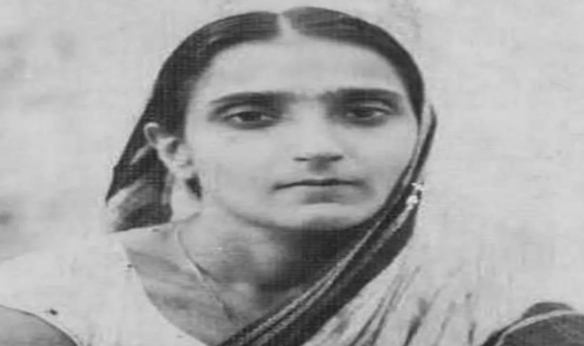
Amid this shimmering constellation of revolutionaries, the figure of Durga Devi Vohra—affectionately referred to as the “Revolutionary Fire of India”—commands particular attention and respect. Uniquely, she holds the distinction of being the only recognised “Iron Lady” within the annals of India’s revolutionary history, widely known as Durga “Bhabhi.” Her impressive legacy defies the outdated misconception that leadership in the quest for freedom rests solely with men. As noted by Chaman Lal, a prominent historian, “Who would have thought that those humble, pious goddesses of peace and sweetness would become true warriors for their nation?”
Born in Shahjahanpur (within the Kaushambi district of present-day Uttar Pradesh) on October 7, 1907, Durga Devi Vohra hailed from an affluent family, the daughter of Pandit Banke Bihari. At the remarkably young age of ten, she was married to the revolutionary Bhagwati Charan Vohra, whose lineage included Rai Saheb Shiv Charan, a figure honoured by the British for his contributions to the railways. Interestingly, the families possessed considerable wealth, with Bhagwati Charan’s father inheriting ₹40,000 ,and Durga’s father acquiring ₹5,000, funds that were initially reserved for emergencies. However, they made a groundbreaking decision to devote this wealth towards revolutionary activities, marking a critical juncture in the national movement.
Bhagwati Charan Vohra completed his Bachelor of Arts from National College, Lahore, in 1923. Inspired by her husband’s fervent commitment to the cause, Durga Devi pursued her own education, earning a Prabhakar (BA Honours) in Hindi from Punjab University, Lahore. Following her husband’s father’s demise in 1920, Bhagwati Charan became increasingly resolute in his dedication to the revolutionary movement, demonstrating unwavering determination and immense self-confidence. Durga Devi became his pillar of strength, sharing in his fervent ambition and commitment to the revolutionary ideologies that swirled around them.
As noted by her associate Comrade Ramchandra, “Durga Devi made significant efforts to assist the families of revolutionaries in Lahore and acted as a ‘post office’ for hidden revolutionaries,” serving a critical role in the underground movement. Durga Devi undertook remarkable risks, including the daring act of smuggling firearms from the North-West Frontier Province by concealing them beneath her garments. Tragically, on May 28, 1930, a devastating explosion claimed the life of Bhagwati Charan while he was testing a bomb along the banks of the Ravi River. Even in the face of profound grief, she displayed remarkable resilience, shouldering the responsibility of raising her young son, Sachi Nanda, while maintaining her unwavering commitment to the revolutionary cause. “I was not a born revolutionary,” she once stated, “but I became a revolutionary through the maturity of my thoughts.” Her deep-seated belief in the principles of socialism, equality, secularism, and national independence energised her activism, as she stood firmly against British imperialism, feudalism, capitalism, and exploitation. She ardently engaged with organisations such as the Naujawan Bharat Sabha and the Hindustan Socialist Republican Association (HSRA).
The Naujawan Bharat Sabha, founded in March 1926 in Lahore by Bhagat Singh and his esteemed comrades—including Bhagwati Charan Vohra and Ramchandra Kapoor—sought to mobilise the youth for the revolutionary movement. During its inception, both Durga Devi and Sushila Devi astounded attendees by making a profound statement: they drew blood from their thumbs and applied it as a tilak to the portrait of Kartar Singh Sarabha, a young martyr from the Ghadar movement who sacrificed his life on November 16, 1916. This bold gesture symbolised the indomitable spirit of revolution that fuelled their collective endeavour.
Durga Bhabhi’s contributions were not limited to nurturing the revolutionary spirit; she played a decisive role in the Assembly Bomb Case (1929) and the Lahore Conspiracy Case (1929), where Bhagat Singh ,and his comrades faced trial. As a devoted member of the defence committee, she displayed incredible resourcefulness by selling her jewellery to raise ₹3,000 for their legal defence, and she regularly visited imprisoned revolutionaries, ensuring that their spirits remained high.
At this juncture, it is imperative to acknowledge and honour the profound contributions of Durga Bhabhi and her fellow women revolutionaries who fought valiantly for India’s independence. Their courage, tenacity, and sacrifices deserve to be celebrated in our historical narratives, ensuring that their legacies continue to inspire future generations.xx
Durga Bhabhi played an essential and often overlooked role as a bridge between imprisoned revolutionaries, their legal representatives, and underground activists. Her unwavering commitment to the cause of India’s independence has largely gone unnoticed by history, yet her contributions were pivotal. Following the arrest of the Hindustan Socialist Republican Association (HSRA) leadership, she stepped into a position of remarkable authority, assuming control of both the HSRA and the Naujawan Bharat Sabha. This remarkable transition not only showcased her determination, but also secured her a significant place in the annals of history.
On the fateful day of October 8, 1930, Durga Bhabhi, alongside the daring Prithvi Singh Azad, orchestrated a bold plan to assassinate Lord William Hailey. This act was intended as a direct retaliation for the executions of Bhagat Singh and his comrades. While the assassination attempt ultimately failed, it resulted in the wounding of Sergeant Taylor, marking a notable instance where a woman played a central role in a violent act of resistance.
The narrative of her bravery continues with a remarkable episode following the assassination of J.P. Saunders. In an audacious disguise, Bhagat Singh masqueraded as an officer, while Durga Devi Vohra, portraying his ‘false wife,’ journeyed to Kolkata. This thrilling escapade epitomises the courage embedded in India’s revolutionary movement, highlighting the risks they took in the fight for freedom. Durga Bhabhi’s commitment to the cause extended even to the emotional realm, as she led the poignant funeral procession of Jatindra Nath Das after his tragic hunger strike at Lahore Central Jail, honouring his sacrifice.
After the tumult of the revolutionary years, on July 20, 1940, Durga Bhabhi channelled her passion for social justice into founding a school for underprivileged children in Lucknow. Her efforts did not go unrecognised; in 1956, Prime Minister Jawaharlal Nehru visited the school, a testament to her impact on the community. Later, she further demonstrated her dedication to education by donating land for the Shaheed Research Institute, ensuring that the legacy of sacrifice and learning would continue.
Durga Bhabhi left this world on October 15, 1999, at the venerable age of 92. She is fondly remembered as an unsung hero in the tapestry of Indian history, her extraordinary life woven into the very fabric of the struggle for independence.