THE ASIAN INDEPENDENT UK

Bal Ram Sampla
Geopolitics
True accountability means being willing to defend your ideas against people who disagree with you. When a public figure only makes bold, aggressive statements in front of audiences that are forced to nod along, it is not a display of strength—it is a confession of weakness. This is the central hypocrisy of Victor Gao, a prominent spokesperson for the Chinese establishment.
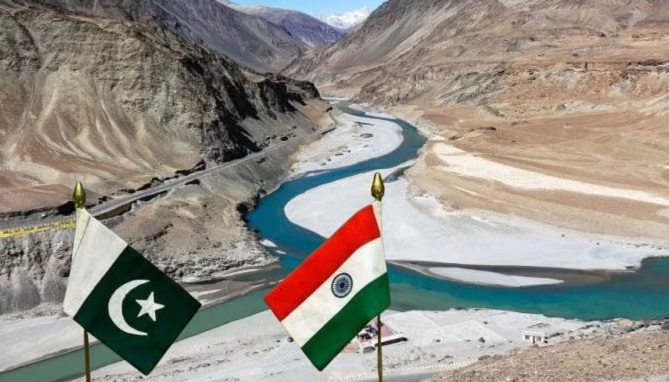
Recently, Gao traveled to Pakistan and delivered a stern lecture to India regarding the Indus Waters Treaty. Quoting the ancient philosopher Confucius, he warned India not to use its geographical position to restrict water flows to its neighbors, calling such actions a potential “war crime.”
On the surface, it sounded like a principled stand for human rights. But the venue Gao chose revealed his true strategy: he made these remarks in a country that relies heavily on China for billions of dollars in infrastructure loans and diplomatic backing.
In Islamabad, Gao knew the local media would never turn the microphone around and ask him hard questions. He knew no one in the room would point out that China is currently building the Medog Megadam, the largest hydroelectric project in human history, right on the edge of the Indian border, giving Beijing the ultimate power to control water flowing into India and Bangladesh.
He could lecture others about water security only because he was standing in a safe zone where China’s own water grab is actively ignored.
This pattern of behavior shows what happens when state-vetted commentators operate outside of a protected bubble. When Gao speaks in environments where the press is tightly controlled or highly sympathetic, he presents himself as a polished, Western-educated intellectual. He uses his background as a Yale graduate to sound like an independent think-tank expert.
However, when he steps into an environment with actual journalistic freedom, the polished facade immediately crumbles.
In a famous interview on Al Jazeera, Gao was subjected to basic, adversarial questioning without a state-approved script. When asked simple questions—such as whether a Chinese citizen has the freedom to criticize their own president, or why top Chinese ministers keep mysteriously disappearing from public life—Gao could only offer bumbling excuses. He even went so far as to claim that China is a thriving democracy, a statement so detached from reality that the live studio audience openly laughed at him.
There is a profound difference between diplomacy and propaganda. True diplomacy requires engaging with uncomfortable facts and balancing competing interests. Propaganda, on the other hand, relies entirely on avoiding a mirror. By traveling to friendly nations to threaten rivals while hiding behind ancient philosophy,
Victor Gao proves that his bold rhetoric cannot survive the light of real scrutiny. A critic who can only speak loudly in an echo chamber is not a defender of justice; they are simply a hypocrite who is deeply afraid of a fair debate.
References
1.https://youtu.be/ugPwapoV2_M?si=aMB2RjXgj7WPVW_D
2.https://youtu.be/GihzLFfSGUs?si=npGPyC-uT02Bam2O
3.https://arunachal24.in/china-begins-work-on-worlds-largest-dam-india-accelerates-11000-mw-siang-project/?hl=en-
4.https://youtu.be/RcvNNlS50SM?si=XvxqcyEBaeQmJxpM