THE ASIAN INDEPENDENT UK

Bal Ram Sampla
Geopolitics
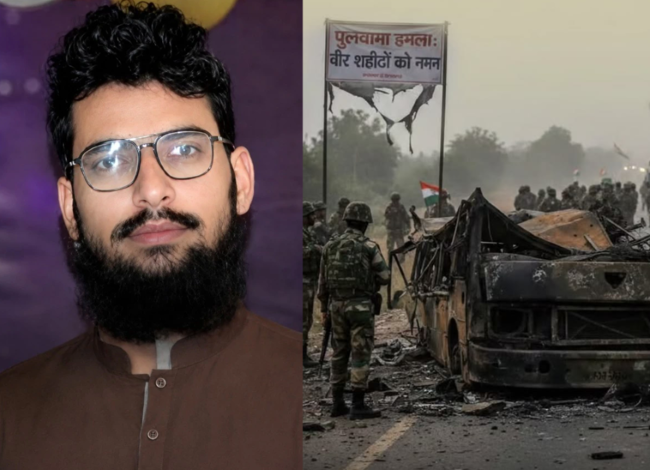
On May 21, 2026, Hamza Burhan, one of the key masterminds behind the 2019 Pulwama terror attack — was shot dead by unidentified gunmen in Muzaffarabad, Pakistan-occupied Kashmir. The man who helped orchestrate the deadliest attack on Indian security forces in decades met his end in the same country that had sheltered him for years. Pakistan, predictably, said nothing.
Hamza Burhan
Born Arjumand Gulzar Dar in the Pulwama district of Jammu and Kashmir, Hamza Burhan left India in 2017 under the pretext of pursuing higher studies. He was a medical student — known by the alias “Doctor”, but what he pursued in Pakistan was far darker. He joined Al-Badr, a banned terrorist outfit, and quickly rose to become one of its top commanders. His role in the February 14, 2019 Pulwama attack, in which a suicide bomber rammed an explosive-laden vehicle into a CRPF convoy killing 40 jawans, made him one of India’s most wanted terrorists. The Indian government officially designated him a terrorist under the UAPA in 2022.
After Pulwama, Burhan did not stop. He adapted, becoming a remote operator, radicalizing youth in South Kashmir through encrypted messaging apps, routing weapons and cash through courier networks, and masterminding hit-and-run strikes on security personnel and civilians, all from the safety of Pakistani soil.
The Killing
On the night of May 21, 2026, bike-borne assailants opened fire on Burhan near Muzaffarabad, reportedly outside a medical institution where he held an administrative position. He died instantly from multiple gunshot wounds. No organisation claimed responsibility. Pakistani authorities launched no credible investigation. The killers vanished into the night.
Pakistan’s Deafening Silence
The most revealing aspect of Burhan’s death is not how he was killed, but how Pakistan responded, with complete silence. No official statement was issued. No condemnation. No acknowledgment that a designated terrorist had been living and operating freely within its territory for nearly a decade.
This silence is not new. It follows a grim pattern. Paramjit Singh Panjwar, chief of the Khalistan Commando Force, was gunned down in Lahore. Shahid Latif, a key handler behind the 2016 Pathankot airbase attack, was shot inside a mosque in Sialkot. In each case, the killers were described as “unknown gunmen.” In each case, Pakistan remained silent.
The pattern raises an uncomfortable question: how can a country remain unaware that its territory is being used as a sanctuary by internationally designated terrorists, and then claim innocence when those same terrorists are killed on its streets?
Harbouring Terror
Pakistan’s history of sheltering terrorists is not a matter of speculation, it is a matter of record. Osama bin Laden was found living in Abbottabad, a stone’s throw from Pakistan’s premier military academy. Hafiz Saeed, the mastermind of the 2008 Mumbai attacks that killed 166 people, lived openly in Lahore for years before token house arrest. The leaders of Jaish-e-Mohammed and Lashkar-e-Taiba have operated from Pakistani soil with near impunity.
Hamza Burhan’s case fits perfectly into this pattern. He arrived in Pakistan as a student, was absorbed into a terrorist infrastructure that could not exist without state knowledge or complicity, and spent years directing attacks against India, all while living freely in Muzaffarabad.
Justice or Covert
Indian social media erupted with references to “Operation Dhurandhar,” India’s reported covert operation targeting terror networks. Whether or not Indian intelligence was involved in Burhan’s killing remains unconfirmed. But the wider truth is undeniable: a man responsible for the deaths of 40 Indian soldiers has been eliminated. For the families of those soldiers, it is a measure of justice, however cold, however quiet.
Conclusion
The killing of Hamza Burhan is more than a single news event. It is a window into a long and unresolved crisis: Pakistan’s use of terrorist proxies as instruments of foreign policy, its refusal to act against designated militants on its soil, and the impunity with which its territory has been used to plan and execute attacks against India. Until Pakistan is held meaningfully accountable, diplomatically, economically, and strategically, the cycle will continue. The “unknown gunmen” will keep appearing. And Pakistan will keep saying nothing.
References
1.https://thelogicalindian.com/pulwama-attack-mastermind-hamza-burhan-killed-by-unknown-gunmen-in-pakistan-occupied-kashmir/
2.https://www.indiatvnews.com/news/world/pulwama-attack-mastermind-hamza-burhan-shot-dead-in-pakistan-2026-05-21-1041947
3.https://thefederal.com/category/news/hamza-burhan-pulwama-conspirator-shot-dead-pok-243954
4.https://www.ibtimes.co.in/pulwama-plotter-hamza-burhan-shot-dead-by-unknown-gunmen-pok-902230