THE ASIAN INDEPENDENT UK

Bal Ram Sampla
Geopolitics
India is at the centre of a major debate over a proposed $9 billion project on Great Nicobar Island — a remote but strategically vital island sitting at the entrance to the Strait of Malacca. The project plans to build a massive container port, an airport, and a new city on the island.
While the government sees it as essential for India’s future, opposition leader Rahul Gandhi has strongly opposed it, calling it a crime against nature and tribal communities. This paper looks at both sides of the argument and asks whether the opposition’s stance, however well-meaning, risks ignoring a serious national security reality.
What Is the Great Nicobar Project?
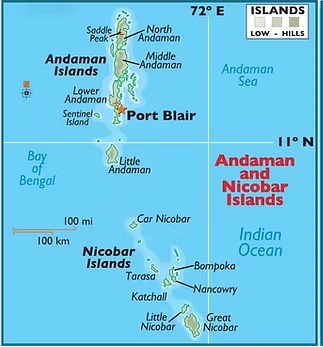
Great Nicobar Island is part of the Andaman and Nicobar Islands chain, located nearly 3,000 kilometres from New Delhi. What makes it special is its location — it sits right at the mouth of the Strait of Malacca, one of the busiest shipping lanes in the world. Around 30 percent of all global maritime trade passes through this narrow waterway, including a very large share of China’s oil imports.
The Indian government, led by Prime Minister Narendra Modi, wants to develop the island into a major transshipment and logistics hub. The project would involve clearing large areas of rainforest and building modern infrastructure on a 910 square kilometre island that is currently home to around 9,000 people, including indigenous tribal communities who have had little contact with the outside world.
Rahul Gandhi’s Opposition
Rahul Gandhi visited the island and came away strongly opposed to the project. He described it as “destruction dressed in development’s language” and called it one of the gravest crimes against India’s natural and tribal heritage. He pointed to the clearing of 160 square kilometres of rainforest and the potential displacement of indigenous communities, including the Shompen — a largely uncontacted tribe who have lived on the island for thousands of years.
Rights groups like Survival International have backed Gandhi’s concerns, warning that the project could effectively wipe out the Shompen people entirely. Gandhi has vowed to try and stop the project, and the wider Congress party has called for a complete reassessment of the plan.
These are real and serious concerns. The destruction of ancient rainforests and the displacement of indigenous communities are not small matters. In any democratic society, such issues deserve to be heard.
The National Security Argument Gandhi Is Ignoring
However, Gandhi’s opposition has a significant blind spot — he has largely ignored the strategic and military importance of the island.
India’s position in the Indian Ocean is under growing pressure from China. Beijing has been steadily building a network of ports and naval facilities across the Indian Ocean — from Pakistan to Sri Lanka to Myanmar — in what strategists call the “String of Pearls.” This strategy is designed to surround India with Chinese influence and give China the ability to project naval power deep into waters that India considers its backyard.
Great Nicobar Island is one of India’s most powerful answers to this challenge. Because it sits at the entrance to the Strait of Malacca, an Indian naval and logistics base there would give India enormous strategic leverage. In the event of a conflict with China, India could potentially use this position to block or disrupt Chinese shipping through the strait — including the oil supplies that China’s economy depends on. This kind of geographical advantage is rare and cannot easily be replicated elsewhere.
By focusing entirely on the environmental and tribal aspects of the project, Gandhi has failed to engage with this dimension at all. This is a serious gap in his argument.
Is Gandhi Supporting China’s Interests?
Some have gone further and argued that by opposing the project, Gandhi is effectively supporting China’s strategic position. After all, China would clearly benefit if India abandons or weakens its plans for Great Nicobar.
This is a strong charge, but it needs to be handled carefully. There is no credible evidence that Gandhi is acting in China’s interests deliberately. His motivations appear to be genuine concern for the environment and for tribal communities. The fact that his position happens to align with what China would want does not make him pro-China.
However, it does make him strategically irresponsible. A leader of the opposition has a duty not just to criticise but to offer serious alternatives. Gandhi has not explained how India should secure its position at the Strait of Malacca if not through this project. He has not proposed a smaller, less damaging version of the development that could still serve India’s defence needs. Simply opposing the project without addressing the security question is not good enough.
Finding a Middle Ground
The real debate should not be between development and no development. It should be about how to develop responsibly.
It is possible, at least in theory, to establish a meaningful Indian military and naval presence on Great Nicobar with a much smaller footprint than the current $9 billion plan envisions. The strategic goal — securing India’s position at the Strait of Malacca — does not necessarily require clearing 160 square kilometres of rainforest or displacing thousands of tribal people. A more targeted approach could serve India’s defence needs while causing significantly less environmental and human damage.
Neither side in this debate has seriously engaged with that middle ground. The government has pushed ahead with a massive commercial project and defended it on security grounds. The opposition has attacked the project on environmental grounds without offering any strategic alternative. Both positions are incomplete.
Conclusion
The Great Nicobar project touches on some of the most important questions facing modern India — how to protect the environment, how to safeguard indigenous communities, and how to defend the nation in an increasingly competitive world. These are not questions with easy answers.
Rahul Gandhi is right to raise environmental and tribal concerns. They are legitimate and important. But he is wrong to ignore the national security dimension entirely. India’s position at the Strait of Malacca is genuinely vital, and the threat from China’s growing naval presence in the Indian Ocean is real.
The strongest criticism of Gandhi is not that he supports China — there is no evidence of that. It is that he is being strategically incomplete. A responsible opposition should challenge the government to find a smarter, less damaging way to achieve India’s security goals — not simply oppose a project that addresses a very real national need.
In the end, India needs both — a secure strategic presence at Great Nicobar, and a commitment to protecting the remarkable natural and human heritage of the island. The challenge is finding a way to achieve both at once.
Reference
1.https://www.geo.tv/latest/662100-indian-opposition-slams-nicobar-megaport-plan-as-destruction
2.https://impressivetimes.com/latest/rahul-gandhi-great-nicobar-project-controversy/
3.https://www.france24.com/en/live-news/20260429-indian-opposition-slams-nicobar-megaport-plan-as-destruction
4.https://m.thepeninsulaqatar.com/article/29/04/2026/indian-opposition-slams-nicobar-megaport-plan-as-destruction