By: Surjit Singh Flora

(Asian independent) Keir Starmer is fighting for authority at home while Mark Carney is settling into office with more room to breathe. In London, Labour MPs are no longer whispering about a replacement, they are naming one and talking about a deadline. In Ottawa, Carney is holding his line against Trump, and that distance from Washington is helping him look steadier. The contrast now cuts through a damaged UK-US special relationship, where trade and Iran have pushed trust to a low point.
Starmer’s problem is no longer a rough patch. It is a survival test. Labour’s local election losses rattled MPs, and the party’s poor polling has turned every mistake into a threat.
At least 22 Labour MPs have publicly called for Starmer to quit or set an exit date. That matters because once doubts go public, discipline starts to crack.
The pressure has not stopped there. Catherine West warned that a contest could be forced by Monday if no cabinet minister steps forward. Meanwhile, speculation around Wes Streeting has filled Westminster with talk of a possible challenge. The dispute is no longer about personalities alone. It is about whether Starmer still controls his party.
Labour’s losses gave critics a simple line. Voters were already angry about living costs, higher bills, and a sense that the government has no clear grip.
Starmer also faces the old poison of politics, the feeling that power is slipping away before it has been used. When that happens, every policy wobble looks larger. A leader who once promised order now looks pinned down by events.
The UK-US special relationship has taken a hard hit under the weight of trade threats and the war in Iran. Trump wants loyalty. Starmer has offered limits.
Trump has threatened the trade deal after Starmer refused to give him what he wanted. That leaves Britain exposed.
The problem is not only the threat itself. It is the message behind it. The White House can still use access to the American market as pressure, and that makes London look weaker than it hoped after earlier efforts to secure a quick deal.
The Iran war turned a trade row into a trust problem. Starmer said Britain would not be dragged into the war, and he refused to commit forces on Trump’s timetable.
He did allow some military access in defensive terms, but that was not enough to calm Washington. Once military strategy entered the argument, the split went beyond tariffs. It became a fight over who sets the terms.
Carney has more political room because he looks less desperate. He also has a stronger base after his Liberals gained a parliamentary majority in April 2026.
Carney has pushed back on tariffs and sovereignty pressure, but he has done it with control. He sounds measured, not heated.
That matters. Trump may dislike resistance, yet he respects a leader who does not flinch. Carney’s calm gives him leverage without making him look weak at home.
Canada is also reducing its dependence on Washington by widening its trade focus toward Europe and other partners. That gives Carney more room if talks with Trump stall.
It is an economic move, but it is also a political shield. A leader who has options looks less trapped.
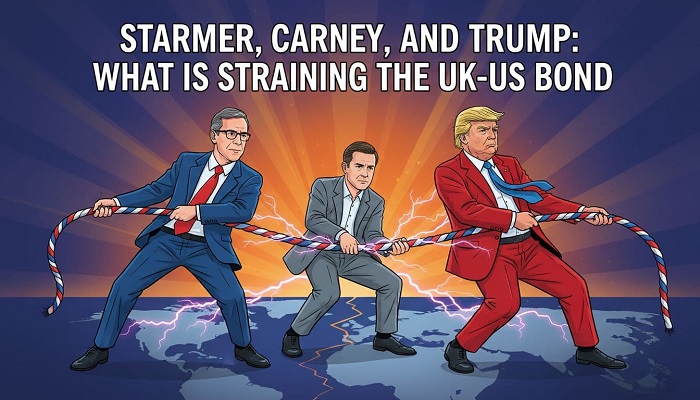
Starmer’s weakness comes from losing control at home while dealing with a hostile Trump. Carney is steadier because he refuses to chase approval from Washington.
Both men are shaping their countries’ next chapter. Only one of them has the political space to keep doing it.