
Dr Ramjilal, Social Scientist; Former Principal, Dyal Singh College, Karnal, Haryana, India

(Asian independent) Abstract: The Haryana region played an important role in India’s struggle against British colonial rule from 1885 to 1947. During this period, Haryana did not exist as a separate administrative unit; most of its territory was part of undivided Punjab, while some areas remained under princely states. This political arrangement influenced the character of regional nationalism, which developed through various organisations including the Indian National Congress, Arya Samaj, peasant organisations, revolutionary and socialist groups, as well as Gandhian campaigns and Praja Mandal movements.
This article examines the freedom movement chronologically, beginning with the impact of the Revolt of 1857, followed by the emergence of organised nationalism, the First World War, the Rowlatt agitation, Non-Cooperation, Civil Disobedience, agrarian politics, the Quit India movement, and the activities of the Indian National Army. Special attention is given to Karnal, Panipat, and Mewat, alongside areas such as Ambala, Hisar, Rohtak, and various princely states. The participation of Hindu, Sikh, and Muslim communities—including the Meo peasantry and Muslim Kamboh activists—is highlighted. The article argues that this regional struggle must be understood as a people’s movement involving peasants, women, students, soldiers, and ordinary villagers, whose contributions have often been under-represented.
**Keywords**
Haryana region; Indian freedom movement; undivided Punjab; Indian National Congress; Arya Samaj; peasant movements; Karnal; Panipat; Mewat; Meo community; Muslim Kamboh; Sikh freedom fighters; Chhotu Ram; Unionist Party; Praja Mandal; revolutionary movement; women; Indian National Army; Partition; Marxist interpretation.
1. Introduction: The Historical and Political Setting
The history of India’s freedom movement cannot be fully understood without examining its regional dimensions. The Haryana region participated in the national struggle through various political and social movements, but it lacked a separate administrative identity during 1885–1947. Most of its territory was integrated into Punjab province, while princely states such as Jind, Loharu, Dujana, and Pataudi operated under different political arrangements. The term “Haryana region” is therefore used as a geographical and historical descriptor rather than as the name of a distinct province during that period.
The legacy of the Revolt of 1857 was particularly significant. The suppression of the revolt strengthened British military and administrative control over the region. Following the revolt, the region was administered through Punjab starting in 1858, and the colonial state increasingly relied on loyal rulers, chiefs, and influential landed interests. Peasants experienced mounting revenue pressure, growing indebtedness, and changes in land relations, all of which influenced the region’s political character in the ensuing decades.
2. The Legacy of 1857 and the Emergence of Political Consciousness
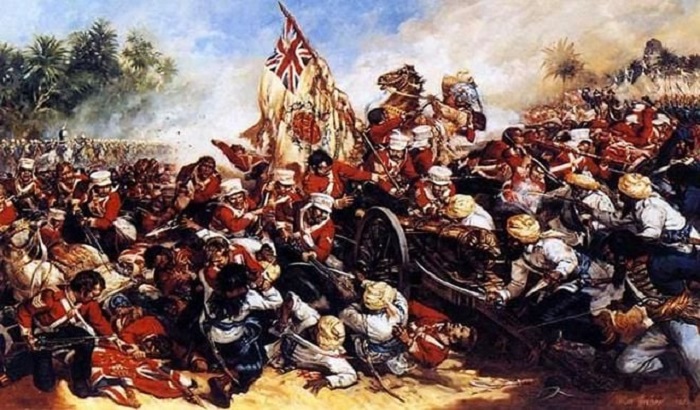
The Revolt of 1857 served as a formative experience for the Haryana region. Soldiers, peasants, village communities, and segments of the ruling classes challenged British authority, although their objectives and interests were not always aligned. The British response included punitive measures, property confiscation, and the strengthening of administrative and military institutions. Subsequently, the administration in Punjab shaped the region’s political and economic position.
Karnal district offers a prominent example of popular resistance. In a published study, the author has examined the involvement of villages such as Balla, Gharaunda, Jalmana, Assandh, Salwan, and areas around Kaithal. The article also discusses the role of various communities, including Jats, Muslims, Sikhs, Kambojs, Sianis, Rods, Dalits, and Gujjars. These accounts illustrate that resistance was not limited to a single community.
The role of local rulers requires nuanced analysis. While some rulers and chiefs supported the British, others among the local population resisted colonial authority. For instance, the assistance given by the rulers of Jind and Patiala, along with certain local chiefs, in suppressing the revolt highlights the political divisions of the time. In the Karnal region, the British relied on military support from princely states to quell resistance, and the sacrifices and destruction experienced in Balla, and nearby villages became an integral part of the region’s historical memory.
Mewat should also be understood in this broader historical context. The agrarian conditions and relations of the Meo population with local authorities shaped its later political mobilisation, and their history cannot be confined solely to the communal crisis of 1947.
3. Congress, Arya Samaj, and Early Political Awakening (1885–1905)
The establishment of the Indian National Congress in 1885 created a national platform for political demands. Early organised nationalism in the Haryana region developed gradually due to the small size of the educated middle class and the predominantly rural nature of society. Lala Murlidhar from Ambala was one of the early Congress figures, participating in the organisation’s first session in Bombay in 1885. The primary delegates representing the Haryana region at the 1886 Calcutta Session (the second session) were Pandit Din Dayal Sharma, Babu Balmukund Gupta, and Lala Murlidhar Gupta.
Lala Lajpat Rai attended the 1888 Allahabad Session (the fourth session), making his formal debut at this annual national gathering. He also represented Hisar as a delegate at the 1889 session held in Bombay. The Arya Samaj played a significant role in social and educational awakening during this period. Lala Lajpat Rai, who practised law in Hisar from 1886 to 1892, helped organise Arya Samaj activities and promote political awareness. As a result, Hisar became an important centre for reformist and nationalist discussions.
Political awakening was not limited to Hindu reform organisations. Muslim associations also emerged in Ambala and other areas, while Sikh reformist activities expanded. The official history of the Ambala district records the establishment of Muslim organisations, including the Anjuman-i-Islamiya and the Central National Muhammadan Association, alongside Sikh and Arya Samaj organisations. Although these groups had different religious and social objectives, their development reflected the growth of public life in colonial Punjab.
4. Moderates, Extremists, and Swadeshi (1905–1914):
The partition of Bengal in 1905 strengthened Indian nationalism. The Swadeshi movement promoted the boycott of foreign goods, indigenous production, and national education. Within the Congress, differences emerged between moderates, who favoured constitutional methods and gradual reform, and extremists, who called for more assertive political action. These debates influenced Punjab and the Haryana region. Lala Lajpat Rai became a prominent representative of assertive nationalism. Meanwhile, agrarian issues remained central to rural society, as cultivators faced revenue demands, indebtedness, land alienation, and the increasing influence of moneylenders. The interests of prosperous landowners did not always align with those of tenants, small cultivators, and agricultural labourers . These differences would later shape peasant politics.
5. The First World War and the Rowlatt Agitation (1914–1919): In the First World War, Indians provided unprecedented help to the British government. From 1914 to 1916, out of 1,92,000 Indian soldiers, the number of soldiers from Punjab was 1,10,000. The public not only provided soldiers but also donated Rs 2 crore as war donation and Rs 10 crore as interest. Haryana region donated Rs 84 lakh 33 thousand 666 as war fund. In this, Karnal district’s contribution was Rs 24,45,226.
The feeling of discontent reached its peak
The region of Haryana sent many recruits. By November 30, 1918, The total numbers of Indian Army and Imperial service troops were Ambala division excluding Simla district 71,366 (Another estimate is 84001 soldiers)-district-wise number of recruits was Hissar 15,461, Rohtak 22,144, Gurgaon 18,867, Karnal 6,553 and Ambala 8,341. With 22,144 Rohtak had the highest number of service troops. Out of these about 50 % were Jats, Brahmins 11.57 %, Ahirs 5.6%, Rajput (Muslims) 2.6 %, Sikhs almost negligible, and other Hindus, 12.68%.6.The Rowlatt legislation of 1919: The Jallianwala Bagh massacre on April 13, 1919
The Rowlatt legislation of 1919 provoked widespread opposition, leading to public meetings, protests, and demonstrations against the repressive law. Mahatma Gandhi was stopped and arrested at Palwal railway station on April 10, 1919, while travelling to Punjab. The Jallianwala Bagh massacre on April 13 intensified anti-colonial sentiment across the country. Udham Singh, who assassinated former Punjab Lieutenant-Governor Michael O’Dwyer in London in 1940, became a symbol of revolutionary opposition to the violence associated with Punjab in 1919. His actions are part of the broader Sikh and Punjabi revolutionary tradition.
6.The Singapore Mutiny of World War I: February 15, 1915 – Led by Young Haryanvi Soldiers
The first mutiny of the World War I was led mostly by young men from villages of Hisar, Rohtak, Meham and Gurgaon districts of Haryana. The Singapore Mutiny, which is known as the first mutiny of WWI and left an indelible mark on India’s freedom struggle, started on February 15, 1915. It was led by Muslim soldiers who belonged to the British army’s 5th Light Infantry Brigade.
Even as the world observes the centenary of the Great War, the sacrifice of these soldiers has been all but forgotten, as most of the soldiers and their descendants migrated to Pakistan after Partition.
The brigade mainly comprised Rajput Muslims and Pathans and had been sent from Madras to replace the Yorkshire Light Infantry in Singapore. They reached there in October 1914 and were to leave for Hong Kong in February. On the day of embarkment, a rumour spread that they were actually being sent to Turkey and would have to fight Muslims there.
The Singapore Mutiny shook the foundation of British rule in Asia.
7.Non-Cooperation and Khilafat Movement (1920–1922):
The Non-Cooperation Movement transformed the freedom struggle into a mass movement. Students, teachers, lawyers, traders, peasants, and ordinary villagers participated in meetings, boycotts, protests, and the promotion of khadi. Concurrently, the Khilafat Movement, led by Muslim political and religious leaders, developed alongside non-cooperation. Its alliance with Congress created opportunities for Hindu-Muslim cooperation against colonial rule. The Jhajjar political conference on June 8, 1921, chaired by Asaf Ali, is a significant example. The Jhajjar District Gazetteer records that Hindus and Muslims jointly passed resolutions demanding Swaraj. It also highlights Muslim organisers who disseminated the Khilafat message, including Bakshi Ahmad Khan, Maulavi Mulahdan, Khair Mohammad, and Mohammed Shafi.
Karnal and Panipat witnessed arrests and public mobilization. Volunteers from Gagsina and Salwan later took part in Civil Disobedience activities, while Lala Lajpat Rai’s political work helped connect the district with national developments. In Ambala, women volunteer prepared salt in Anaj Mandi on April 26, 1920, showcasing the increasing involvement of women in public political activities.
The Muslim Kamboh community also deserves recognition during this period. The author identifies Chaudhary Ilahi Bakhsh Kamboj as the chairman of a Khilafat conference held in Karnal in 1921, and Master Noor Mohammad Kamboj as a participant who left government employment to establish a national school. These details should be considered alongside the published work of S.C. Mittal on the Khilafat Movement.
8. Mewat and the Meo Peasant Rebellion:
Mewat holds a unique place in the history of agrarian resistance. The Meos, primarily cultivators, lived across the Gurgaon region and neighbouring princely territories, particularly Alwar and Bharatpur. Their political and economic conditions were shaped by revenue demands, local authority, customary rights, and the power of princely administrations.
Majid Hayat Siddiqi’s significant study, History and Society in a Popular Rebellion: Mewat, 1920–1933, focuses on the popular uprising of late 1932 and early 1933. The rebellion was directed against the political authority of Alwar and Bharatpur but also spread to areas of British India. Siddiqi emphasises that the uprising emerged from interconnected political, social, agrarian, and cultural histories; it cannot merely be defined as a religious disturbance or an isolated local event.
The Meo experience highlights the importance of peasant agency beyond the formal Congress organisation. Their struggles had distinct local causes and leadership. The relationship between Meo mobilisation, Congress politics, and the Muslim League should be examined without equating them as identical political movements.
9. Revolutionary and Socialist Movements:
During the 1920s and 1930s, revolutionary nationalism and socialist ideas influenced young people throughout northern India. The example of Bhagat Singh and his comrades, alongside the Naujawan Bharat Sabha, inspired opposition to imperialism and the demand for complete independence. These movements also addressed issues of social equality, exploitation, and the rights of workers and peasants.
The Haryana region was connected to this broader political atmosphere through students, young activists, and local networks. The revolutionary movement was not confined to a single religious community; Sikh, Hindu, and Muslim activists participated in various parts of the Punjab region. However, the specific local affiliations of individual participants must be established through documentary evidence.
10. Chhotu Ram, Agrarian Politics, and the Unionist Party:
Agrarian questions became increasingly significant in Punjab politics. Indebtedness, land alienation, and the influence of moneylenders impacted cultivators across religious communities, though their economic positions varied.
Chhotu Ram, from Garhi Sampla in Rohtak, emerged as a leading advocate for agricultural interests. In 1923, he helped establish the Unionist Party with Mian Fazl-i-Husain and other leaders. The party sought to unite important agrarian interests across Hindu, Sikh, and Muslim communities. Chhotu Ram’s legislative efforts on rural indebtedness, land alienation, and agricultural markets significantly benefited the peasant class in united Punjab, earning him a respected place in the history of the north-western region of the Indian subcontinent.
Nevertheless, the Unionist Party merits critical assessment. Its cross-community character did not imply that all rural classes held equal political influence. Large landowners and powerful cultivating groups wielded greater political power than tenants, landless labourers, and poorer peasants. Although the Unionist program achieved important agrarian reforms, it did not eliminate inequalities within rural society.
11. Civil Disobedience and Regional Participation, 1930–1934:
The Civil Disobedience Movement, which began in 1930, played a significant role in expanding nationalist mobilisation throughout towns and villages in India. Key forms of protest during this period included boycotting foreign goods, refusing to cooperate with colonial institutions, and actively participating in satyagraha.
In the Haryana region, Karnal and Panipat emerged as notable centres of this movement. The Karnal District Gazetteer documents a number of arrests in cities such as Karnal, Panipat, Kaithal, Shahabad, Salwan, and Gagsina. Volunteers from Salwan and Gagsina even travelled to Lahore specifically to court arrest, indicating that the movement reached a wide audience beyond just educated urban residents.
Research on the participation of Muslim Kambohs has uncovered that there were at least 23 Muslim Kamboh satyagrahis recorded in the Karnal District Jail register. Among them was B. Aamna Kamboh, who was arrested for manufacturing salt in Lahore as part of the protest.
12. Provincial Autonomy and the Praja Mandal Movements, 1935–1939:
The Government of India Act of 1935 brought about provincial autonomy in India, culminating in elections held in 1937. While the Indian National Congress established ministries in several provinces, Punjab remained under the control of a Unionist government led by Sikandar Hayat Khan. Chhotu Ram, a prominent minister, pursued an agrarian agenda that reflected the interests of farmers.
The political landscape in the Haryana region during this period was multifaceted, characterized by the interplay between Congress nationalism, Unionist agrarian politics, Sikh political organisations, and various Muslim political movements. These entities often cooperated while simultaneously competing for political influence.
In the princely states, the Praja Mandal movement emerged as a significant force, advocating for civil rights, responsible governance, reduced taxation, and the abolition of forced labor. These local movements were connected to the broader national struggle for independence.
13. The Second World War and India’s Political Crisis:
The British government’s unilateral decision to involve India in the Second World War without consulting elected Indian representatives triggered a profound political crisis. In response, the Congress ministries resigned, while the Unionist government in Punjab continued to align itself with the British war effort. In October 1940, Gandhi initiated Individual Satyagraha to assert Indians’ right to oppose their country’s forced participation in the war. During this campaign, authorities arrested 251 individuals from Rohtak, 120 from Ambala, 77 from Hisar, and 36 from Karnal as part of the satyagraha participants.
Additionally, a study conducted in Karnal revealed the presence of a revolutionary group that planned an attack on the Punjab Governor in January 1941. This group included Sadhu Ram Kamboj from Kheda, Atmaram Kamboj from Nanheda, Ramprasad Kamboj from Alahar, Vishnu Dutt Sharma from Ladwa, and Pandit Moolchand from Muradgarh, among others. However, they were apprehended before they could execute their plan.
The passage of the Quit India resolution on 8 August 1942 marked a pivotal moment in the freedom struggle. In reaction, the British government arrested key Congress leaders and declared the organization unlawful, resulting in widespread demonstrations, arrests, and clandestine activities throughout the Haryana region. According to records from Ambala district, there were approximately 298 arrests and numerous police lathi charges during this time, while the Karnal account reports 31 arrests and an attempted unfurling of the national flag by workers from Gagsina.
Muslim participation in the movement is particularly noteworthy. Although the Muslim League did not join the Quit India movement as an organisation, this should not obscure the individual political choices of many Muslims. The author’s study highlights the involvement of young Muslim Kambohs from Ambala, including an FIR against eleven youths on 14 August 1942. It also identifies Fatima B. Amina Kamboj from Karnal, who was detained for cyclostyling and distributing underground leaflets.
14.Mahatma Gandhi’s Movements: Role of Haryanvi Women:
A comprehensive exploration of Haryana’s struggle for freedom must shine a light on the pivotal contributions of Haryanvi women, who courageously dismantled the walls of patriarchal seclusion (purdah) that had constrained them for generations. In the wake of the brutal British reprisals following the revolt of 1857, which had initially forced women back into the confines of domestic life, a remarkable awakening took place, fuelled by the efforts of the Arya Samaj and the fervent involvement in Gandhian mass campaigns.
At the grassroots level, women from diverse regions such as Sirsa, Hisar, Rohtak, Sonipat, Ambala, Karnal, and Gurugram emerged as passionate activists, engaging in various forms of civil disobedience. They stood shoulder to shoulder with their male counterparts, contributing significantly to every major movement led by Mahatma Gandhi. Notable figures among them include Manni Devi, Dhapa Devi, and Chitra Devi from Rohtak, who exemplified this resolve. Kasturba Bai bravely faced arrest and conviction during the Individual Satyagraha in 1941, while Kamala Devi Bhargava from Gurugram played an active role in the Quit India Movement, demonstrating extraordinary courage.
Sohag Rani, who began her political journey in Lahore, was sentenced to nine months in prison for her participation in a protest meeting that coincided with the hanging of Shaheed Bhagat Singh—a moment that tested her resilience as she endured severe torture while imprisoned. Other remarkable women like Chandbai and Taravati from Hisar, Laxmibai Arya from the village of Rohana, and Gayatri Devi from Sonipat also rose to prominence. Shanno Devi, with roots in both Rohat and Multan, was another significant figure, alongside a host of others including Sunhari from Jagadhari, Vidyavati, Yamuna Devi, Mahadevi, Prasanni Devi, and Shanti Devi.
The contributions of these women were not merely supportive; they were essential. The narrative of Haryana’s freedom movement would be incomplete without acknowledging the impact of internationally recognised leaders like Aruna Asaf Ali, hailing from Kalka, and Sucheta Kriplani of Ambala. Their legacies stand as testaments to the valour of Haryanvi women.
Chandabai of Sirsa, for instance, was active in Congress sessions during the 1920s and faced imprisonment in Lahore in 1941 due to her anti-war stance. Likewise, Gayatridevi, Kasturi Devi, Mannodevi, and Sohag Rani boldly led Salt Satyagraha marches in 1930, facing police brutality in both Sonipat and Rohtak. Fatima B. Amina Kamboh from Karnal is another courageous figure, who took part in the Quit India Movement in 1942 and endured house arrest for her bold act of distributing underground pamphlets advocating for freedom.
The collective spirit and unwavering determination of these women not only shaped the freedom struggle in Haryana but also laid a foundational ethos for future generations, affirming their rightful place in history.
14.The Sikhs’ participation:
Sikh participation in the freedom movement was notably significant, as highlighted in the author’s published study of Kamboj Sikhs. The research identifies key figures such as Udham Singh, Master Sunder Singh Lyallpuri, Jathedar Bhai Tehal Singh Dhanju, Honorary Captain Sardar Bahadur Ram Singh Mahrok, and Bibi Gurbaksh Kaur Kamboj. These individuals played important roles in the wider Sikh and Punjabi freedom movement, and recognising their local connections in Haryana is essential to this historical narrative.
15.The Azad Hind Fauj (INA): Role of Haryana:
Subhash Chandra Bose’s Azad Hind Fauj subsequently launched attacks in eastern India. The forces from Haryana consisted of 398 officers and 2,317 soldiers, while another source states that there was a total of 2,847 soldiers from Haryana. Among them, 346 made the ultimate sacrifice in the struggle for India’s independence. Specifically, in Karnal district, there were 119 soldiers and 14 officers, with five of them being martyred. Moreover, many Haryanvi women enlisted in the Rani of Jhansi Regiment of Subhas Chandra Bose’s Indian National Army (INA), demonstrating their commitment to the anti-imperialist cause.
Specifically, in Karnal district, there were 119 soldiers and 14 officers, with five of them being martyred. (Source: My City Reporter Interview: Karnal’s sons were at the forefront of the freedom movement, My City, Amar Ujala, Karnal.)
16. Mewat, Partition, and Communal Peace (1946-1947):
The final years of colonial rule were marked by communal tension, a weakening of the Unionist coalition, and the political crisis surrounding Partition. These developments significantly impacted Mewat and the neighbouring areas of Alwar and Bharatpur. The Meo community faced insecurity, violence, and displacement during this period. While some Meos migrated towards Pakistan, many remained in India.
The political situation in Mewat was complex. Muslim League activity in the region increased during 1945-46, and discussions about a separate Meo political unit were held. However, the community did not follow a uniform political course, as its history must be examined in light of agrarian interests, local leadership, and diverse political affiliations.
Mahatma Gandhi’s visit to Ghasera on 19 December 1947 became a significant event in the efforts to persuade Meos to stay in India. Meo leader Chaudhary Yasin Khan played a vital role in inviting Gandhi. During this visit, Gandhi appealed for peace and the protection of the Meo population. This event should be distinguished from the peace initiatives and communal discussions of 1946, which occurred prior to Independence and Partition.
The contributions of Hindu, Sikh, and Muslim peace workers, local leaders, and ordinary villagers require further investigation. Partition was not solely a narrative of violence and migration; it also includes the histories of those who endeavoured to maintain communal harmony and shared social life.
17. A Marxist Interpretation:
The freedom movement in the Haryana region should be understood not just as a political struggle against foreign rule , but also as a movement shaped by class relations, agrarian conditions, and social inequalities. Colonialism relied on revenue extraction, the commercialisation of agriculture, changes in land relations, and the protection of selected rulings and landed interests.
The aftermath of the 1857 rebellion illustrates the relationship between colonial power and local elites. The British depended on rulers, chiefs, and influential landlords who supported their authority. In the countryside, growing indebtedness and land alienation created new forms of economic dependence. Suraj Bhan Bhardwaj’s study on colonial economic transformations in Haryana identifies the impact of revenue policies, commercialisation, and evolving land relations on rural society.
The agrarian politics of Chhotu Ram and the Unionist Party must also be examined from this class perspective. Their cross-community alliance challenged moneylending interests and sought protection for cultivating landowners. However, the interests of prosperous landowners did not always align with those of tenants, landless labourers, and poorer peasants.
The Meo rebellion of 1932–33 demonstrates the capacity of peasant communities to resist oppressive authority. The Praja Mandal movements expressed demands for civil rights and representative government against princely autocracy. The participation of Hindu, Sikh, and Muslim peasants and activists also challenges narrow communal interpretations of the freedom struggle.
A Marxist interpretation must, therefore, recognize both the unity and contradictions within the movement. It was a national struggle against imperialism, but it also contained conflicts over land, class, caste, social power, and political representation. While independence ended formal British rule, it did not automatically erase agrarian inequality, poverty, or social discrimination.
18. Conclusion and Legacies:
The Haryana region played a significant role in India’s freedom struggle from 1885 to 1947. Its history was shaped by various movements, including Congress nationalism, Arya Samaj, peasant mobilisation, revolutionary and socialist ideologies, Gandhian campaigns, Unionist agrarian politics, the Praja Mandal movements, and the Indian National Army (INA). Key areas such as Karnal, Panipat, Mewat, Ambala, Hisar, and Rohtak, as well as the princely states, developed unique forms of political engagement.
It is essential to recognise the collective contributions of the Hindu, Sikh, and Muslim communities. The Meo peasantry, Sikh cultivators involved in the Praja Mandal movement, Muslim nationalists, Muslim Kamboh activists, women, students, soldiers, and village volunteers all played crucial roles in this historical narrative. Their diverse experiences and political affiliations enriched the broader struggle against colonial rule.
The legacy of this movement extends beyond the achievement of independence; it also encompasses the democratic aspirations it generated, including civil liberties, representative government, agrarian justice, communal harmony, and social equality. A people-centred history of the Haryana region should emphasise the contributions of ordinary participants alongside prominent leaders while also critically examining the social and economic inequalities that persisted after independence.
References:
A. The author’s published research and articles:
1. Lal, Ramji. Dr. (1986). New Delhi:Political India 1935–42: Anatomy of Indian Politics. New Delhi.
2.लेखक, हरियाणा: तब और अब, कुरुक्षेत्र, 1967, पुस्तक के सह-लेखक हैं.
3. Lal, Ramji. Dr.. (25 August 2025). “The Role of Karnal District in the Indian Independence Movement from 1857 to 1947: A Review.” Samaj Weekly UK.
4. Lal, Ramji. Dr. (25 August 2025). “The Role of Karnal District in the Indian Independence Movement from 1857 to 1947: A Review.” The Asian Independent UK.
5. Lal, Ramji. Dr. (8 August 2026). “The Role of the Muslim Kamboj Community in the Freedom Movement (1857–1947): A Systematic Study and Review.” The Asian Independent UK.
6. Lal, Ramji. Dr. (9 August 2026). “सन् 1857–1947 तक स्वतंत्रता आंदोलन में मुस्लिम कंबोज समुदाय की भूमिका.” Pratibimb Media.
7. Lal, Ramji. Dr. (19 August 2026). “Role of the Kamboj Sikhs in the Indian Freedom Movement: 1857 to 1947—A Review.” Samaj Weekly UK.
8. Lal, Ramji. Dr. (19 August 2026). “Role of the Kamboj Sikhs in the Indian Freedom Movement: 1857 to 1947—A Review.” The Asian Independent UK. Read article.
9. Lal, Ramji. Dr.. (26 July 2026). “The Muslim Era (712 AD–1857 AD): The Role of the Muslim Kamboh Community—A Review.” The Asian Independent UK.
10.Lal, Ramji. Dr. (20/11/2026). Subaltern Mobilisation, Gender Agency, and Class Dynamics in Haryana’s Freedom Struggle (1885–1947): A Socio-Historical and Marxist Analysis https https://theasianindependent.
11. Lal, Ramji. Dr. (20/11/2026).
Subaltern Mobilisation, Gender Agency, and Class Dynamics in Haryana’s Freedom Struggle (1885–1947): A Socio-Historical and Marxist Analysis https://samajweekly.com/
12. Lal, Ramji. Dr. (19 November 2026Pratibimb Media )हरियाणा के स्वतंत्रता संग्राम में जन-लामबंदी, महिला नेतृत्व और वर्ग-गतिशीलता (1885–1947)//https://
13.My Interview: Karnal’s sons were at the forefront of the freedom movement, My City, Amar Ujala, Karnal.)
B. Books ,and Journals and News Papers:
1. Shukla, S.P. Dr. (1985) INDIA’S FREEDOM STRUGGLE AND THE ROLE OF HARYANA , New Delhi: CRITERION PUBLICATIONS.
2.Bhardwaj, S. B. (2017). “Economic Transformations and Their Socio-Political Impact in Colonial Haryana, 1857–1947.” Journal of Reviews and Research in Social Sciences, 5(2), 121–131.
3. Siddiqi, M. H. (1986). “History and Society in a Popular Rebellion: Mewat, 1920–1933.” Comparative Studies in Society and History, 28(3), 442–467. Cambridge University Press.
4. Mittal, S. C. (1986). Haryana: A Historical Perspective. New Delhi: Atlantic Publishers.
5. Yadav, B. D., and Gian Singh. (1970). Freedom Struggle in Haryana. Rohtak: M.D. University.
6. Barrier, N. G. (1966). The Punjab Alienation of Land Bill of 1900. Duke University.
7. Puri, H. K. (1993). The Ghadar Movement: Ideology, Organisation and Strategy. Amritsar: Guru Nanak Dev University.
8.https://timesofindia.
C. Official records and gazetteers
1. Government of Haryana, Archives Department. Oral Records of Freedom Fighters.
2. Government of Haryana, Archives Department. Public Records and Archival Holdings.
3. Government of Haryana, District Administration Ambala. History of Ambala. Official district website.
4. Government of Haryana, District Administration Jind. History of Jind and the Praja Mandal Movement. Official district website.
5. Government of Haryana. Haryana State Gazetteer, Volume I. c.Official Gazetteer.
6. Government of Haryana. Jhajjar District Gazetteer, Chapter II: History. Gazetteer PDF.
7. Government of Haryana. Karnal District Gazetteer, 1918. District Gazetteer catalogue.
8. Government of India. District Census Handbook: Kaithal, Haryana. Census of India.
9. https://en.wikipedia.org/wiki/
10.National Archives of India, INA Papers, File No. 601/INA.