By: Surjit Singh Flora

(Asian independent) September 11, 2026, will place the United States between public ceremony and private grief. Twenty-five years after the attacks, remembering 9/11 means naming the 2,977 people killed, excluding the 19 hijackers, at the World Trade Center, the Pentagon, and near Shanksville, Pennsylvania.
The anniversary also carries a wider record. Illnesses, wars, security policies, civil liberties disputes, discrimination, and social division followed the attacks. A serious commemoration holds those consequences beside the individual lives that were lost.
Remembering 9/11: Where tragedy left its marks
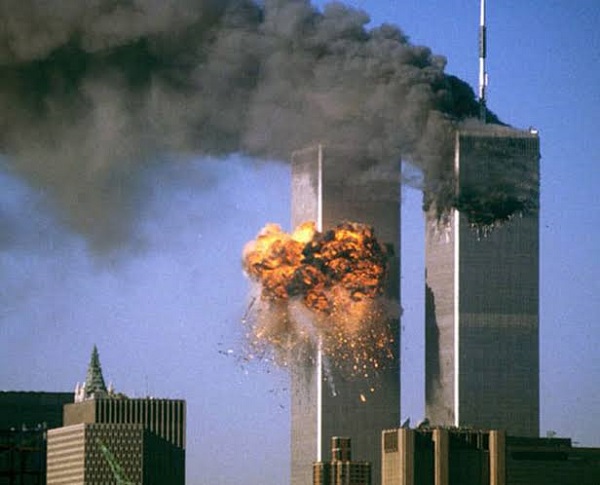
On September 11, 2001, 19 al Qaeda hijackers seized four commercial airplanes. American Airlines Flight 11 and United Airlines Flight 175 struck the World Trade Center’s Twin Towers in New York City. American Airlines Flight 77 struck the Pentagon in Arlington, Virginia.
United Airlines Flight 93 crashed in rural Pennsylvania near Shanksville after passengers and crew members resisted the hijackers. The attacks killed people from many countries. The dead included passengers, flight crews, office workers, Pentagon personnel, emergency workers, and people near the attack sites.
The physical geography remains familiar: lower Manhattan, Arlington, and a field in Somerset County. Yet the attacks reached far beyond those places. Families received final phone calls. Workplaces lost entire teams. Schools faced classrooms with absent parents. Firehouses and police precincts carried losses that altered their daily lives for decades.
The attacks themselves must remain distinct from the policies, conflicts, and social harms that unfolded afterward. Remembering 9/11 begins with the historical facts of that day, then follows the consequences without collapsing them into one event.
The memorials that keep individual names from becoming statistics
The National September 11 Memorial and Museum in New York places the names of those killed around the footprints of the Twin Towers. In Virginia, the Pentagon Memorial honors each victim through individual memorial units. The Flight 93 National Memorial preserves the Pennsylvania site and tells the story of those aboard the fourth plane.
Names matter because a total cannot convey a person’s work, family, humor, habits, or unfinished plans. Photographs, oral histories, recorded messages, and family testimony keep the public record connected to lives rather than abstraction.
Annual rituals also give private grief a public form. Bells, flags, wreaths, moments of silence, survivor testimony, and local gatherings appear at city halls, schools, houses of worship, and neighborhood memorials. Many firehouses observe the day in their own way.
Families may mourn in public, in private, or not at all. Each response deserves respect.
The people who survived, responded, and became ill
The death toll does not capture the full human cost. Firefighters, police officers, construction workers, volunteers, recovery workers, residents, and others faced injury and exposure to toxic dust and debris after the attacks.
The World Trade Center Health Program documents long-term physical and mental health conditions among eligible responders and survivors. Its existence reflects the length of the crisis, not only its immediate violence.
Institutions should present these histories with verified records and careful language. First responders, survivors, and medical workers do not need to become symbols stripped of privacy. Their accounts deserve accuracy without turning trauma into spectacle.
The long public health record after the attacks
Anniversaries often focus on the morning of September 11, but recovery lasted years. Debris removal, identification work, medical treatment, funerals, and rebuilding extended the emergency far beyond the initial attacks.
For many responders, illness arrived after public attention had shifted. Respiratory disease, cancers, and mental health conditions became part of the post-9/11 record. Families have also carried the burden of caregiving, lost income, and repeated medical appointments.
Recovery workers faced hazards that were not always visible
Workers at Ground Zero included union tradespeople, city employees, volunteers, sanitation staff, and federal personnel. Some arrived for a single shift, while others worked for months. Their roles differed, but many encountered contaminated air and difficult working conditions.
Public memory can flatten that labor into a heroic image. A fuller account recognizes both courage and the institutional failures that complicated protection, monitoring, and compensation.
Medical care became part of remembrance
The James Zadroga 9/11 Health and Compensation Act created pathways for treatment and compensation after years of advocacy. The law bears the name of a New York City police officer whose illness became widely known during that debate.
Care for affected people is not separate from memorial practice. It is one way the country acknowledges that the damage did not end when the sites were cleared.
A memorial that records the dead but ignores the sick preserves only part of the history.
How the 25th anniversary can teach a generation born after the attacks
Many people attending 2026 observances were children on September 11, 2001, or were born later. Their first encounter with the attacks may have come through a textbook chapter, a documentary clip, airport screening rules, or a family story.
That distance makes primary sources more important. Timelines, archived news reports, photographs, oral histories, official records, and survivor accounts offer context that slogans cannot provide. They also show that the day involved ordinary people in ordinary places before it became a national symbol.
Teaching the history without turning violence into spectacle
Age-appropriate lessons can address terrorism, rescue work, public health, military conflict, discrimination, and policy change without relying on graphic material. Teachers can use names, maps, first-person accounts, and historical documents to make the subject human and comprehensible.
Students should also learn that grief does not follow a single script. Some families speak publicly. Others protect their memories from public attention. Both choices belong in the historical record.
What changed after September 11, from war to civil liberties
The United States invaded Afghanistan in October 2001, targeting al Qaeda and the Taliban government that had sheltered it. The United States invaded Iraq in 2003, beginning a separate war whose rationale and consequences remain subjects of sustained debate.
At home, airport security expanded under the Transportation Security Administration. Surveillance powers grew, and the USA PATRIOT Act intensified arguments about government authority, privacy, due process, and civil liberties.
Remembrance does not require agreement about every policy that followed. However, an honest account must include intended protections, contested decisions, civilian costs, and the legal disputes that shaped the next quarter-century.
Religious and spiritual responses were more complicated than revival claims
Gallup reported a six-percentage-point increase in religious service attendance during the first weekend after the attacks. By November 2001, attendance had moved back toward earlier levels.
Some people found renewed faith, prayer, and community. Others experienced anger, doubt, or distance from organized religion. Polling can describe a short-term pattern, but it cannot speak for every household, congregation, or person in mourning.
The backlash against Sikh Americans belongs in the national record
Sikh Americans faced harassment and violence after the attacks because some people confused Sikh identity with stereotypes about Muslims, Arabs, and Middle Eastern people. Sikhism is a distinct religion, and no religious or ethnic community bears collective responsibility for terrorism.
Turbans, uncut hair, and beards made some Sikh men visible targets for people acting on ignorance. Threats, assaults, vandalism, workplace discrimination, airport scrutiny, school bullying, and attacks on religious clothing entered daily life for many families.
Early incidents often went unreported. Federal hate crime data did not separately identify anti-Sikh bias until 2015, leaving a limited official picture of the years immediately after September 11.
Balbir Singh Sodhi and the violence of mistaken identity
On September 15, 2001, Balbir Singh Sodhi was planting flowers outside his gas station in Mesa, Arizona. Sodhi was a Sikh American husband, father, and business owner.
Frank Roque shot and killed him after mistaking him for an Arab or Muslim man. A court convicted Roque of first-degree murder and sentenced him to life in prison.
Sodhi’s murder was not equivalent to the September 11 attacks. It revealed, however, how quickly fear became violence against an innocent person who had no connection to the crimes.
From school bullying to the Oak Creek gurdwara shooting
The pattern continued in different forms. Sikh students reported bullying. Adults described discrimination at work, verbal threats, and physical attacks. A 2014 Sikh Coalition survey found that more than half of surveyed Sikh students had experienced bullying, with higher rates among students who wore turbans. The survey did not represent every Sikh student.
In 2012, a white supremacist killed six worshippers at the Sikh Temple of Wisconsin in Oak Creek. The attack formed part of a wider history of anti-Sikh violence, though each incident has its own causes and circumstances.
Sikh communities responded through mutual aid, advocacy, and interfaith relationships. That work often began with mourning and continued through practical support for affected families.
Religious freedom includes the right to live openly
Sikh Americans are not outsiders who must prove their place in the country after every act of terrorism. They should not have to hide religious clothing, change names, or abandon cultural practices to avoid abuse.
Their experience raises basic questions about equal protection and religious freedom. A country cannot claim to defend pluralism while allowing fear to dictate who can move safely through a school, workplace, airport, or neighborhood.
Seva and langar connect faith with public life
Sikh tradition includes seva, or selfless service, and langar, a community meal open to all. Gurdwaras often provide food and assistance without asking who belongs to a particular faith or background.
Those practices offer a public example of citizenship rooted in service. They also counter the suspicion that has too often followed visible religious difference.
Public systems need better tools and training
Law enforcement agencies need training that distinguishes religious communities and recognizes bias crimes. Schools and employers need accessible reporting systems that people can trust.
Qualified interpreters, mental health care, and accurate hate crime categories also matter. Without them, institutions miss patterns of abuse and leave affected people to carry harm alone.
A national anniversary guide should connect memory with public responsibility
A useful 2026 anniversary guide should gather information from federal agencies, local governments, museums, memorials, schools, libraries, houses of worship, and civic groups. It should include ceremonies, exhibits, classroom materials, oral history projects, moments of silence, and livestreams.
Community service can give the anniversary a practical dimension. Blood drives, food distributions, disaster relief efforts, and interfaith gatherings connect public remembrance with local needs.
Event details can change. Hosts should confirm times, locations, registration rules, security procedures, transportation, accessibility accommodations, and weather policies before announcements go public.
Memorial sites require restraint and respect
Visitors should follow site rules, avoid obstructing families and survivors, and treat names and artifacts with care. Photography may be permitted in some areas, yet permission does not erase the need for judgment.
Large ceremonies can carry meaning, but smaller gatherings often matter as much. A school library reading names, a local firehouse memorial, or a quiet vigil may offer a more fitting setting for those who avoid crowds.
Accuracy and care matter as much as solemn ceremony
Credible remembrance separates verified history from conspiracy theories, viral misinformation, religious stereotypes, and ethnic blame. Archival material needs clear context, especially when it depicts distress or loss.
Public rituals are strongest when they leave room for people who attend every year, observe privately, feel anger or guilt, or avoid the date because of trauma. The scale of a ceremony matters less than its honesty and care.
The Measure of the 25th Anniversary
The names of those killed on September 11 remain at the center of the anniversary. So do the survivors, recovery workers, and first responders who became ill, along with children who inherited a history they did not witness.
The attacks must be remembered as terrorism against civilians. The fear, prejudice, and violence that followed must also remain in the record, without false equivalence between the original crimes and their aftermath.
The strength of the 25th anniversary will rest on accuracy, compassion, and equal regard for every life affected.