THE ASIAN INDEPENDENT UK

Bal Ram Sampla
Geopolitics
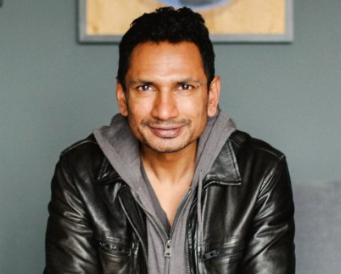
Raja Miah is a British-Bangladeshi Muslim who was awarded an MBE for his community work. For much of his life he worked to protect young people from extremism and to build better relations between different communities. But around 2019, something changed. He began to notice a pattern in the town of Oldham that he could not ignore — a pattern that linked local politicians, kinship networks, and the cover-up of child sexual exploitation. Since then, he has spent years writing and broadcasting about it through his platform, Red Wall and the Rabble.
He is not a journalist in the traditional sense. He has no newspaper behind him, no television channel, no powerful editor. He publishes his findings himself, for free, funded by ordinary readers. Senior Labour figures have called him dangerous. Police have raided his home. Politicians have tried to discredit him. Yet his core findings have never been genuinely disproved, and a national statutory inquiry into grooming gangs — which he helped force — is now underway.
What Is the Biraderi?
The word biraderi comes from Urdu. It means brotherhood. But it is much more than a word. It is a system — a way of organising life that has been carried from the villages of Mirpur and Azad Kashmir, a mountainous region of Pakistan, all the way into the towns of northern England.
The biraderi is built on kinship. That means family ties, clan loyalties, and obligations passed down through generations. If you belong to a biraderi, you look after your own. You support the men your elders tell you to support. You vote for the candidates your clan approves of. You show up at events, weddings, business openings, and community gatherings — not because you are told to in writing, but because everybody understands what is expected. And everybody understands the consequences of not complying.
Raja Miah describes it plainly. Nobody orders anyone to show up, he writes. The ask is understood. So are the consequences for staying away.
This system was transplanted into Britain as Pakistani communities settled in cities like Bradford, Rochdale, Oldham, and Rotherham over the course of four generations. It brought with it not just culture and community, but a ready-made structure for organising people — including at election time.
How the Biraderi Infiltrates Local Politics
The process by which the biraderi gains influence over council politics is gradual. It does not happen through a single dramatic takeover. It happens quietly, over years, through relationships and favours and the slow accumulation of power.
Here is how Miah describes it working:
Step one: establish community presence. Biraderi clans are already embedded in their local areas long before they become politically active. They run businesses, mosques, community centres, and social events. They are the people who can bring large numbers of people together at short notice. Political parties, especially Labour in northern towns, notice this and begin to court these community leaders.
Step two: deliver the votes. In communities organised around the biraderi, households do not necessarily vote as individuals. They vote as units. The head of a family or clan tells his household who to vote for, and they do. This is sometimes reinforced through the postal vote system. Miah has documented how postal votes can be harvested — collected from households by community figures — allowing a small number of people to control a large number of votes. This gave the biraderi something extraordinarily valuable: a reliable, deliverable bloc of votes that a political candidate could count on.
Step three: demand candidates and council seats. Once the biraderi can demonstrate that it delivers votes, it is in a position to negotiate. The next step is to put forward its own candidates. Labour, needing the votes to win in seats where white working-class support was declining, accepted this arrangement. Over time, candidates backed by biraderi networks began winning council seats across towns in northern England.
Step four: control patronage. With council seats come contracts, planning permissions, jobs, and influence over public services. The biraderi does not just decide who stands for election — it decides who gets the contract, who gets the call when a favour is needed. The council becomes another arena in which the kinship network operates, distributing resources among its own.
Step five: make dissent dangerous. Once the network holds enough power, challenging it becomes risky. Whistleblowers face social exclusion, threats, or accusations of racism. Politicians who raise concerns find themselves frozen out.
Miah himself describes a sustained campaign to silence him — arrests, harassment, threats to his family — which he believes was orchestrated by those with most to lose from his work becoming public.
Labour’s Role and Its Conflict of Interest
The Labour Party did not design this arrangement. But it allowed it to take hold, and in doing so it created a conflict of interest that had devastating consequences.
In northern towns where the white working-class vote was shrinking and Pakistani-heritage communities were growing, Labour became dependent on biraderi-delivered votes to hold its seats. This dependency meant that Labour politicians who knew about problems within those communities — including the organised sexual exploitation of young girls — had a powerful reason to stay quiet.
If you rely on a community’s votes to survive politically, you do not investigate that community. You do not prosecute its leaders. You do not ask difficult questions about its councillors. You look the other way, and you hope nobody notices.
Miah puts it starkly. Children were sold for votes, he writes. It is a brutal formulation, but the evidence supports the essential truth of it. In Rotherham, in Rochdale, in Oldham, police and council officials knew about the exploitation of young girls by networks of men from Pakistani-heritage communities. They documented it. They wrote reports. And then they buried those reports, fearing accusations of racism and, Miah argues, fearing the political consequences of acting.
The biraderi was not simply a background feature of this failure. It was central to it. The same network that delivered votes also protected the men involved in abuse. The same community power structures that placed candidates on council ballots ensured that uncomfortable questions were not asked and that those who asked them faced consequences.
The Evidence That Could Not Be Buried
What makes Miah’s work difficult to dismiss is that events have repeatedly confirmed his core argument.
West Midlands Police produced intelligence profiles in 2010 identifying organised networks of Pakistani men sexually exploiting girls in Birmingham.
By 2015, they had a confidential document identifying over 700 children at potential risk in that city alone, with 113 classified as high risk. None of this was made public. No inquiry was called. Birmingham MPs, including those who later became senior government ministers, were representing these constituencies throughout this period and called for nothing.
In Rotherham, the Casey Report confirmed that over 1,400 children had been abused over decades, and that the council and police had known and had chosen to do nothing. A convicted peer, Baron Nazir Ahmed, who had been jailed for child rape, was welcomed as a guest of honour at a property investment roadshow in Stockport attended by sitting Labour MPs and a deputy lord mayor. The promotional material naming these figures together remained publicly available online.
When a national inquiry was eventually announced — forced in part by the campaigning of Miah and others — survivors who joined the panel began to resign within weeks. They said the scope of the inquiry was being quietly changed to move away from grooming gangs and toward general child abuse. The government minister responsible told Parliament that this claim was untrue. Evidence then emerged that the survivors were telling the truth.
This is the pattern Miah has documented across years: suppression, denial, and then eventual confirmation.
Why His Critics Cannot Demolish His Case
The response to Miah from politicians and mainstream media has followed a consistent pattern. They attack him personally — calling him divisive, opportunist, or a threat to community relations. They point to his 2021 arrest, which led to no conviction. They cite MPs who condemned him in Parliament. They describe him as someone who exploits community tensions for personal gain.
What they do not do is engage with the substance of what he has found. They do not explain why police in Birmingham buried a report identifying 700 children at risk. They do not explain why a convicted child rapist was welcomed at an event attended by sitting Labour MPs. They do not explain why survivors resigned from the national inquiry panel and why the government minister’s denial of their claims proved to be false.
Calling someone divisive is not a rebuttal. It is an attempt to change the subject. And on the specific question of how the biraderi operates within British politics, Miah’s description has been corroborated not by his enemies but by the documented record of what actually happened in town after town across the north of England.
Conclusion
Raja Miah is a complicated figure working in a deeply uncomfortable space. He is a Muslim writing critically about Muslim community networks. He is a man awarded by the Queen for community service who has since been arrested and harassed. He is a grassroots campaigner who reached over a million viewers on social media before mainstream outlets would touch the story he was telling.
The biraderi, as he describes it, is not simply a cultural tradition. It is a political machine — one that gradually placed its own candidates in council chambers, made Labour dependent on its votes, and used that dependency to shield its members from accountability. The children who suffered most from that arrangement were poor, white, and working-class. They were, as Miah puts it, the forsaken.
The national inquiry he helped force is now underway. Whether it will go far enough remains to be seen. What is clear is that the picture he painted, year after year, from Oldham to Birmingham to Rochdale, has turned out to be substantially true — and that those who called him dangerous have yet to explain why
References
1.https://www.freespeechbacklash.com/article/raja-miah-divisive
2.https://www.redwallandtherabble.co.uk/pakistani-untouchables/
3.https://www.thelibertybeacon.com/the-pakistani-biraderi-network-is-protecting-muslim-rape-gang-perpetrators-in-the-uk/
4.https://rajamiah.substack.com/p/the-pakistani-paedo-promoting-party
5.https://open.spotify.com/episode/6KFwyk37VdjDqttQlclR5r
6.https://podcasts.apple.com/us/podcast/089-raja-miah-how-politicians-betrayed-grooming-gang/id1317356120?i=1000715476371
7.https://rajamiah.substack.com/p/the-second-citys-dirty-secret