THE ASIAN INDEPENDENT UK

Bal Ram Sampla
Geopolitics
There is a particular kind of political disappointment that cuts deeper than ordinary policy disagreement. It is the disappointment of communities who were told they mattered, who were courted with specific, personal pledges, and who then watched those pledges quietly dissolve once power was secured. For Britain’s Dalit and Sikh communities, that disappointment has become painfully familiar under the current Labour government.
The Dalit Community: Decades of Waiting
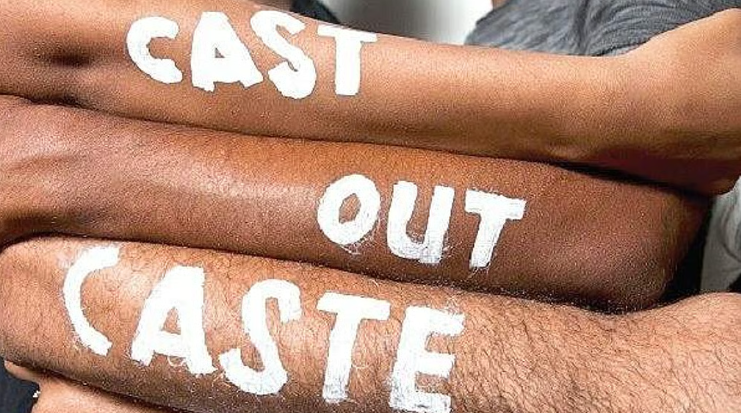
The story of caste discrimination legislation in the UK is one of the longest-running failures of political will in modern British equality law. It begins not with this Labour government, but stretches back far enough to implicate the entire political class and Labour bears a particular share of the blame.
As far back as 2010, when Labour passed its landmark Equality Act, the Dalit community pushed hard for caste to be included as a protected characteristic. An historic meeting in the House of Lords, attended by over 100 campaigners, urged the then Labour government to act. The Act passed with only a cautious “order-making power” a mechanism allowing a future minister to add caste protection if evidence warranted it, rather than the explicit, enforceable protection Dalits had sought. It was a half-measure dressed up as progress.
In 2013, Parliament went further: the Enterprise and Regulatory Reform Act imposed a legal duty on the government to make caste an aspect of race under the Equality Act. This was not a suggestion. It was a statutory obligation. Yet successive governments Conservative and now Labour have failed to fulfil it.
The scale of the problem is not trivial. Estimates suggest upto 500,000 Dalits live in the UK, facing discrimination in workplaces, educational institutions, healthcare settings, and social care, with no specific legal recourse. As the Dalit Solidarity Network has put it, without explicit caste protection in law, Dalit communities are denied their right to equality and dignity, with no appropriate recourse to justice.
When Labour returned to power in 2024, hope briefly revived. The party had promised a Race Equality Act in its manifesto. Dalit campaigners and allies like Labour MP Warinder Juss called again for caste to be included in the forthcoming equality legislation. But as the Equality (Race and Disability) Bill has taken shape, caste has been conspicuously absent from its provisions. The bill focuses on ethnicity and disability pay gap reporting, worthwhile, but far removed from the specific protections Dalits have been promised and denied for over a decade.
The government has shown no urgency to finally fulfil the 2013 statutory duty that Parliament placed on it.
This is not a new betrayal. But it is a betrayal nonetheless, made worse by the fact that Labour, when seeking South Asian votes, has been willing to speak the language of equality with great warmth.
The Sikh Community: Justice Traded Away
If the Dalit community’s grievance is rooted in years of legislative inaction, the Sikh community’s is more recent, more specific, and more raw.
Operation Blue Star — the Indian Army’s June 1984 assault on the Golden Temple in Amritsar, Sikhism’s holiest site , remains one of the most painful events in modern Sikh history. Hundreds, were killed. What has made the wound deeper for British Sikhs is the evidence, uncovered in declassified documents in 2014, that the Thatcher government secretly sent an SAS officer to advise Indian forces on conducting the operation months beforehand.
Every government since 2014 has faced calls for a full independent inquiry. The Heywood review, commissioned by David Cameron, was widely dismissed as inadequate, it had a narrow scope, significant conflicts of interest, and left key documents unexamined. Sikh groups have demanded a genuinely independent, judge-led inquiry ever since.
It was Labour, in opposition, that made the most explicit promise. In 2022, Keir Starmer personally wrote to Gurdwaras and Sikh organisations across the country pledging that a future Labour government would “open an independent inquiry into Britain’s military role in the Indian army’s 1984 raid on the Golden Temple.” His deputy Angela Rayner reiterated the commitment as recently as June 2024, saying Labour stood with the Sikh community in calling for an inquiry.
Then came the general election and the promise vanished from Labour’s manifesto entirely.
Since taking office, Foreign Secretary David Lammy reportedly failed to respond to five letters from the Sikh Federation on the matter. Now, according to Sky News sources, the inquiry is unlikely to proceed at all , with concerns about damaging UK-India relations, strengthened by a major new trade deal signed with Modi’s government, cited as the reason.
Over 450 UK Gurdwaras and Sikh organisations have written to the Prime Minister demanding action. The Sikh Federation has warned of a “no platform” policy against Labour MPs who fail to support the inquiry. The language could not be clearer: this is a community that feels not just disappointed, but betrayed.
A Pattern, Not a Coincidence
Taken separately, each of these failures might be explained away as the inevitable compromises of governance. Taken together, they reveal something more troubling: a pattern in which Labour actively courts South Asian minority communities with the language of justice and dignity, then allows those promises to erode when they come into tension with other political priorities, in one case, the pressure of Hindu nationalist-aligned lobbying against caste legislation; in the other, the economic prize of a trade deal with India.
This is not simply about broken promises in the “abstract”. For Dalit communities, the absence of legal protection means real people continue to face discrimination in their workplaces and communities with no proper recourse. For Sikh communities, the abandonment of the inquiry means the truth about British complicity in a massacre at their holiest site, on one of their holiest days remains officially unacknowledged.
Both communities were told they mattered. Both communities are learning, again, that the political calculus shifts when the cameras are off and the votes are counted.
Labour has historically been the party these communities turned to, believing it stood for the marginalised, the overlooked, and the historically wronged. The question now being asked, with justifiable anger, is: who exactly does it stand for when standing for them becomes inconvenient?
Reference
1.https://youtube.com/shorts/y6brY5WbfmQ?si=PcA3YKeMgDCmikr6
2.https://www.opendemocracy.net/en/why-is-uk-government-wheeling-back-on-legislation-against-caste-discrimination/
3.https://greatdriffieldradio.co.uk/uk/more-than-400-sikh-groups-call-on-starmer-to-launch-promised-inquiry-on-golden-temple-massacre/
5.https://slguardian.org/thatchers-role-in-golden-temple-massacre-sparks-inquiry-calls/