THE ASIAN INDEPENDENT UK
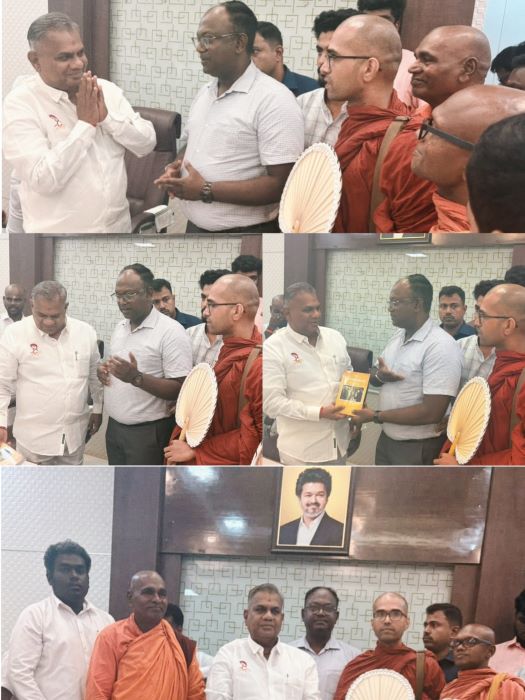
On 8 June 2026, leaders of the South Indian Buddhist Council (SIBC) paid a courtesy visit to Mr. M. Ravi Shankar, Deputy Speaker of the Tamil Nadu Legislative Assembly, and Mr. Bussy N. Anand, Minister for Rural Development and Water Resources in the Government of Tamil Nadu.
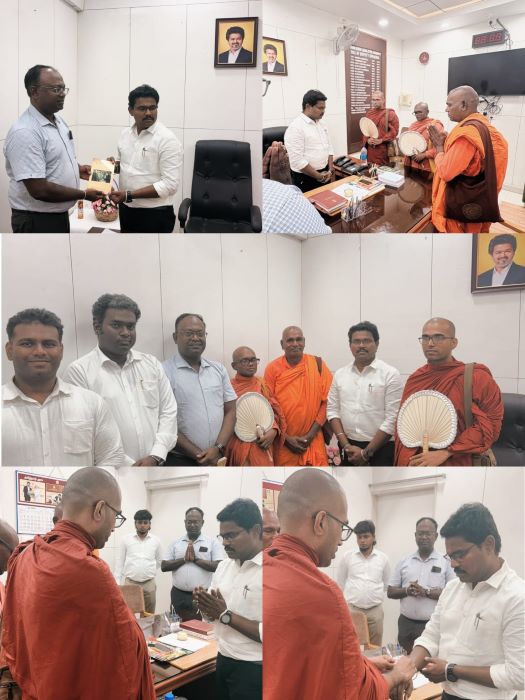 The SIBC delegation was led by Mr. N. Gauthama Prabhu, Chairperson of SIBC, and included Venerable Bhikkhu Sumedha, Venerable Bhikkhu Soratha, Venerable Bhikkhu Kanchi Bodhidhamma, Advocate Sakthi Pavalavel, and Advocate Gowtham Ganesh of the Madras High Court.
During the meeting, the Buddhist monks shared the Buddha’s teachings on ethical leadership and good governance. In the Buddhist tradition, monks do not bestow blessings for political power, electoral victory, or personal success, nor do they offer political endorsements. Rather, they provide guidance and blessings that encourage righteous conduct, wisdom, compassion, and the welfare of all people. The team presented the constitution of India by highlighting the Buddha’s teaching on the Dasa Raja Dhamma (Ten Duties of a Righteous Ruler), a timeless framework for ethical governance and public leadership:
• Dāna – Generosity and public service.
• Sīla – Moral conduct and ethical behaviour.
• Pariccāga – Self-sacrifice for the common good.
• Ājjava – Honesty, integrity, and transparency.
• Maddava – Gentleness, humility, and respect.
• Tapa – Self-discipline and restraint.
• Akkodha – Freedom from anger and ill will.
• Avihiṃsā – Non-violence and compassion towards all beings.
• Khanti – Patience, tolerance, and perseverance.
• Avirodhana – Upholding justice, fairness, and the welfare of the people.
During the interaction, the political leaders and members of the delegation also reflected on the historical and social significance of Buddhism in India. In this context, Mr. M. Ravi Shankar referred to Dr. B. R. Ambedkar’s well-known observation that Indian history may be understood as “a mortal conflict between Buddhism and Brahmanism.” This statement has had a significant influence on modern interpretations of India’s social, religious, and political history.
The monks expressed their aspiration that public representatives and government leaders be guided by these enduring principles in serving society, promoting social harmony, and advancing the welfare of all citizens.
As part of the traditional Buddhist benediction, the monks offered the following blessing:
“May you be established in Dhamma. May you govern with wisdom rather than passion, with compassion rather than prejudice, and with justice rather than favouritism. May your actions contribute to the welfare, happiness, and security of all beings.”