THE ASIAN INDEPENDENT UK

By Vidya Bhushan Rawat*
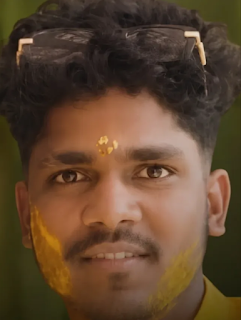
A caste-based murder that has shocked the nation has taken place in Uttarakhand. An 18-year-old boy, Ketan Lal, from the Shilpkar community—the commonly used name for Dalits in Uttarakhand—was allegedly called to his girlfriend’s home in Tehri town in the middle of the night. The girl reportedly belonged to a Rajput family.
Ketan’s Brahmin friend, Diwakar Dimri, took him to the girl’s house on his motorcycle. According to reports, both young men were caught by the girl’s father, Yashvir Singh Panwar, and his father, and were locked inside a room. Both were beaten, but the most brutal assault was allegedly inflicted on Ketan.
According to a report in the Hindustan Times, the post-mortem examination revealed several disturbing findings:
– Deep bruises covering his back, chest, and limbs.
– Pliers were allegedly used to pull out his fingernails and toenails.
– Nails were driven into his feet.
– Severe injuries were inflicted on his genitals.
Both Ketan and his friend were assaulted with sticks.
There is widespread outrage over the extreme brutality of the crime. The police have arrested the accused, Yashvir Singh Panwar and his father. It has also been reported that Diwakar was severely beaten and admitted to a hospital in Rishikesh. However, some people have expressed doubts and suspect that Diwakar may have acted as a conduit for Yashvir Panwar in bringing Ketan to the house. The sad reality is that caste polarization has become so intense that many people have lost their sense of reason. The police must investigate the case honestly and examine every possible angle. Diwakar should be provided protection, as he is a crucial witness and may possess important information about the incident.
The problem in Uttarakhand is that cases registered under the Scheduled Castes and Scheduled Tribes (Prevention of Atrocities) Act rarely reach their logical conclusion. In fact, this is the situation in much of India. I have observed cases in Uttar Pradesh where the primary effort of governments and even some lawyers appears to be securing compensation for victims’ families rather than ensuring justice. As cases drag on for years, public interest fades, and families are often forced to accept the harsh reality that the legal system moves painfully slowly.
Violence against Dalits and caste discrimination in the so-called Devbhumi remain alarmingly high and require urgent attention. I have always maintained that if Uttarakhand can free itself from its deeply entrenched and often brutal caste discrimination, it could truly become a “Devbhumi.” However, as long as society continues to function according to Brahmanical doctrines of hierarchy and exclusion, it risks social unrest in the future.
The key question is how seriously Uttarakhand’s politicians and civil society will take this case. Will they come out on the streets and publicly condemn this barbaric crime? We know that violence against Dalits rarely becomes a major news story in Uttarakhand. In many villages of Jaunsar, Dalits are still denied entry into temples. The SC/ST Act is often not implemented effectively in the district because the entire Jaunsar region has been designated a Scheduled Tribe area. Consequently, violence against Dalits in the region remains high and frequently goes unreported by the media.
Political activist Jagadish Chandra, who belonged to the Shilpkar community, was allegedly murdered by his father-in-law in Almora because of his relationship with the latter’s daughter. The murder took place around September 1, 2022, yet little is known about the current status of the case. It is a serious failure that Uttarakhand still lacks dedicated special courts for such cases. The government should establish special courts and set strict timelines for the disposal of cases involving caste-based violence.
While such incidents are neither new nor entirely surprising, they are a stark reminder that India has yet to become a casteless society. Caste remains one of the most effective tools for social and political mobilization, and many politicians continue to exploit it. Inter-caste marriages are often viewed as threats to the purity of the caste system. Dr. B.R. Ambedkar believed that inter-caste marriages could help strengthen social unity, but today many laws and social practices seem designed to discourage challenges to caste hierarchies. Individuals are increasingly denied the freedom to make decisions about their own futures. Our marriage system remains deeply hypocritical and often fails to respect individual choice and autonomy.
Ketan has been murdered. Sadly, he is not the first person to lose his life because of love. Whether the girl genuinely loved him or not remains unclear. The fact that she allegedly called him to her house in the middle of the night has led some to suspect that it may have been a trap, and therefore all relevant facts should be thoroughly investigated. I have seen many instances where young women eventually compromise under family pressure.
I have tremendous respect for Kowsalya of Coimbatore, whose husband, Sankar, was brutally murdered by her parents because he was a Dalit while she belonged to a dominant backward caste community. Kowsalya chose to stand with her husband’s family and fought courageously for justice. She endured social ostracism but challenged both caste oppression and patriarchy. Today, she has dedicated her life to the cause of women’s rights and social justice in Tamil Nadu.
Will the girl who called Ketan to her house speak out? Will the Uttarakhand Police conduct an honest investigation and take the case to its logical conclusion? Much depends on how political parties, civil society organizations, and the media respond—and whether they continue to pursue justice after the initial public outrage fades.
So far, the record of the state apparatus in addressing violence against Dalits has been disappointing and offers little reason for optimism. Nevertheless, public pressure must continue. Devbhumi must become an “Insanbhumi”—a land of human dignity—and not remain trapped within the narrow confines of a brutal hierarchical caste system. The time has come to embrace constitutional morality, which recognizes the right of every individual to make their own choices and live with dignity.
Will India ever fully accept this principle? Claims of being the world’s largest democracy often ring hollow when individuals are denied the freedom to choose whom they love or marry. Let us see how the administration and the state government handle this case. Ketan deserves justice.
If society truly does not want entire castes to be stigmatized, then members of those communities must speak out against such acts of violence and openly reject those who commit them. Silence only strengthens the culture of impunity.