THE ASIAN INDEPENDENT UK

Bal Ram Sampla
Geopolitics
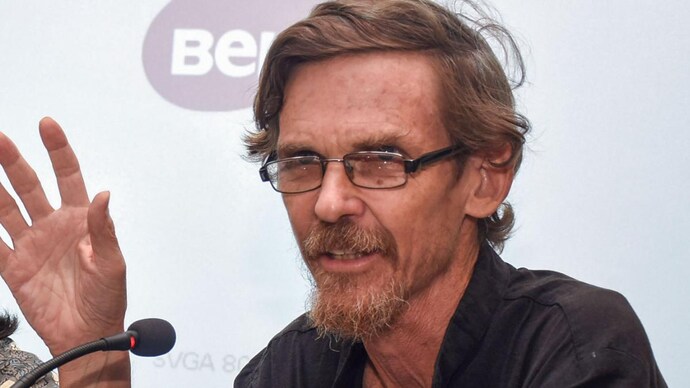
Jean Drèze is not the kind of economist who sits in a comfortable office and studies poverty from a distance. Born in Belgium in 1959, he came to India as a young man, fell in love with the country, gave up his Belgian citizenship, and became an Indian citizen in 2002. He has spent decades living and working in some of India’s poorest regions particularly Jharkhand , walking into villages, sitting with tribal and Dalit communities, and asking a simple but powerful question: are government policies actually reaching the people who need them most?
He studied at the University of Essex and did his PhD at the Indian Statistical Institute. His most important intellectual partnership has been with Nobel Prize winning economist Amartya Sen. Together, they wrote landmark books like Hunger and Public Action and An Uncertain Glory: India and its Contradictions, which changed how people think about poverty, hunger, and development in India.
In June 2026, he was awarded the Global Inequality Research Award at the World Inequality Conference in Paris, a recognition long overdue.
The Big Idea Behind His Work
Most economists measure a country’s success by how fast its economy grows. Drèze asks a different question: who benefits from that growth, and who is left out?
India has one of the fastest-growing economies in the world. But Drèze has spent his career showing that economic growth alone does not end hunger, does not educate children, does not keep women safe, and does not feed the poorest families. He has argued, with careful data and field evidence, that the state has a responsibility to actively reach the most excluded people, those outside the caste system like Dalits and Adivasis, women, the elderly, and the landless poor
His Greatest Contributions:
1. The Right to Food and the Public Distribution System
Drèze has been one of India’s most persistent voices for the right to food. He was centrally involved in the Right to Food Campaign, a nationwide movement that pushed the Indian government to treat food not as charity but as a legal right.
His research exposed how millions of the poorest families, particularly Dalits and tribal communities were being denied food rations through the public distribution system due to bureaucratic failures, corruption, or exclusion by Aadhaar authentication.
He conducted field surveys in Jharkhand, Chhattisgarh, Odisha, and other poor states, producing hard evidence of starvation deaths and malnutrition that could not be ignored.
This advocacy directly contributed to the passing of the National Food Security Act in 2013, which gave two-thirds of India’s population a legal right to subsidised food grains.
2. MGNREGA — Giving the Poor the Right to Work
Perhaps Drèze’s single most important contribution to policy is the Mahatma Gandhi National Rural Employment Guarantee Act (MGNREGA). He did not just support this law , he conceptualised it, drafted its first version, and fought for it to become reality.
MGNREGA guarantees every rural household in India 100 days of paid work per year. At its heart, it was designed for those with nothing, landless labourers, Dalit and Adivasi communities, and women who had no other source of income. At its best, it has provided a crucial safety net for hundreds of millions of people.
Drèze has also been a watchdog for this law , opposing attempts to weaken or repeal it, and criticising the government when wages are delayed or work is denied.
3. Child Nutrition and the Mid-Day Meal Scheme
India has some of the worst child malnutrition rates in the world, worse than many much poorer African countries. Drèze has researched this crisis deeply, showing it is not just about poverty but about how the state delivers (or fails to deliver) nutrition to children.
He was a strong advocate for the Mid-Day Meal Scheme, which provides free cooked meals to children in government schools. His research showed this scheme not only reduced hunger but also increased school attendance, particularly among girls and children from Dalit and tribal communities.
4. Jharkhand and India’s Most Vulnerable Tribal Communities
Drèze moved to Ranchi, the capital of Jharkhand, because that is where some of India’s most excluded people live. He has researched the Particularly Vulnerable Tribal Groups (PVTGs), communities so marginalised that even within the tribal world, they are the most forgotten.
His field surveys documented how these communities were being excluded from welfare programmes through Aadhaar authentication failures — people dying or going hungry because a fingerprint scanner wouldn’t recognise their worn hands. He has been a fierce critic of using Aadhaar as a compulsory gateway to food and employment entitlements.
5. Education for the Poorest Children
Drèze co-authored a major 2022 report on the schooling crisis in Jharkhand, focusing on schools where Scheduled Caste and Scheduled Tribe children make up the majority. It found schools with a single teacher, crumbling infrastructure, and pandemic-induced learning losses that had never been addressed.
His work consistently brings attention to the fact that India’s education system serves the wealthy well and the poor very badly and that Dalit and Adivasi children bear the greatest burden of this failure.
Why He Is Different
What sets Jean Drèze apart from most economists is that he combines rigorous research with genuine activism. He does not just publish academic papers. He organises public hearings in remote villages, trains local volunteers to conduct surveys, and campaigns directly for policy change.
He has also been remarkably humble. When he received the Global Inequality Research Award, he said: “This recognition is not something I achieved on my own. All the work I do is in collaboration with people and collectives working for change.”
He has lived simply, close to the communities he studies, and has spent his career in solidarity with the people most economists only write about from afar.
What He Has Taught India
Jean Drèze has taught India several things that seem obvious but are too easily forgotten:
(I) Growth without equity is not development. A country where billionaires multiply while tribal children starve is not succeeding.
(II) The poor are not passive victims. They are rights-holders, and the state has legal and moral obligations to them.
(III) Data must come from the ground. Real knowledge about poverty requires going into villages, not just reading government statistics.
(IV) Caste and exclusion are economic issues, not just social ones. Dalits and Adivasis, communities placed outside the caste system entirely — face a specific and severe form of economic exclusion that requires specific policy responses.
Conclusion
Jean Drèze is that rare thing: an economist with both a brilliant mind and a conscience to match. He has spent his life asking who gets left behind when India celebrates its growth story, and he has done something about it. The laws he helped shape — MGNREGA and the National Food Security Act have touched the lives of hundreds of millions of people.
The Global Inequality Research Award is recognition not just for an academic career, but for a life devoted to the idea that the poorest, most excluded people in India deserve dignity, justice, and a seat at the table.
As Ambedkar knew, and as Drèze has spent his career demonstrating, that dignity cannot be assumed, it has to be fought for, measured, and legislated into existence.
References
1.https://globalactiononpoverty.wordpress.com/experts-onboard/jean-dreze/
2.https://ruralindiaonline.org/en/library/resource/gloom-in-the-classroom-the-schooling-crisis-in-jharkhand/
3.https://idronline.org/contributor/jean-dreze/
4.https://madhyamamonline.com/india/economist-jean-drze-honoured-with-global-award-for-research-on-poverty-and-inequality-in-india-1527144
5.https://www.researchgate.net/scientific-contributions/Jean-Dreze-20450810