SAMAJ WEEKLY UK
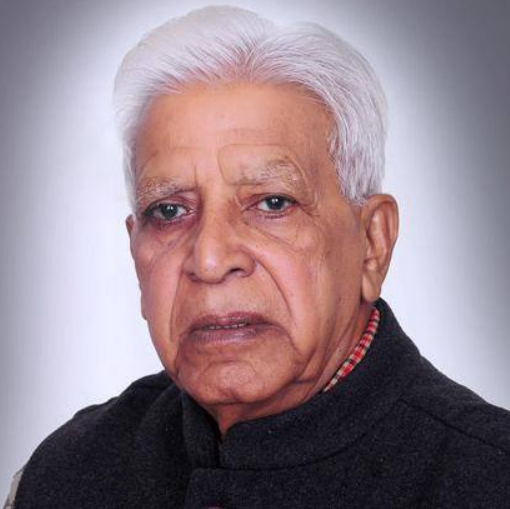
DR RAMJILAL,
Social Scientist and Former Principal,
Dyal Singh College, Karnal (Haryana, India).
Email.id.[email protected]
Haryana, a region rich in historical significance, has been shaped by various religions and castes, particularly since the era of the Mahabharata. Among these groups, the Other Backward Classes (OBC) constitute a significant demographic, accounting for approximately 34% of the state’s population of 2.82 crore. The OBC category includes around 78 distinct castes, which are entitled to a reservation of 27% in jobs and educational institutions throughout Haryana. These OBCs are further divided into two subgroups: OBC Block A (16%) and OBC Block B (11%).
The OBC population is subject to an income limit for the ‘creamy layer’, currently set at ₹8 lakh. OBC Block A comprises about 18.93% of the total state population, while OBC Block B makes up around 15.05%. Their primary occupations include agriculture, dairy farming, transportation, small-scale industries, government services, and various roles in the private sector.
Despite their substantial numbers, a review of data as of 2026 shows that the representation of OBCs in various sectors is disproportionately low. Many government initiatives designed to assist these communities have encountered implementation challenges. Additionally, while some local leadership has emerged, its influence on policymaking is often limited.
A critical issue is the internal disparity within the OBC category. Although certain castes within the OBC-B sub-group exhibit improved participation in education, administration, and political spheres, those in the OBC-A subcategory continue to face considerable obstacles. This situation highlights the need for a comprehensive survey and potential sub-categorisation of OBCs to ensure equitable distribution of benefits. Furthermore, some castes within the OBC framework are landless and struggle with unstable employment opportunities.
Agriculture plays a vital role in Haryana’s economy, with 55% of OBC families involved in farming and animal husbandry. However, increasing family fragmentation and a shift towards nuclear households are leading to smaller landholdings. The average landholding for an OBC farmer is about 1.5 acres, which is significantly less than the state average of 2.4 acres. This trend positions many OBC farmers in marginal and small-scale categories, hindering their ability to adopt modern agricultural practices. As farming becomes less profitable, many are forced to migrate to urban areas in search of better employment.
Currently, around 67% of OBC farmers are classified as marginal or small-scale, placing them on the fringes of the socioeconomic spectrum. In urban areas, approximately 40% of the OBC population works in the unorganised sector, taking jobs as auto-rickshaw drivers, workers in roadside eateries, and employees in small factories. These roles often provide limited access to capital, insurance, and government support.
The employment landscape presents a growing crisis affecting not only OBC youth but also all young people in the state. Data from the Centre for Monitoring Indian Economy (CMIE) indicates an unemployment rate of 14.7% among OBC individuals aged 18–29, compared to a state average of 12.1%. Many degree holders in Haryana find themselves unemployed due to a lack of reservation policies in the private sector and for contractual appointments.
Although there has been a rise in enrolment in educational institutions, the quality of education has stagnated. OBC enrolment in primary education stands at a notable 98%, but this number declines sharply to just 31% after Class 12. In competitive examinations for fields such as engineering, medicine, and civil services, the success rate for the general category is below 40%. Factors contributing to this decline include deteriorating educational standards, financial constraints, limited access to coaching and guidance, and challenges in the home environment.
The implementation of 27% reservation for OBCs was initially announced by then-Prime Minister V.P. Singh on August 7, 1990, followed by an official notification on August 13, 1990. This decision faced judicial review in the Supreme Court case of Indra Sawhney. & Others v. Union of India on November 16, 1992. A nine-judge bench upheld the 27% reservation while capping total caste-based reservations at 50%, with subsequent government notifications confirming this ruling on September 13, 1993.
According to the Census of India, the populations of Scheduled Castes (SC) and Scheduled Tribes (ST) are recorded at 16.6% and 8.6%, respectively, while Other Backward Classes (OBC) account for 52% of the nation’s total population. This distribution has led to a reservation quota of 50% for SC, ST, and OBC categories combined, which together represent 74.12% of the population. In contrast, the general category, which encompasses 25.28% of the population, was also allocated 50% of the available seats. However, the introduction of the ‘creamy layer’ rule has diluted the reservation policy, posing challenges for backward classes. Despite this, debates around caste-based reservations continue, yet many Members of Parliament (MPs), Members of Legislative Assembly (MLAs), national media representatives and intellectuals seem to remain silent on critical issues. These include payment-based reservations for Non-Resident Indians (NRIs) in medical and professional courses, service extensions and post-retirement re-employment within the bureaucracy, lateral entry into civil services, and hiring practices in universities that prioritise professional experience over academic qualifications.
Between 1993 and 2024, several chief ministers from the general category—namely Bhajan Lal, Bansi Lal, Om Prakash Chautala, Bhupinder Singh Hooda, and Manohar Lal Khattar—served in Haryana, yet none effectively implemented the Supreme Court’s directives concerning reservations. During this period, Haryana’s reservation quota was set at a mere 15%. This changed in mid-2024 when Manohar Lal Khattar was succeeded by Nayab Singh Saini, an OBC leader. In a strategic move aimed at consolidating voter support ahead of the elections, Saini announced that the reservation limit would increase from 15% to 27%, and the income ceiling for the ‘creamy layer’ would rise from ₹6 lakh to ₹8 lakh. This adjustment is anticipated to extend reservation benefits to approximately 4.5 lakh more families, potentially enhancing electoral support for the BJP.
The increase in the ‘creamy layer’ income threshold, excluding salary and agricultural income from the calculation, is a significant change. The government has allocated between ₹900 crore and ₹1.2 lakh to assist 1.2 lakh students under the post-matric scholarship scheme, facilitating their admission into educational institutions. However, while financial support is crucial, it does not ensure academic success. Therefore, it is proposed that the government create residential coaching centres and counselling cells in every administrative division. This initiative aims to bolster the OBC community’s skill sets, though appointments within these centres should be based solely on merit, devoid of political influence. Regular evaluations and inspections by a government-formed expert committee, predominantly comprising OBC members, are also recommended.
Despite the increase in reservation quotas within the administration, proportional representation has faced challenges. The Haryana government currently employs around 3.6 lakh regular staff alongside 1.1 lakh personnel from the Haryana Kaushal Rozgar Nigam (HKRN). Previous OBC representation stood at 15% among Group A and B officers and 27% among Group C and D employees. New announcements from the government aim to achieve 27% representation across all groups, including a special recruitment drive to address backlog vacancies for the BC-A and BC-B categories, potentially creating 6,400 new positions and filling 6,000 backlog vacancies.
However, the current situation reveals lower than expected OBC representation in higher administrative roles, with estimates indicating they make up only 9% to 11% of Group A and about 13% of Group B positions. Historical data from the Haryana government (2003-2016) reflects that OBC representation in government jobs is significantly less than that of SCs. Current figures for 2023-24 indicate a total workforce of 413,733 in the government sector and factories, 1,310,533 employees in organised sectors, and 66,865 across various public corporations and agencies. However, There is a lack of specific breakdowns by OBC and SC categories. In light of this, the Haryana government has subdivided the SC category into ‘Other SC’ and ‘Deprived SC’, dedicating 10% of the 20% quota to the latter. It is suggested that a similar ‘Most Deprived’ sub-category within the OBC group be established, along with a corresponding special quota.
Enrolment in educational institutions has seen a significant increase; however, the quality of education has not improved. In Haryana, the enrolment of Other Backward Classes (OBC) students in primary education has reached an impressive 98%. Despite this achievement, data from UDISE Plus for 2024-25 shows that OBC enrolment at the secondary and higher secondary levels is considerably lower, with figures standing at 27.7% for grades 9–10 and 27.9% for grades 11–12. The transition rate from primary to higher secondary education is just 29.2%, which is significantly below the national average at all educational levels.
This situation raises serious concerns since education is crucial for progress. Success rates in competitive examinations—such as those for engineering, medicine, and civil services—remain below the 40% threshold observed in the general category. Although the Haryana Government has initiated several measures to address these issues, their effectiveness has been limited. Contributing factors include declining educational standards, insufficient coaching and career guidance, challenging home environments, and issues such as parental unemployment and financial difficulties.
Moreover, the employment crisis is affecting youth broadly, with severe implications for both OBCs and other categories. According to CMIE data, the unemployment rate among OBC individuals aged 18–29 is 14.7%, which exceeds the state average of 12.1%. To address this issue, there is a call for reservation policies that reflect the OBC population share, advocating for their implementation in contractual appointments across schools, colleges, and universities and within the private sector.
The OBC community in Haryana seeks representation that accurately reflects its population size, rather than just sympathy. It is essential to implement the 27% reservation quota and address the backlog of vacancies. Furthermore, it is recommended that the Haryana government publish an annual report on this matter every August 15th. Initiatives should include educational and skill development missions, granting outstanding OBC students access to free coaching, laptops, and placement assistance. Additionally, the establishment of an ‘OBC Enterprise Fund’ of ₹500 crore is proposed to provide interest-free loans of up to ₹25 lakh.
To reduce internal competition and foster unity, quarterly dialogues involving the BC-A and BC-B categories are also suggested. Ultimately, the OBC community is vital to Haryana’s development, and genuine progress can only be achieved through the proper implementation of government initiatives. Reservation should be recognised as a right for underprivileged sections, rather than as an act of charity. Achieving these rights requires awareness, organisation, unity, and active struggle.
Read At:
>https://samajweekly.com/objectives-of-the-constitution-of-india/
>https://samajweekly.com/regarding-unreserving-reserved-seats
>https://www.indiatoday.in/magazine/cover-story/story/19901015-storm-created-by-mandal-commission-poses-serious-threat-to-vp-singh-political-survival-813100-1990-10-14
>https://www.newindianexpress.com/india/2024/Dec/06/63-experts-appointed-via-lateral-entry-from-2019-to-2023-center-tells-parliament
>https://indianexpress.com/article/india/india-others/sunday-story-mandal-commission-report-25-years-later
>https://sundayguardianlive.com/legally-speaking/creamy-layer-classification
>https://samajweekly.com/regarding-unreserving-reserved-seats >https://navbharattimes.indiatimes.com/india/reservation-history-in-india-why-renew-after-10-years-now-sc-saying-for-time-limit/articleshow/95372768.cms
>जयप्रकाश नारायण—-.https://janchowk.com/beech-bahas/pm-modis-attack-on-constitutional-values-and-democratic-institutions/
>https://www.business-standard.com/elections/lok-sabha-election/modi-govt-used-privatisation-as-weapon-to-weaken-reservations-ramesh- 124042800459_1.html
>https://www.thehindubusinessline.com/economy/fall-in-number-of-sanctioned-posts-persons-in-central-govt-civilian-jobs-finance-ministry-report/article66980341.ece
>https://theleaflet.in/over-60-lakh-central-and-state-govt-posts-lying-vacant
>https://www.deccanherald.com/india/karnataka/more-than-60-lakh-vacancies-in-centre-state-govts-psus-commission-1160312.html 7
> Dainik Tribune,( Chandigarh),29 May,2024,p.12
>https://samajweekly.com/other-backward-classes-are-not-easy-in-haryana/
>https://theasianindependent.co.uk/extremely-backward-classes-should-get-social-rights/
>https://hastakshep.com/aapki-najar/west-bengal-obc-reservation-17-to-7-percent-analysis-307887
>https://haryanascbc.gov.in/reservation-in-haryana/list-of-backward-classes
>https://prsindia.org/files/bills_acts/acts_states/haryana/2016/Act%20No.%2015%20of%202016%20Haryana.pdf
>https://nhmharyana.gov.in/WriteReadData/Guidelines/NHMInstructions/Reservationpolicy.pdf
>https://sewa.haryana.gov.in/organization/haryana-backward-classes-commission/
>https://csharyana.gov.in/WriteReadData/Instructions/Human-Resources-III/15989.pdf
>https://indianexpress.com/article/cities/chandigarh/haryana-govt-increases-reservation-for-obc-category-income-limit-9410992/
>https://www.thehindu.com/news/national/haryana/haryana-hikes-creamy-layer-ceiling-adds-new-obc-quota-ahead-of-polls/article68410811.ece
>https://samajweekly.com/dr-bhimrao-ambedkar-in-the-context-of-deprived-scheduled-castes/
>https://theasianindependent.co.uk/reservation-and-social-justice-a-review/
>https://samajweekly.com/reservation-and-social-justice/
> https://pratibimbmedia.com/reservation-and-social-justice-a-review/
>https://theasianindependent.co.uk/extremely-backward-classes-should-get-social-rights
>https://educationforallinindia.com/share-of-udise-2024-25-obc-enrolment-in-indias-school-education-system/
>Haryana Increases Reservation for OBCs In Government Jobs https://www.ndtv.com/india-news/haryana-government-increases-reservation-for-obc-5954088
>https://theprint.in/politics/how-haryana-quota-for-backward-class-sub-category-in-municipal-polls-could-help-bjp-in-2024/1567881/
>https://timesofindia.indiatimes.com/city/chandigarh/haryana-cm-increases-reservation-for-obcs/articleshow/111211250.cms