
THE ASIAN INDEPENDENT UK
By Vidya Bhushan Rawat*
05/05/2026
The election outcomes in the five states are deeply disturbing and disappointing. Before analysing them based on the ‘available’ data, a few points need emphasis.
The first and foremost issue is that of ‘fair play’ and the impartiality of institutions. The SIR process has been used to deny voters their right to vote. In a democracy, people have the right to vote, and when they are systematically denied this right, it must be questioned. The role of the Supreme Court on this issue, as well as many others, does not inspire confidence about the future. The Election Commission provided data at its convenience rather than according to established norms. In the first phase, high voter turnout data was available from the morning, but in the second phase, such data did not come through consistently.
The second issue concerns the BJP and Hindutva. It is a fact that the BJP and Hindutva remain widely accepted ideologies among the masses, including Savarnas, backward classes, Dalits, and Adivasis. To describe the BJP today merely as a party of Bania-Marwadis supported by Brahmins is an oversimplification. However, it must also be recognised that the BJP has altered the power dynamics of Indian politics, shifting influence from Brahmins to Banias and Marwadis. The support of India’s business tycoons and their media houses, which often function as spokespersons for the BJP, indicates that Brahmin, Bania, and other Savarna communities are solidly behind the party.
The third point is that the BJP and Hindutva have mastered the art of managing contradictions. While Savarnas are their strongest supporters, they have also secured a significant share of Dalit, Adivasi, and OBC votes—something other parties have failed to achieve.
Despite full institutional backing, the questionable SIR process, and the redrawing of constituencies, electoral victories still require substantial public support. The BJP’s continued acceptability among the masses means that these additional advantages only strengthen its base and widen its winning margins.
The losses the BJP suffered in the 2024 Lok Sabha elections now appear to have been fully recovered, and the 2028 elections seem a foregone conclusion. With more than 75% of India under its influence, the BJP may be set for a long-term dominance, similar to the Congress in the first three decades after independence.
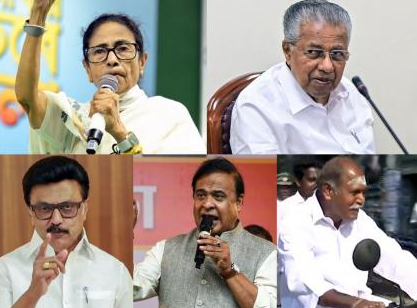
The biggest shock comes from Tamil Nadu, where the DMK was defeated. The personal defeat of Chief Minister M. K. Stalin and his highly capable IT minister shows that governance alone is not sufficient in politics. Stalin provided a competent administration and worked hard, yet many Dalits in Tamil Nadu felt isolated and let down during his tenure. There were no significant efforts to reach out to them. Another failure was the lack of a sustainable alliance with the Congress, VCK, and the Left; they remained merely electoral partners and were not given adequate representation in governance. Although the DMK performed well administratively, the coalition lacked cohesion on the ground, as allies had little say in governance. The distrust between the Congress and the DMK was evident, and there was no joint campaign by Rahul Gandhi and M. K. Stalin. Nevertheless, Tamil Nadu remains a role model in many respects. The DMK, with its century-long legacy rooted in Periyar’s Self-Respect Movement, is a cadre-based party and should not lose confidence. Electoral setbacks are part of democracy. Regional parties in Tamil Nadu must preserve their autonomy.
In West Bengal, the Trinamool Congress and Mamata Banerjee have not accepted the defeat, alleging that the BJP has “stolen” the election. She faced one of the toughest battles of her political life, with the entire electoral machinery seemingly aligned against her. Polarisation in Bengal is now a reality, and the BJP also advanced its agenda among non-Bengali migrants. While there were concerns about the misuse of central forces and the lack of judicial intervention on SIR-related issues, the defeat was not entirely unexpected. Many observers believe that Trinamool’s aggressive stance against the Left and Congress inadvertently helped the BJP gain ground. Mamata Banerjee had earlier aligned tactically with the BJP and Hindutva to weaken the Left, and later fragmented the Congress. Her political strategy assumed that Muslims and Dalits would eventually consolidate behind her party. However, outreach to Dalits and Adivasis remained limited, with the party focusing primarily on Muslims. The historical impact of Partition, particularly on communities like the Matuas, continues to shape political behaviour in the region.
The Congress-led UDF victory in Kerala was anticipated. Governance in Kerala remained largely consistent. It would be beneficial for the Congress and other parties to preserve democratic space for secular forces, as attempts to undermine them may only increase the BJP’s acceptability in such regions.
In Assam, polarisation appears complete, alongside the Congress party’s failure to cultivate strong local leadership. Gaurav Gogoi performed well in Parliament but could not inspire electoral confidence. The Congress had already lost several senior leaders in Assam before the elections. The party’s inability to manage its leadership, along with the imposition of ineffective “observers” and “experts,” reflects an ongoing internal weakening. Rahul Gandhi’s limited campaigning in Assam also raises questions, possibly indicating overreliance on local leadership.
Regional parties are steadily being marginalised, paving the way for the dominance of national parties. A broader trend is emerging in which smaller players are being eliminated. With the number of independent candidates reduced to negligible levels, regional dynasties may also face decline. The DMK is likely to endure due to its strong ideological and organisational foundation. Its defeat does not signify a rejection of the Dravidian model or Periyar’s vision but points more to issues of management and implementation. The Congress must play a unifying role by bringing parties together. The concerns raised by Rahul Gandhi regarding “vote theft” and delimitation are serious and deserve attention.
For the Congress, this is a moment for introspection. While it is positive that Rahul Gandhi is emphasising social justice, the party must also address immediate, pressing issues. Overemphasis on the caste census alone will not yield electoral gains unless it is backed by broader social movements around justice and unemployment. Imposing agendas without grassroots mobilisation is unlikely to succeed. The Congress must collaborate with other parties, ensure fair representation, and continue to question institutional impartiality. The INDIA alliance must remain united, focus on regional strengths, and finalise seat-sharing arrangements well in advance of future elections.
Victory and defeat are integral to the electoral process, but the autonomy and impartiality of institutions are crucial for the survival of democracy in India. These results not only reflect political trends but also reveal how elections are increasingly shaped by media, money, machinery, and management. This is a matter of serious concern and demands reflection.