THE ASIAN INDEPENDENT UK

Bal Ram Sampla
Geopolitics
Dr. BR Ambedkar: The Man Who Loved Animals
On the tender, forgotten side of Dr. B. R. Ambedkar
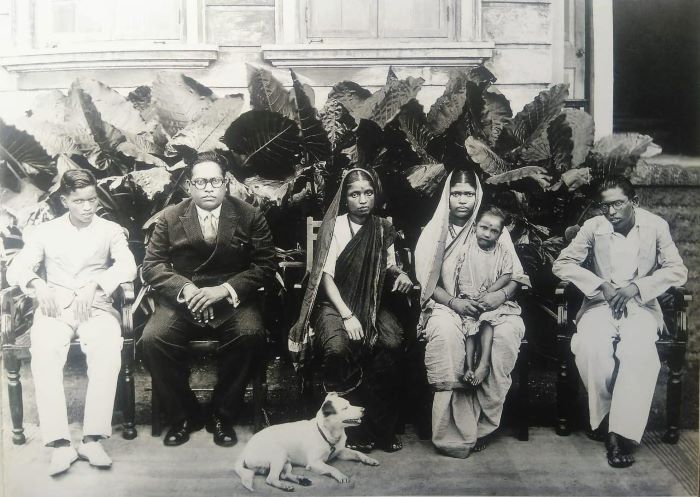
There is a photograph that not many people talk about. Dr. B. R. Ambedkar stands with his family at Rajgruha, his home in Bombay. Beside them, looking up with quiet devotion, is a fox terrier named Tobby. The photograph is from 1934. The man in it had already faced a lifetime of humiliation, had crossed oceans to educate himself, had fought systems that treated his people as less than human. And yet here he is, standing next to a dog, in the way that people stand next to someone they love.
 It began early. When young Bhim was barely twenty years old, his family lived in a tiny chawl in Parel, Bombay — two small rooms shared by nearly a dozen people. In those cramped quarters, they also kept a she-goat. We do not know her name. We do not know what she looked like. But we know that Ambedkar remembered her. He mentioned her in his speeches, years later, long after he had left that chawl behind. Some memories stay not because they are grand, but because they are warm.
He loved dogs above all other animals. His personal assistant, Nanak Chand Rattu, who stayed with him until his final days, wrote that Ambedkar would bring dogs from the farthest corners of the country if a good breed caught his eye. He would pay any price. Whenever he travelled, he left instructions with the servants to care for the dogs. He would phone to ask after their health. Coming off a plane, before anything else, he would look for his dog.
There was Tobby, the fox terrier. When Tobby hurt his paw in a door, Ambedkar sent him to the veterinary hospital and visited twice a day. When Tobby died, the people around Ambedkar did not know how to console him. Rattu wrote that he rolled in his chair “like a bereaved mother,” and for days he would walk to the spot where Tobby used to lie, and simply stand there, and whisper — Poor Tobby.
Then there was Peter. He came into Ambedkar’s life as the puppy of Jeel, a beloved dog owned by his close friend Barrister M. B. Samarth. When Jeel died, Ambedkar took one of her puppies home to Rajgruha as a way of keeping some part of her alive. He named the puppy Peter. It was the act of a person who understood grief, and who knew that love can be carried forward.
And then there was Mohini.
 Mohini had brown, silky hair and long, flowing ears. She was, by all accounts, full of life. Every morning, without fail, she would pad quietly into Ambedkar’s room, wag her tail, and raise her paw — as if to shake hands, as if to say: it is morning, and I am here. Ambedkar would put down whatever he was reading, take her into his lap, and say: “So, you are here to tell me this is morning. You are so good. Alright, now go and have your milk.”
He called her Bhikni. A small, private name, used only at home.
 During the years between 1947 and 1950, when Ambedkar was drafting the Constitution of India — working sixteen to eighteen hours a day, his body failing him, his legs in constant pain, unable to sleep for days at a stretch — Mohini would lie at his feet through the night. She would wriggle and roll beside him while he wrote. He would reach down and pat her gently. In the quiet of those long nights, when the weight of a nation rested on one man’s exhausted shoulders, a dog lay beside him. That is not a small thing.
His tenderness extended beyond the animals he kept. He filled water feeders for sparrows and migratory birds in his garden. And there is one detail, almost too small to mention, that says everything. Whenever he clipped his nails, he collected every single clipping in a piece of cloth and disposed of them carefully — so that a small bird would not accidentally swallow one and be hurt.
Think about that for a moment. This was a man drowning in the work of building a just nation, a man in physical pain, a man surrounded by political enemies. And he was carefully collecting his nail clippings so that birds would be safe.
Dr. Ambedkar believed deeply in the Buddhist idea of Maitri — a word that goes beyond love. It means fellowship with all living beings. Not just the people who look like you, not just the people who vote for you, not just the people who need your laws. All living beings.
He had earned the right to be hard. Life had given him every reason to build walls. And yet he took puppies home to remember dogs that had died. He visited sick animals in hospital. He wept for a fox terrier. He watched out for sparrows.
The man who gave India its Constitution also gave a dog named Mohini her morning milk, and called her by a nickname, and let her sleep at his feet while he wrote through the night.
Source
Dr. SPVA Sairam. “Maitri, The Kindness That Shaped Ambedkar”
https://www.theculturecafe.in/p/guest-post-maitri-the-kindness-that