
THE ASIAN INDEPENDENT UK

Bal Ram Sampla
Geopolitics
Political Analysis
21st April 2026
In British politics, honour and accountability are supposed to mean something. When a Prime Minister makes a catastrophic misjudgement, fails the public, and then stands at the despatch box unable — or unwilling — to give a straight answer, the country has every right to ask: what exactly is this man made of?
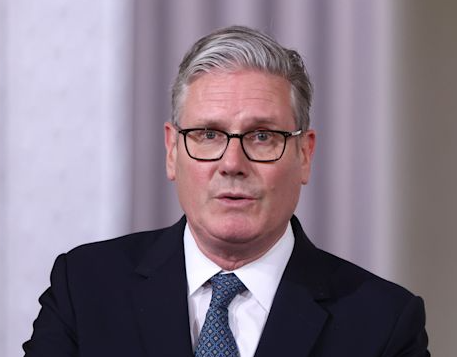
The Peter Mandelson vetting scandal has laid bare something millions of ordinary people already suspected about Sir Keir Starmer. This is a Prime Minister who does not take responsibility. He takes cover.
The Mandelson Affair: A Failure He Cannot Escape
The facts are not in dispute. Peter Mandelson, a man with a long and controversial political history, was appointed UK Ambassador to the United States by Starmer. He failed security vetting. The Prime Minister claims he was never told.
Let that sink in. The man who appointed Mandelson, defended him publicly, and sent him to represent Britain on the world stage, now claims he knew nothing of his failure to pass the most basic security checks. The public are not fools. They can see exactly what this is — a Prime Minister trying to have it both ways: take the credit when it suits, and pass the blame when it does not.
A man of genuine honour would have resigned. Not because the rules demand it, but because integrity demands it. That is what honour looks like. Starmer chose a different path.
PMQs: The Weekly Theatre of Evasion
Week after week, MPs and the public watch the same performance at Prime Minister’s Questions. A question is asked. A question is not answered. Something else is said instead — usually an attack on the opposition, a pre-rehearsed line, or a statistic carefully stripped of all context.
This is not political skill. This is contempt — contempt for Parliament, and contempt for the millions of people who watch at home and deserve honest government. Evasion dressed up as statesmanship is still evasion. And after a while, the public stops mistaking it for anything else.
Sultana and Anderson: Speaking for the Country
On Monday, two MPs from very different political traditions — Zarah Sultana of Your Party and Lee Anderson of Reform UK — said out loud what their constituents have been saying around kitchen tables for months. They called the Prime Minister a liar. They refused to withdraw it. And they paid the price, both suspended from the House of Commons.
Whatever one thinks of their parties or their politics, their actions reflected something important: they were not speaking for themselves. They were speaking for the people who sent them there. Constituents who feel ignored, lied to, and let down do not want their MPs to deploy carefully worded procedural objections. They want someone to stand up and say what everyone already knows.
Both MPs showed more courage in those brief moments than the Government has shown in months of press conferences, statements, and Parliamentary appearances combined.
Dianne Abbot: The Question That Said Everything
If Sultana and Anderson were the thunder of Monday’s session, Diane Abbott was the lightning. The veteran independent MP — a former Labour stalwart who knows Starmer’s methods better than most — cut through all the noise with a single, forensic question that no one in Government could answer.
“It’s one thing to say nobody told me,” Abbott said. “Why didn’t the Prime Minister ask?”
Nine words. That is all it took to expose the hollowness of Starmer’s defence. Here was a Prime Minister who built his entire reputation on being forensic — a former Director of Public Prosecutions, a lawyer’s lawyer, a man who prides himself on examining every detail. Yet when it came to appointing one of the most controversial figures in British political history to one of the most sensitive diplomatic posts in the world, he apparently asked no questions at all.
Abbott did not shout. She did not need to be removed by the Speaker. She simply held a mirror up to the Prime Minister’s claims and let the reflection speak for itself. That is what real accountability looks like. That is what Parliament is supposed to do.
Abbott went further outside the chamber, telling Sky News that it is “just not possible that No 10 didn’t know” and that the Prime Minister must consider his position if he misled the House. Coming from a veteran Labour MP who has sat through decades of political crises, those words carry enormous weight.
The Speaker’s Role: Rules, or Protection?
Sir Lindsay Hoyle insists he was applying the rules equally. The parliamentary convention against calling a fellow member a liar is longstanding, applying to all parties and all Prime Ministers. That much is true.
But the public ask a fair question: when the rules of Parliament are used to silence the very language the public uses every day to describe what they see, whose interests are those rules truly serving? There is something deeply “uncomfortable about a Parliament that protects its own decorum more fiercely than it demands accountability from those who govern”.
Procedural rules exist to enable scrutiny — not to shield leaders from it.
A Question of Character
Leadership is not just about policy. It is about character. It is about whether the person at the top, when things go wrong, looks in the mirror or looks for someone to blame.
By that measure, Starmer has failed a fundamental test. The Mandelson appointment was his decision. The failure to know about the vetting collapse was his failure. The months of defending Mandelson publicly while security concerns reportedly circulated was his responsibility. Yet in the Commons on Monday, the Prime Minister was “staggered”, “unaware”, blameless.
The public have heard this script before. From other Prime Ministers, in other scandals, about other failures. It never gets more convincing with repetition.
Conclusion: Honour Has a Price
A Prime Minister of genuine honour and integrity, facing this level of scandal, this degree of public mistrust, and this volume of unanswered questions, would consider whether they are still the right person for the job. They would ask themselves whether staying in office serves the country or merely serves themselves.
Starmer shows no sign of asking that question. He has apologised — again — in carefully managed language that accepts responsibility in tone while avoiding it in substance. He has blamed officials. He has blamed systems. He has blamed the process.
He has not blamed himself.
Two MPs stood up in Parliament and said what the country is saying. They were thrown out for it. The Prime Minister remained. And in that moment, Parliament told us everything we need to know about where power truly sits — and who it protects.
The country deserves better. It knows it. And so, deep down, does he.
References
1.https://www.lbc.co.uk/article/yourparty-mp-zarah-sultana-removed-from-commons-after-branding-starmer-a-bare-fa-5HjdY2g_2/
2.https://www.gbnews.com/politics/video-zarah-sultana-suspended-speaker-keir-starmer-barefaced-liar
3.https://youtu.be/zpQ9AvkkrR4?si=N2EmCBATNMDrOU24
4.https://edition.cnn.com/2026/04/20/uk/keir-starmer-mandelson-epstein-vetting-intl
5.https://morningstaronline.co.uk/article/pressure-mounts-pm-resign-over-mandelson-appointment