

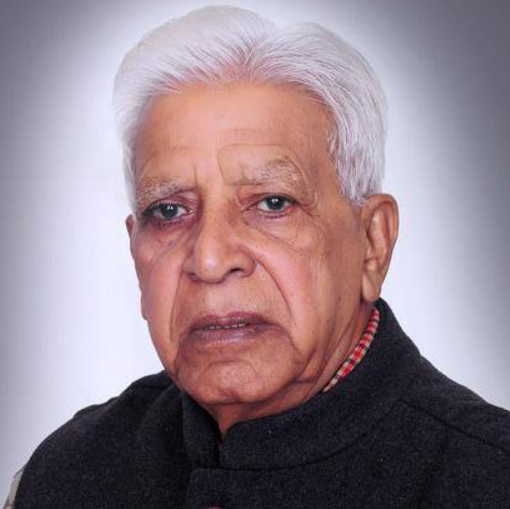
Dr RAMJILAL, Social Scientist and former Principal, Dyal Singh College, Karnal. (Haryana-India)
email. [email protected]
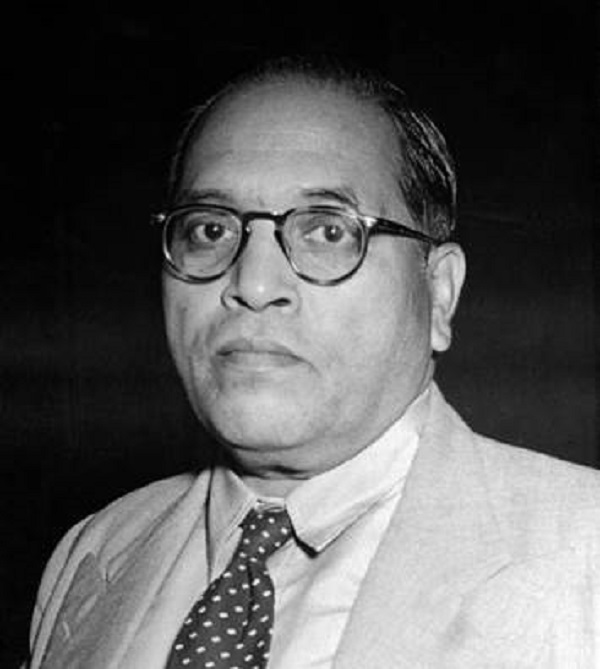
(Asian independent) Brief: India’s democratic journey cannot be assessed solely through elections, economic growth or the formal equality guaranteed by the Constitution. It must also be judged by the everyday experiences of communities historically subjected to caste-based exclusion, humiliation and violence. Dr Bhimrao Ramji Ambedkar understood that political democracy could not survive sustainably without social and economic democracy. His struggle against untouchability was therefore not simply a campaign for social reform; it was a challenge to the structures of power that denied millions of people dignity, education, access to resources and equal citizenship.
Caste-based discrimination has changed its outward forms, but its consequences remain visible in education, employment, housing, land ownership, sanitation work, political representation and access to justice. Constitutional safeguards and protective legislation have created important avenues for emancipation, yet implementation remains uneven. The central question is whether India is moving from the formal abolition of untouchability towards the substantive equality that Ambedkar envisaged.
Keywords: B. R. Ambedkar, caste, untouchability, Dalits, Article 17, Scheduled Castes, social justice, constitutional democracy.
Details:
1. The Varna System and the Historical Development of Caste:
The relationship between varna and jati requires historical care. The fourfold varna framework—Brahmin, Kshatriya, Vaishya and Shudra—appears in ancient Indian textual traditions. The actual social organisation of the subcontinent, however, developed through numerous jatis, regional communities, occupational groups and changing hierarchies. These categories did not form one uniform system throughout Indian history. Untouchability became associated with the exclusion and stigmatisation of communities assigned occupations considered polluting, including the handling of human waste, animal carcasses and other forms of stigmatised labour. The origins and historical development of these practices remain subjects of scholarly debate.
2. Dr Ambedkar and the Varna System: Destructive, Violent, Exploitative, and Extremely Dangerous:
Ambedkar wrote very clearly about ‘Hindu society’ in the editorial (31 January 1920) of the first issue of his first Marathi fortnightly newspaper Mooknayak (The Leader of the Voiceless):
‘Hindu society is a tower, and each caste is a floor of this tower. It is worth noting that this tower does not have stairs; there is no way to go from one floor (caste) to another. Whoever is born in a particular caste dies in the same caste. No matter how capable a person from the lower caste is, he can’t enter the upper caste, and no matter how unworthy a person from the upper caste is, no one dares to push him to the lower caste”.
Dr Ambedkar considered the Varna and the caste (Jati) system to be destructive, violent, exploitative, and extremely dangerous. He said that this system developed conservatism, superstitions, and such traditions, which resulted in the exploitation of the working class. The protectors of this system have destroyed humanity by exploiting the common man, especially the Dalits, and enslaving people. The enslaved people kept getting their heads chopped off by their own weapons, kept doing slavery, kept producing crops by ploughing, and kept dying of hunger themselves. This system never gave time to convert the ploughshares into swords. They did not have any weapons or organisation. This system reduced the Dalits and the weak to a moribund state and destroyed their power to revolt. As a result, India never witnessed a social revolution as it did in European countries. Dr Ambedkar believed that until a social revolution takes place in India, exploitation will not end despite many laws and provisions of the Constitution, and the Dalits and the working class (proletariat class) will continue to be exploited. In short, the Dalits and the exploited class, that is, the working class, were exploited, are exploited, and will continue to be exploited.
3. Dr Ambedkar and the Annihilation of Caste:
Dr Bhimrao Ambedkar has had a profound impact on marginalised communities worldwide, providing them with inspiration and guidance. Throughout his life, Ambedkar wrote extensively on 64 subjects, with a primary focus on the structural foundations of caste. One of his most significant contributions is *Annihilation of Caste*, written in 1936 for the Jat-Pat-Todak Mandal conference. This influential text critiques the caste system as a form of graded inequality. Although the speech was never delivered due to objections from the organisers, Ambedkar chose to publish it independently in 1937, leading to its recognition as a foundational work in modern anti-caste thought.
In addition to *Annihilation of Caste*, Ambedkar authored several other important texts related to caste and the varna system, including ‘CASTES IN INDIA: THEIR MECHANISM, GENESIS AND DEVELOPMENT’ (1916), which he presented at an Anthropology Seminar at Columbia University. Other key works include ‘Shri Gandhi and the Emancipation of the Untouchables’ (1942), ‘What Did Congress and Gandhi Do for the Untouchables?’ (1945), and ‘Who is Untouchable and How?’ (1948). Ambedkar famously stated that “Untouchability is worse than slavery,” characterising untouchability, which stems from casteism, as narrow, inhuman, unscientific, immoral, and divisive.
Ambedkar’s arguments transcended the mere abolition of untouchability. He viewed caste not simply as a series of prejudices but as an institutional system governing social relations through hereditary status, endogamy, and graded hierarchy. As a result, he believed that eliminating untouchability alone would not dismantle the caste system’s underlying structure. This perspective sets him apart from approaches that primarily seek to reform how the oppressed are treated within the existing social framework.
Ambedkar rejected explanations that treated caste as merely a division of labour. In Annihilation of Caste (1936), he argued that caste was a division of labourers, organising people into graded social groups and restricting their freedom to choose occupations, form relationships and participate equally in society. In his analysis, caste was sustained not only by economic arrangements but also by social rules, religious authority, endogamy and inherited status. He argued that political reform could not eradicate caste if society continued to regard caste hierarchy as legitimate.
Ambedkar’s approach was radical because he placed the experience of the oppressed at the centre of social analysis. He demanded equal access to public resources, education, employment and political power. His goal was not simply to make the treatment of excluded communities more humane while preserving inherited hierarchy; it was to transform the social order through liberty, equality and fraternity.
4. Reservation in Education, Public Services and Legislatures serves as an instrument of substantive equality: Historical Exclusion to Inclusion:
Reservation serves as an instrument of substantive equality rather than a substitute for improving the quality of education or creating employment opportunities. It addresses historical exclusion, under-representation, and barriers that go beyond individual qualifications. In public employment, Article 16 provides the constitutional framework for reservation, with provisions subject to specific clauses and judicial interpretations. Articles 15(4) and 15(5) allow for special provisions in education, while Article 16(4A) pertains to reservation in promotions for Scheduled Castes and Scheduled Tribes under constitutional conditions. Articles 330 and 332 ensure reserved legislative representation, while Articles 243D and 243T extend reserved representation to local government.
Reservation in legislatures grants historically excluded communities from a formal presence in democratic institutions. However, representation does not automatically translate into independent political power. Members elected from reserved constituencies may encounter party discipline, limited resources, or pressure from dominant local groups. Meaningful representation demands political education, transparent candidate selection, the freedom to voice community concerns, and accountability to constituents. Moreover, reserved seats cannot substitute for broader social alliances and the ongoing struggle against caste discrimination in society.
5.Supreme Court Decisions and the Meaning of Constitutional Protection:
Several Supreme Court decisions illustrate the ongoing challenge of transforming constitutional promises into enforceable rights. In *State of Madhya Pradesh v. Ram Krishna Balothia* (1995), the Court upheld the constitutional validity of important provisions of the SC/ST (Prevention of Atrocities) Act, acknowledging the seriousness of caste-based atrocities and the necessity for special legal measures.
In *Safai Karamchari Andolan v. Union of India* (2014), the Court tackled the persistent issue of manual scavenging and emphasised the importance of implementing the 2013 legislation. It issued directives regarding the identification and rehabilitation of manual scavengers and compensation for families of individuals who died during sewer work. This judgment underscores that simply prohibiting occupational caste stigma is insufficient; it highlights the need for dignified alternative livelihoods and effective rehabilitation.
In *Subhash Kashinath Mahajan v. State of Maharashtra* (2018), the Court continued to address these critical issues. The Court issued directions concerning arrests and preliminary inquiries under the Atrocities Act. Parliament subsequently amended the law, and in Prathvi Raj Chauhan v. Union of India (2020), the Court considered the amended provisions and upheld the relevant statutory framework. Together, these developments illustrate the tension between preventing misuse of criminal law and ensuring that procedural barriers do not weaken protection for victims. The governing law must be stated with reference to the relevant statutory amendments and later judgments, rather than relying on an isolated decision.
6. Crimes Against Dalits and the Particular Vulnerability of Dalit Women:
National Crime Records Bureau data provide an important, though incomplete, picture of recorded crimes. According to the Crime in India 2023 data published through the Government of India’s Open Government Data platform, 57,789 cases of crimes and atrocities against Scheduled Castes were recorded in 2023, compared with 57,582 in 2022. This represents a small increase in registered cases. These figures should not be interpreted as a complete measure of the prevalence of caste violence. Reporting practices, police registration, access to complaint mechanisms and public awareness influence the numbers; changes in recorded cases may reflect changes in reporting as well as changes in actual incidence.
Dalit women may face overlapping discrimination based on caste, gender and class. Sexual violence, threats, social boycott, labour exploitation and intimidation can be compounded by economic dependence and unequal access to police, medical care and legal assistance. A victim may also encounter pressure to withdraw a complaint or accept an informal settlement. The intersection of caste and gender therefore requires more than a general policy for women or a general policy for Scheduled Castes. It requires gender-sensitive policing, prompt medical and legal support, witness protection, safe accommodation where necessary, compensation, rehabilitation and accountability for officials who neglect their duties.
A rise in recorded crimes is a warning that requires investigation, not a reason to dismiss the value of official statistics. Equally, a fall in registrations does not necessarily prove that violence has declined. Governments should publish transparent data on investigations, charge-sheets, trials, convictions, acquittals, case duration, compensation and rehabilitation. Such information would help distinguish better reporting from worsening violence, and identify where the justice system is failing.
7. Neoliberalism, Privatisation and Dalit Education and Employment:
India’s economic reforms, initiated in 1991 and expanded in subsequent decades, increased the role of markets, private investment and competition in many sectors. These changes have generated new opportunities for some people, including entrepreneurs and skilled workers from historically marginalised communities. Their effects, however, have been uneven. The relevant question is not whether every market reform has harmed Dalits, but whether economic restructuring has expanded or restricted their effective access to education, secure employment, assets and social mobility.
Reservation in public employment operates within the applicable constitutional and statutory framework. As employment shifts towards private enterprises, informal work, contractual arrangements and subcontracting, a growing share of workers may be employed in settings where the public-sector reservation system does not apply in the same way. The consequence can be a gap between constitutional representation in covered public employment and access to emerging areas of economic activity. This issue calls for reliable data on caste, recruitment, promotion, wages, job security and ownership rather than unsupported assumptions.
In education, greater reliance on private provision and household spending may intensify barriers for poor and first-generation learners. Tuition fees, coaching costs, digital devices, internet access, English-language learning, transport, accommodation and the loss of income when a young person studies can all influence educational participation. Students from disadvantaged households may be forced to combine paid work with study or leave education early. At the same time, public institutions and targeted support have enabled many Dalit students to enter higher education and professional fields. The impact of neoliberalism must therefore be assessed through disaggregated evidence on enrolment, retention, completion, debt, institutional quality and employment outcomes.
A rights-based response would strengthen public schools and universities, fund scholarships and hostels adequately, ensure timely disbursement, improve digital access, prevent caste discrimination on campuses and expand affordable vocational and professional education. Public procurement and entrepreneurship support can help disadvantaged groups access markets, while social security and labour protections are essential for workers in insecure employment. Economic growth should be judged not only by aggregate output but also by who gains from it.
8. Commissions, Institutional Accountability and the Way Forward:
The National Commission for Scheduled Castes, parliamentary committees, government departments and expert bodies have roles in monitoring safeguards and recommending corrective measures. Their reports should inform policy on education, employment, atrocities, manual scavenging, representation and implementation of protective legislation. The government must respond to recommendations through measurable action rather than treating reports as administrative formalities. Data should be disaggregated by gender, region, rural and urban location, disability and relevant socioeconomic indicators wherever feasible and lawful.
The priorities are clear: enforce anti-untouchability and atrocity laws; improve investigation and trial capacity; protect complainants and witnesses; end manual scavenging and hazardous sewer cleaning through technology and rehabilitation; ensure scholarships and quality education; strengthen reservation and representation within the constitutional framework; expand secure employment; and address landlessness, housing discrimination and unequal access to credit. Dalit women must participate in designing and evaluating programmes that affect them. Civil society, trade unions, teachers, journalists and democratic political organisations also have a responsibility to challenge caste prejudice rather than normalise it.
9. Relevance: The Social Transformation:
Ambedkar’s significance extends beyond the text of the Constitution; it encompasses the social transformation he advocates. His ideas caution against conflating formal rights with actual equality. While untouchability can be legally abolished, caste discrimination can still persist in areas such as housing, education, employment, and social relationships. Reservations may provide access to institutions, yet unequal educational opportunities can hinder individuals from succeeding. Economic growth can generate wealth, but it often leaves vulnerable workers in unstable jobs. Addressing these contradictions requires evidence-based approaches, democratic mobilisation, and public accountability.
India will truly honour Ambedkar not just by commemorating his birth anniversary or quoting his words, but by ensuring that a person’s caste does not dictate the quality of education they receive, the work they perform, the safety they experience, the justice they attain, or the political voice they possess. The goal is to transition from constitutional equality on paper to social justice in practice, moving from exclusion to inclusion in order to strengthen unity and cohesion within society.
References:
1.Ambedkar, B. R. (1936). Annihilation of caste. Government Central Press. (See also the Columbia University-hosted text: https://ccnmtl.columbia.edu/
2.Ambedkar, B. R.(1916).’CASTES IN INDIA: THEIR MECHANISM, GENESIS AND DEVELOPMENT’
which he presented at an Anthropology Seminar at Columbia University.
3.Ambedkar, B. R. (31 January 1920), First editorial, ‘ Hindu society’, Mooknayak (The Leader of Voiceless):
4.Ambedkar, B. R.(1942). Shri Gandhi and the Emancipation of the Untouchables’ (1942),
5.Ambedkar, B. R. (1936). Annihilation of caste. Independent Labour Party.
6.Ambedkar, B. R. (1942). What Did Congress and Gandhi Do for the Untouchables?’
7.Government of India. (1950). The Constitution of India. Legislative Department, Ministry of Law and Justice. –Articles 14–17, 21, 23, 46, 335 and 338.
8.Government of India. (1955). The Protection of Civil Rights Act, 1955.
Government of India. (1989). The Scheduled Castes and the Scheduled Tribes (Prevention of Atrocities) Act, 1989. India Code. https://www.indiacode.nic.in/
9.Government of India. (2013). The Prohibition of Employment as Manual Scavengers and their Rehabilitation Act, 2013.
10.Indra Sawhney v. Union of India, 1992 Supp. (3) SCC 217 (Supreme Court of India).
11.M. Nagaraj v. Union of India, (2006) 8 SCC 212 (Supreme Court of India).
12.Jarnail Singh v. Lachhmi Narain Gupta, (2018) 10 SCC 396 (Supreme Court of India).
13.Prathvi Raj Chauhan v. Union of India, (2020) 4 SCC 727 (Supreme Court of India).
14.Safai Karamchari Andolan v. Union of India, (2014) 11 SCC 224 (Supreme Court of India).
15.State of Madhya Pradesh v. Ram Krishna Balothia, (1995) 3 SCC 221 (Supreme Court of India).
Subhash Kashinath Mahajan v. State of Maharashtra, (2018) 6 SCC 454 (Supreme Court of India).
16.National Crime Records Bureau. (2026). Crime in India 2023: Crime/atrocities against Scheduled Castes. Government of India, Ministry of Home Affairs. Open Government Data Platform India. https://www.data.gov.in/
17.Lal,Ramji,Dr.(26.2.2025).In Dr.Bhimrao Ambedkar’s Thinking, Casteism is a Destructive obstacle in Nation-Building—An Analysis https://samajweekly.com/in-dr-
18.Lal, Ramji,Dr.(January 5, 2025). Forword of the book on Ambedkar
Reflection of Dr. Bhim Rao Ambedkar’s Ideology in English Literature: A Critical Evaluation/https/theasianindep
19.Lal, Ramji,Dr.(20/2/2023).https//sa
20.Lal,Ramji,Dr. (May1.2025).hptts/heasianindep
21.Lal,Ramji,Dr.(20/2/2023).
22.Lal, Ramji,Dr.(26/07/2023). Philosophy of Dr. Bhimrao Ambedkar in the context of deprived scheduled castes: A reconsideration and relevance in the present context https://samajweekly.com/dr-
23.Lal, Ramji, Dr. (6 May 2026) Ambedkarite Thought – Challenges before an Equality and Justice-based Alternative, Dainik Tribune, Chandigarh p.6 {(लाल, रामजी,डॉ.( 6मई 2026).अंबेडकरवादी चिंतन -समता व न्याय आधारित विकल्प के समक्ष चुनौतियां, दैनिक ट्रिब्यून,चंडीगढ़ पृ.6}
24.Lal,Ramji,Dr. ( 05/10/2026).//https://
25.Lal, Ramji,Dr. (October 10,2026). Bhagat Singh, Mahatma Gandhi, and Dr B. R. Ambedkar’s views on untouchability: A comparative study. Samaj Weekly. https://samajweekly.com/
26.Lal, Ramji,Dr. (October 10,2026). Bhagat Singh, Mahatma Gandhi, and Dr B. R. Ambedkar’s views on untouchability: A comparative study. The Asian Independent. https://theasianindependent.
(11 October, 2026 Pratibimb Media).
27.Lal, Ramji,Dr.( 11 October, 2026Pratibimb Media). https://pratibimbmedia.com/dr-