

Balram Sampla
Geopolitics

Geopolitics
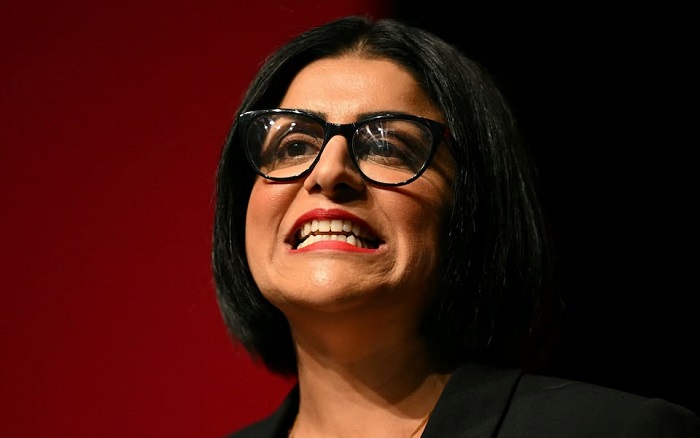
(Asian independent) When Shabana Mahmood assumed office as Home Secretary, the political establishment promised a new era of administrative competence. A firm hand at the helm of border security, public safety, and statutory accountability. Yet, a look at her record reveals a tenure marked by performance over substance, bureaucratic inertia, and a reliance on empty rhetoric while systemic crises continue to mount.
From the handling of human trafficking networks in the English Channel to internal Cabinet squabbling over net migration and the delayed response to group-based child sexual exploitation, the Home Office under Mahmood has demonstrated that rhetoric does not substitute for decisive action.
Rhetoric vs. Reality on Border Control and Labour Visas
The Home Secretary’s public messaging on migration highlights a core disconnect between ministerial tough talk and actual policy delivery. In recent public appearances, Mahmood has frequently condemned human traffickers, acknowledging that criminal gangs operate horrific smuggling networks that subject vulnerable migrants, particularly women to widespread sexual violence and abuse.
However, recognizing the problem is not a substitute for solving it. While Mahmood speaks forcefully on podcasts and at party conferences about “restoring fairness and control,” small-boat crossings persist, and smuggling operations along the French coast continue with near-impunity.
This disconnect is further compounded by recent admissions regarding legal migration. In a revealing interview with The Telegraph, Mahmood lamented that cabinet colleagues continuously lobby her to “hand out more visas” for foreign workers, treating immigration as a cheap “lever that is easy to pull” rather than training British workers.
While Mahmood uses these disclosures to project an image of a minister resisting economic reliance on foreign labour, it ultimately exposes a government working at cross-purposes. By airing internal cabinet squabbles instead of enforcing a coherent strategy across government, the Home Office demonstrates administrative paralysis.
For all the Home Secretary’s complaints about colleague requests, the overall visa numbers and border policy continue to reflect mixed signals and indecision.
The Grooming Gang Inquiry: A Forced Hand and Delayed Action
Perhaps the most glaring failure of Mahmood’s tenure is the government’s handling of child sexual exploitation (CSE). The Home Office’s decision to establish a statutory national inquiry into grooming gangs was presented as a landmark effort to deliver justice. In truth, it was a policy concession forced upon a reluctant administration by mounting parliamentary pressure, public outrage, and the damning findings of independent audits like that of Baroness Louise Casey.
For years, senior political figures including Mahmood in her role as MP for Birmingham Ladywood resisted calls for a comprehensive, national investigation, arguing that local reviews and existing policing mechanisms were sufficient. When the government finally conceded, the resulting inquiry was given a multi-year timeline, effectively pushing accountability and concrete action years into the future.
While Mahmood points to expanded terms of reference examining the role of race, culture, and institutional cover-ups, survivors are left waiting for court convictions rather than procedural updates. Setting up a three-year panel with a £65 million budget serves as a political buffer, allowing ministers to claim action while deferring immediate judicial and institutional reckoning.
The Illusion of Toughness
Critics from across the political spectrum increasingly agree that Mahmood’s “earned settlement” proposals and crackdown on legal visa routes are exercises in public relations rather than structural reform. By tinkering with leave-to-remain timelines and issuing threat-laden warnings to foreign nations regarding returns, the Home Office attempts to cultivate a tough image. Yet, when pressed before parliamentary committees or faced with opposition within her own party, plans are routinely watered down or delayed under the guise of ongoing consultations.
When a Home Secretary relies on media appearances to project firmness while public order, criminal backlogs, and border enforcement flounder under administrative division, the public is left with a stark conclusion: Mahmood’s tenure is defined not by action, but by lip service. Until the Home Office delivers swift criminal prosecutions for gang-based abuse and real control over national borders, her record remains a model of institutional failure.
Reference
1.Grooming Gangs enquiry: Shabana Mahmood Confronted by Early Prisoner Release
https://youtu.be/UX_0Yfjiefg?is=5wqQOkbVvhEci46j
2.Nearly all women arriving on small boats have been raped, says Shabana Mahmood https://www.theguardian.com/uk-news/2026/oct/04/women-small-boats-raped-shabana-mahmood-asylum-migration?CMP=share_btn_url
3.https://www.telegraph.co.uk/politics/2026/10/04/mahmood-ministers-keep-asking-me-to-hand-out-more-visas/
4.https://commonslibrary.parliament.uk/research-briefings/cbp-10613/?hl=en-GB