

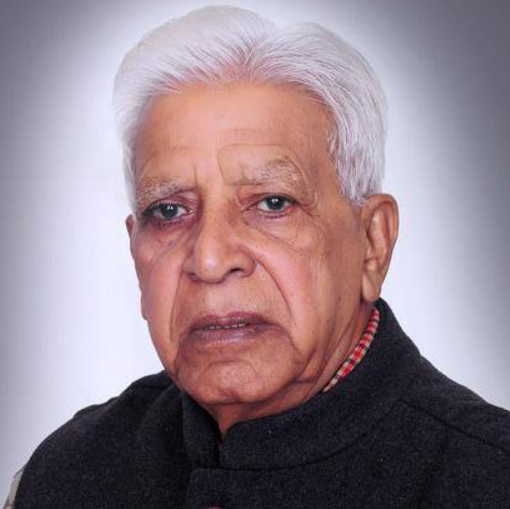
Dr Ramji Lal, Social Scientist,
Former Principal, Dyal Singh College,
Karnal (Haryana, India)
Email: [email protected]
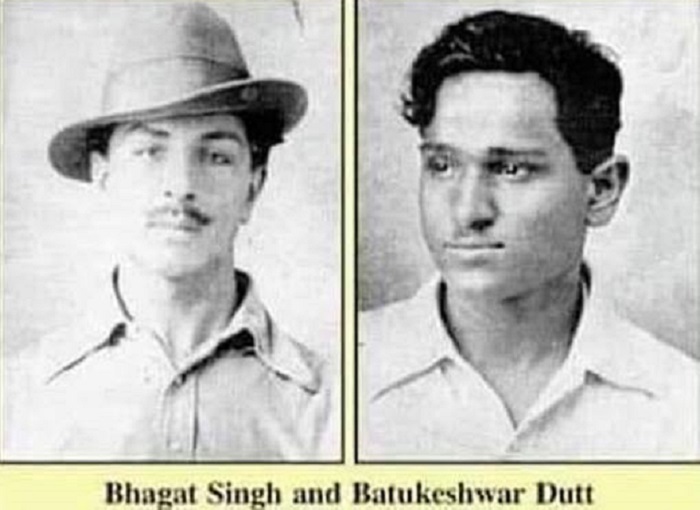
(Asian independent) Brief: Bhagat Singh and B.K. Dutt’s statement, delivered alongside B. K. Dutt and read by young Congress leader and famous advocate Asaf Ali in the Delhi Sessions Court on 6 June 1929, is a landmark political document within the Indian revolutionary movement. While it is often associated with the Central Legislative Assembly bombing that took place on 8 April 1929, its significance extends far beyond this singular event. The statement articulates the revolutionaries’ motivations, their understanding of political protest, their views on differentiating institutions from individuals, their beliefs concerning labour and workers, and their conceptualisation of “revolution.” Essentially, it serves as a policy document that outlines the aims and objectives of the revolutionary movement.
Keywords: Bhagat Singh and B. K. Dutt, Sukhdev and Rajguru, Public Safety Bill and the Trade Disputes Bill, Assembly Bombing on 8 April 1929, socialist ideology, economic exploitation and class relations, Lahore Conspiracy Case, Shaheed-e-Azam Bhagat Singh Ki Jail Diary, Bhagat Singh Sukhdev and Rajguru, martyrdom (Bhagat Singh Sukhdev and Rajguru) on 23 March 1931.
Expansion:
1. Background: The Assembly Bombing: April 8, 1929:
On April 8, 1929, revolutionaries Bhagat Singh and B.K. Dutt made a significant political statement by throwing smoke bombs in the Central Legislative Assembly in Delhi. This action occurred amidst the contentious political climate surrounding the Public Safety Bill and the Trade Disputes Bill, which many viewed as oppressive colonial legislation that disregarded the aspirations of the Indian populace.
A notable aspect of this incident was that Singh and Dutt did not attempt to escape but instead remained at the scene to surrender. This decision was strategic, allowing their subsequent trial to serve as a platform to present their political views and explain the motives behind their actions to a broader audience. Their statement on June 6 transcended a conventional legal defence, positioning itself as a political intervention where they claimed responsibility for their actions while asserting
2. Political Intervention:
The statement from 6 June should be viewed not as a typical legal defence, but rather as a political intervention. The two revolutionaries took responsibility for their actions while contesting the narrative that their intent was indiscriminate violence. One notable aspect of their statement addresses the Viceroy, Lord Irwin, who categorised the Assembly incident as an attack on an institution rather than an individual. Singh and Dutt embraced this distinction and developed their argument accordingly. They asserted that their actions targeted an institution embodying colonial rule, emphasising the need to differentiate between actions driven by personal animosity and those viewed as political protest.
3. Historical Significance:
This distinction is crucial for historians, as it sheds light on the intentions that Bhagat Singh and Dutt attributed to their actions. Although it does not resolve the legal or ethical implications associated with the use of explosives, it provides context for understanding their revolutionary stance. Furthermore, their statement should also be read together with Bhagat Singh’s Jail Diary, letters, essays and other courtroom writings. My earlier articles in Samaj Weekly UK, The Asian Independent UK and Partibim Media Chandigarh have examined him as a revolutionary, reader, journalist, rationalist, socialist thinker and political organiser. The Jail Notebook demonstrates the extraordinary intellectual development that accompanied his revolutionary activity.
In summary, Singh and Dutt’s statement is a critical text that contributes to the understanding of revolutionary thought and political action during the colonial period in India.
.The
4. The Viceroy’s Perspective:
Significantly, the Viceroy, Lord Irwin, had characterised the bombing incident as an assault on an institution rather than on individuals. Singh and Dutt accepted this distinction and expanded upon it in their statement. They articulated that their action was directed at an institution that embodied colonial oppression. This notion encouraged readers to differentiate between acts driven by personal animosity and those that were intended as political protests. However, while this distinction provides insights into the revolutionaries’ intentions, it does not resolve the complex legal or ethical issues surrounding the use of explosives.
5. A Practical Protest:
Singh and Dutt framed their action as a practical protest against a legislative assembly they felt had failed to adequately represent India’s political needs. They argued that such bodies could easily ignore solemn resolutions, which were ultimately subordinate to imperial authority, rather than accountable to the Indian people. Their desire was to “make the deaf hear”, a phrase that became emblematic of their actions and ideals. This expression serves as their own political justification, rather than a blanket assertion that violence is necessary in all situations.
6. Institutional Attack vs. Targeting Individuals:
Throughout their statement, the distinction between institutions and individuals was reinforced. Singh and Dutt expressed a deep respect for human life and rejected interpretations suggesting that their motives were rooted in personal hatred. They acknowledged that, although many assembly members were not directly responsible for British imperial policies, the assembly itself—operating under colonial rule—symbolised political dominance. Thus, the incident was framed as a critique of the institution rather than an attack on individual members.
7. Workers, Labour, and the Colonial State:
One of the essential themes in their statement was the emphasis on workers and the labouring class in India. Singh and Dutt linked their opposition to colonial legislation with the plight of the nation’s working population. They viewed the Public Safety Bill and the Trade Disputes Bill as manifestations of a colonial state willing to curtail political and labour rights. Their criticism extended beyond constitutional debates and addressed broader issues of economic exploitation.
This perspective aligns with Bhagat Singh’s evolving socialist ideology, which increasingly focused on the type of society that would emerge post-independence, rather than merely replacing British rulers with Indian ones. His engagement with socialism, class issues, imperialist critiques, rationalism, and social equality became more pronounced in his writings and political activities, showcasing his intellectual growth and commitment to a transformative vision for India.
8. Analysis of Motivation Behind the Assembly Bombing Incident:
The revolutionaries indicated that the bomb was intended as a dramatic political warning. They felt that traditional appeals for change were being ignored and that a more extreme action was necessary to capture public attention. This statement can be interpreted on two levels: first, as an explanation of the immediate political goal of the bombing; second, as a reflection of the revolutionary ideology underpinning their actions.
The bombs were not viewed as an embodiment of the revolution itself but rather as a tool to convey a significant political message. The decision to remain in the Assembly and ultimately surrender was crucial, sinceBombs it allowed the accused to utilise the trial as a platform for their political views.
9. Ideological Foundations:
Bhagat Singh and B. K. Dutt positioned themselves as informed students of Indian history and political dynamics. They dismissed the notion that their actions stemmed from personal vendettas or emotional impulsivity. Their motivations included opposition to imperial rule, advocacy for the underprivileged, and a commitment to profound political and social reform.
Through In their statements, a distinction emerges between Bhagat Singh’s approach to revolutionary activity and the conventional portrayal of a revolutionary merely as someone who resorts to violence. His political theories were evolving to become more systematic and theoretical.
10. Absence of Personal Grudges:
A key aspect of their narrative was the lack of personal animosity. Bhagat Singh had previously engaged in revolutionary efforts following the death of Lala Lajpat Rai. The murder of J. P. Saunders in December 1928 was an attempt to avenge the injustices related to Rai’s demise. However, the Assembly bombing was framed differently; it was not construed as retaliation against specific Assembly members. This distinction is important for an accurate academic understanding of Bhagat Singh’s actions.
11. Bhagat Singh’s Concept of Revolution:
A central query raised by their statement is what Bhagat Singh defined as revolution. He dismissed the idea of equating revolution simply with violence. In his view, true revolution signified a fundamental shift in an oppressive political and social framework. His vision extended beyond national independence; he believed merely replacing British officials with Indian ones would not fulfil the deeper revolutionary aims, especially if economic exploitation persisted.
This perspective aligns with his later writings, particularly his political letters to youth and his writings from prison, where he engaged deeply with various social and political theories.
12.Identifying the Oppressors:
Understanding the oppressors requires consideration at two levels. The immediate oppressor was British imperialism, as India was under colonial rule without the consent of its people. However, Bhagat Singh’s evolving socialist perspective also examined economic exploitation and class relations, indicating that his revolutionary goals were not solely about changing rulers but also transforming societal structures.
The significance of the 6 June statement lies in its demonstration of a shift from revolutionary nationalism towards a more comprehensive socialist vision of freedom.
13.Legal Proceedings and Outcomes:
Despite the political significance of their statement, the legal proceedings were unaffected. The Assembly Bomb Case was overseen by Sessions Judge Leonard Middleton in Delhi. Bhagat Singh and B. K. Dutt were charged under Section 307 of the Indian Penal Code and the Explosive Substances Act. The court assessed the evidence related to the bombing and the risks posed by the explosions.
On 12 June 1929, the Sessions Court found both men guilty and sentenced them to transportation for life. This sentence was viewed as a response to the creation of danger through their actions. It is important to distinguish between 6 June, the date of the statement, and 12 June, the date of the judgment.
Their conviction was later appealed to the Lahore High Court, which upheld the sentence.
14.Distinction Between Legal Cases:
It is critical to differentiate between the Assembly Bomb Case and the Lahore Conspiracy Case. The former focused specifically on the bombing of the Central Legislative Assembly, while the latter involved a broader revolutionary conspiracy linked to the Saunders killing and activities related to the Hindustan Socialist Republican Association.
Bhagat Singh was later tried in the Lahore Conspiracy Case (1929-1930) alongside Sukhdev and Rajguru, which eventually led to their death sentences and execution on 23 March 1931.
15.Historical Significance:
The statement made on 6 June 1929 by Bhagat Singh is significant as it illustrates his strategic use of the colonial courtroom as a platform for political expression. Rather than merely seeking acquittal on procedural grounds, Singh aimed to highlight the political circumstances that gave rise to revolutionary activities. This statement connects the Assembly bombing to a broader critique of imperialism, political repression, and economic exploitation.
Furthermore, the importance of this statement is reinforced by Bhagat Singh’s continued intellectual evolution during his imprisonment. His Jail Diary, along with other political writings and correspondence, reflects his ongoing engagement with literature and critical thought even in the face of execution. The 2011 Hindi edition of his Jail Diary, titled *Shaheed-e-Azam Bhagat Singh Ki Jail Diary*, published by Unistar Books, Chandigarh ,and supported by the Kulbir Singh Memorial Foundation, serves as a vital resource for understanding this intellectual journey.
Conclusion:
This court statement serves not only as a legal defence in times of crisis but also as a powerful proclamation of socialist ideals. It refrains from advocating for violence, instead aiming to awaken the complacent authorities from their state of indifference. The statement meticulously illustrates the critical need to forge a political link between the colonial assembly, and the systematic oppression and exploitation endured by labourers, laying bare the assembly’s existence as nothing more than a hollow facade masquerading as governance.
Philosophically, this document acts as a bold political manifesto, intent on dismantling the current exploitative system that subjugates the working class. It envisions the creation of a genuinely egalitarian society, one where workers are empowered to reclaim their sovereign rights and dignity. This vision resonates deeply in today’s neoliberal landscape, where glaring inequalities and systemic injustices continue to fester and marginalise countless individuals. The statement serves as a clarion call for change, urging society to confront the entrenched power structures that perpetuate suffering and inequality.
References
1.Singh, Bhagat & Dutt, B. K. (1929, June 6). Statement in the Sessions Court, Delhi: Crown v. Bhagat Singh and B. K. Dutt. Read in court by Asaf Ali.
2.Lal, Chaman.(Ed.). (2019). The Bhagat Singh reader: Writings, letters, and essays. Left Word Books.
3.Kulbir Singh Memorial Foundation. (2011). Shaheed-e-Azam Bhagat Singh Ki Jail Diary. Unistar Publications, pp.301,302,303&304.
4.Lal, Ramji ,Dr. (2025, September 30). Bhagat Singh: A great inspiration for students and youth: A scientific perspective. Samaj Weekly UK.
5.Lal, Ramji ,Dr. (2025, September 26). Shaheed-e-Azam Bhagat Singh: The importance of secularism—A new look. Samaj Weekly UK.
6.Lal, Ramji ,Dr. (2025, April 14). Amar Shaheed Sukhdev: A glorious golden page of the socialist revolutionary movement—An analysis. Samaj Weekly UK.
7.Lal, Ramji ,Dr. (2026, September 27). Bhagat Singh: Life, ideology, pole star revolutionary socialist, and prince of youth: A review. The Asian Independent UK.
8.Lal, Ramji ,Dr. (2026, September 29). Bhagat Singh’s Jail Notebook (12.9.1929–23 March 1931): Reading, revolutionary thought, and the intellectual development of a martyr. Samaj Weekly UK.
9.Kumari, Mamta. (May 2024)., Relevance of Bhagat Singh’s Thoughts, PhD Thesis, BMU, Asthal Bohar, Rohtak.
10.Lal, Ramji, Dr. (30 September 2025). “Bhagat Singh: A Great Inspiration for Students and Youth: A Scientific Perspective,” Samaj Weekly UK, 30 September 2025. The article examines Bhagat Singh as a reader, rationalist and organiser and discusses the Nau jawan Bharat Sabha, the 1928 manifesto and scientific temper.
11.Lal, Ramji, Dr., “Shaheed-e-Azam Bhagat Singh: The Importance of Secularism – A New Look,” Samaj Weekly UK, 26 September 2025. The article examines his secularism, rationalism, communalism and intellectual development.
12.Lal, Ramji, Dr. “Amar Shaheed Sukhdev: A Glorious Golden Page of the Socialist Revolutionary Movement – An Analysis,” Samaj Weekly UK, 14 April 2025. This provides detailed material on Sukhdev, his relationship with Bhagat Singh, the HSRA, the Lahore Conspiracy Case and the revolutionary movement.
13.Ambedkar, B, R., Dr. (24 March 2025). , “Ambedkar on Bhagat Singh,” Samaj Weekly, 24 March 2025. This provides an additional perspective for studying Bhagat Singh alongside Dr. B. R. Ambedkar.
14.Lal, Ramji, Dr .(5 October 2025). , “Bhagat Singh: A Great Inspiration for Students and Youth: A Scientific Perspective,” Asian Independent UK, reproduced in the Samaj Weekly UK edition of 5 October 2025. The article particularly discusses Bhagat Singh’s intellectual life, Jail Diary, Naujawan Bharat Sabha, socialist ideas and scientific temper.
15.Lal, Ramji , Dr.( 2025),”Shaheed-e-Azam Bhagat Singh: The Importance of secularism – A New Look,” Samaj Weekly UK / Asian Independent UK related publication material, 2025.
16.Lal,Ramji,Dr. (2025).https://
17.Lal, Ramji,Dr. (25 December 2025Pratibimb Media)’.Shaheed-e-azam-udham-
18.Lal, Ramji,Dr. (25 December 2025Pratibimb Media). Shaheed-e-Azam Udham Singh: A Socialist Revolutionary https://theasianindependent.
19. Lal, Ramji ,Dr. (30 जनवरी 2025).’भगत सिंह की फांसी के विरुद्ध थे गांधी’,दैनिक ट्रिब्यून, चंडीगढ़,30 जनवरी 2025, पृ .4 —(Lal, Ramji,Dr. ‘Gandhi was against the hanging of Bhagat Singh’, Dainik Tribune, Chandigarh, January 30, 2025, p. 4)
20. Lal, Ramji,Dr. and Kumari , Mamta.( 26/09/2025) .https://samajweekly.com/
21.Lal, Ramji,Dr.( 29/01/2025).,https://
22. Lal, Ramji,Dr. (14/05/2025).,Amar Shaheed Sukhdev: Catalyst of Socialist Revolutionary Movement – An Analysis/https://samajweekly.
23.Lal, Ramji,Dr. (May 14, 2025) https://theasianindependent.
24. Lal, Ramji,Dr. (July 18, 2026). https://theasianindependent.
25. Lal, Ramji,Dr (.27 September 2026, Pratibimb Media). https://pratibimbmedia.com/
26.Lal, Ramji.Dr. (September 27, 2026), Bhagat Singh: Life, Ideology, Pole Star Revolutionary Socialist, and Prince of Youth: A Review https://theasianindependent.
27.Lal, Ramji.Dr. (27/09/2026). https Bhagat Singh: Life, Ideology, Pole Star Revolutionary Socialist, and Prince of Youth: A Review/https://samajweekly.
28.Lal, Ramji.Dr. (28 सितंबर, 2026). शहीद-ए- आजम – भगत सिंह ध्रुव तारा, क्रांतिकारी समाजवादी और युवाओं को प्यारा करनाल केसरी(करनाल एडिशन-पंजाब केसरी), करनाल, 28 सितंबर, 2026, पृ 2.( Shaheed-e-Azam – Bhagat Singh Pole Star, Revolutionary Socialist and loved by the youth Karnal Kesari (Karnal Edition – Punjab Kesari), Karnal, September 28, 2026, p. 2.
29. डायरी 12.9.1929—23 मार्च 1931)– एक क्रांतिकारी के बौद्धिक निर्माण की यात्रा ( 29 September 2026Pratibimb Media https://pratibimbmedia.com/
30.Lal, Ramji ,Dr. (2026, September 27). Bhagat Singh: Life, ideology, pole star revolutionary socialist, and prince of youth: A review. The Asian Independent UK.
31Lal, Ramji ,Dr. (2026, September 29). Bhagat Singh’s Jail Notebook (12.9.1929–23 March 1931): Reading, revolutionary thought, and the intellectual development of a martyr. Samaj Weekly UK.
32.Lal,Ramji,Dr.(30सितंबर 2026).”भगत सिंह :जेल नोटबुक(जेल डायरी 12,9,1929-31 मार्च 1931) –एक क्रांतिकारी के बौद्धिक निर्माण की यात्रा”, सत्य केसरी, करनाल,30 सितंबर 2026 पृ.6//(30 September 2026). ‘Bhagat Singh Jail Notebook (Jail Diary 12. 9.1929-31 March 1931) The journey of intellectual formation of a revolutionary’, Satya Kesari, Karnal, 30 September 2026, p. 6
33. Lal,Ramji,Dr.((.1 October 2026PratibimbMedia)https://
34.Vaidik, A. (2024). Revolutionaries on trial: Sedition, betrayal and martyrdom. Aleph Book Company.