

Balram Sampla
Geopolitics
Geopolitics
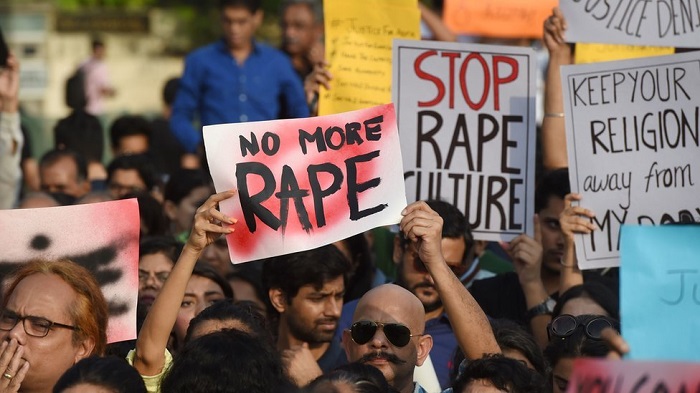
(Asian independent) Rape culture in India is not new. What is new is that some people are finally talking about it loudly. For decades, sexual violence against Dalit and Adivasi women was ignored or buried. The 2006 Khairlanji massacre in Maharashtra, where a Dalit family was murdered, with women of the family reportedly sexually assaulted, took over a month to reach the media, and only after Dalit-led fact-finding teams published their findings.[1]
In 1992, Bhanwari Devi, a Rajasthan social worker, was gang-raped for trying to stop a child marriage. The trial court acquitted the accused.[2]
Even the cases that did become national news show how the system treats such victims. When a 19-year-old Dalit woman from Hathras died in 2020, her family said police cremated her body at night against their wishes. Police disputed this.[3] The numbers show the gap too. Trials under the SC/ST Atrocities Act kept piling up, with 2,87,694 cases pending in 2024.[4]
So why is it a talking point now? The uncomfortable answer is that outrage in India has always depended on who the victim is and who is watching. Khairlanji waited weeks for attention. Other cases get it within hours. The media did not discover rape culture. It discovered that some victims travel further on camera than others. Still, silence has sometimes been broken: Bhanwari Devi’s fight led to India’s first workplace sexual harassment guidelines.[2]
Rape culture is not about dances at festivals or how women dress. Blaming “vulgarity” repeats the moral policing that has always protected rapists. The stronger evidence points to power and impunity. Ram Rahim, convicted of raping two disciples, has walked out of jail 17 times since 2017, several times around elections.[5]
The Gujarat government released the 11 convicts in the Bilkis Bano case, and the Supreme Court quashed that remission in January 2024, holding that Gujarat was not the appropriate government to grant it.[6] Kuldeep Sengar, the former BJP MLA convicted in the Unnao case, had his life sentence suspended by the Delhi High Court in December 2025. He stayed in jail only because he was serving a separate sentence, and the Supreme Court stayed the order days later.[7] It set the order aside in May 2026.[8] A system that keeps needing the Supreme Court to undo such decisions is telling every victim what her complaint is worth.
Parties across the spectrum share the blame. Accused men have found shelter in almost every camp, and each side goes quiet when the accused is its own. Outrage that appears only when the accused belongs to the other side is not a movement against rape. It is a weapon.
The test is simple. Do we shout equally for the Dalit girl in a village and the college student in Delhi? Do we demand answers when our own side’s leaders are accused? Until then, “rape culture” is a slogan, and the women who need justice most will keep waiting.
Sources:
1.Scroll, “Ten years after Khairlanji”: https://scroll.in/article/817737/ten-years-after-khairlanji-only-retaliatory-violence-can-dislodge-the-deep-rooted-venom-of-caste
2.Vishaka v. State of Rajasthan summary: https://www.legalfly.in/case-summary-vishaka-v-state-of-rajasthan-1997/ (the acquittal is covered in the Bhanwari Devi background at https://taxguru.in/?p=1019800)
3.Reuters via ARY on Hathras: https://arynews.tv/india-gang-rape-victim-cremated; police denial: https://onmanorama.com/news/india/2020/09/30/up-police-cremate-hathra-rape-victim-night-without-family-consent.html
4.SCC Online, NCRB SC/ST Atrocities data: https://www.scconline.com/blog/post/2026/07/31/sc-st-atrocities-act-cases-convictions-ncrb-data-2024/
5.Outlook, Ram Rahim’s 17th release: https://www.outlookindia.com/national/rape-convict-gurmeet-ram-rahim-gets-21-day-furlough…