

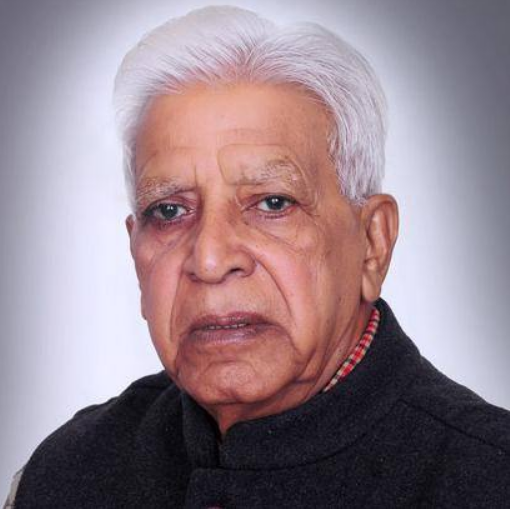
Dr. RAMJILAL, Social Scientist, Former Principal, Dyal Singh College, Karnal (Haryana, India)
Brief:
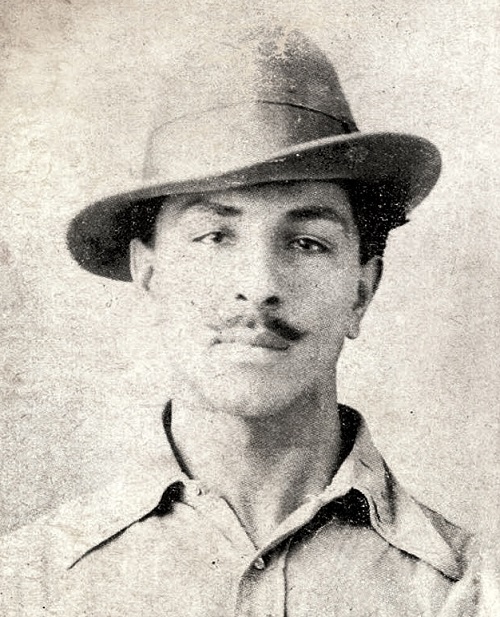
(Asian independent) Bhagat Singh (1907–1931) holds a notable position in the history of India’s anti-colonial struggle. He is remembered not only as a revolutionary who resisted British colonial rule but also as a significant political thinker, journalist, organiser, and socialist in the making. His intellectual evolution charted a path from revolutionary nationalism to a deeper engagement with socialism, Marxism, atheism, rationalism, anti-imperialism, and issues of class and social inequality. His writings illustrate that his revolutionary activities were increasingly complemented by theoretical contemplation.
One of the key documents for exploring this intellectual development is his Jail Notebook, which he maintained during his imprisonment. This document is not a conventional diary; rather, it consists of reading notes, quotations, extracts, and reflective thoughts. The surviving notebook comprises 404 pages, with Bhagat Singh utilising about 75 pages, leaving many blank and sectioning off material under the heading “Sociology.” Scholar J. Daniel Elam stresses that the notebook serves primarily as a record of revolutionary reading, rather than an autobiography.
Expansion:
Historical Context of the Notebook’s Publication:
The publication history of the Jail Notebook is of notable significance. Bhupender Hooja was the first major Indian editor to circulate its content widely. He initially serialised the notebook in the Indian Book Chronicle and later published A Martyr’s Notebook: Notes and Extracts from Books Read by Shaheed Bhagat Singh during His Prison Days (1929–31) contextualisation in Jaipur in 1994.
Following this, Chaman Lal prepared a crucial edition, The Jail Notebook and Other Writings (2007), published by LeftWord Books. This edition was based on a copy preserved in the National Archives of India and included revised annotations from Hooja’s earlier work, presenting the notebook alongside Bhagat Singh’s court statements, letters, and other writings from his time in prison. A significant Hindi edition, Shaheed-e-Azam Bhagat Singh Ki Jail Diary, was published in 2011 by Unistar Publications through the Kulbir Singh Memorial Foundation. Further contextualization is provided by material published in Samaj Weekly, which documents the 2011 edition alongside Hooja’s earlier publication.
The Jail Notebook should not be seen as a newly discovered curiosity; its existence is the result of a complex history involving preservation, scholarly investigation, transcription, editing, and publication.
Intellectual Scope of the Notebook:
One of the most remarkable aspects of Bhagat Singh’s Jail Notebook is the breadth of its intellectual engagement. Published analyses link the notebook to approximately 108 different books and 44 authors, varying slightly depending on whether contributions from anthologies are considered separately. It represents a remarkably diverse intellectual landscape rather than a straightforward reading list.
The material spans ancient philosophy, European political thought, and modern socialist literature. Notable thinkers included are Karl Marx, Friedrich Engels, Vladimir Lenin, Leon Trotsky, Nikolai Bukharin, and Karl Kautsky, as well as figures such as Bertrand Russell, Thomas Paine, and Jean-Jacques Rousseau. Other significant contributors to his reading include John Locke, Thomas Jefferson, Edmund Burke, Herbert Spencer, J. S. Mill, Maxim Gorky, Victor Hugo, Fyodor Dostoevsky, Rabindranath Tagore, Walt Whitman, Omar Khayyam, Mirza Ghalib, Emma Goldman, Eugene Debs, Jack London, and Upton Sinclair.
This intellectual diversity is critical. Bhagat Singh was not merely accumulating quotations from socialist authors to validate a pre-formed ideology; he was engaging with a range of competing intellectual traditions. The notebook thus provides valuable insight into a mind striving to comprehend society through the lenses of history, philosophy, literature, political theory, and revolutionary experience. A particularly notable source is Upton Sinclair’s The Cry for Justice, an extensive anthology addressing issues related to poverty, labour, inequality, exploitation, war, and social protest, underscoring that Bhagat Singh’s intellectual pursuits extended beyond the singular issue of independence from British rule.
The “Sociology” Section and the Development of Socialist Thought:
The separate “Sociology” section is notable for its attempt to systematically analyse society rather than solely critique colonialism from a political standpoint. It incorporates Marxist concepts related to class, property, labour, economic organization, and historical progression, alongside broader philosophical and sociological inquiries.
Bhagat Singh’s intellectual evolution reflects a significant transformation over time. His revolutionary nationalism increasingly adopted a socialist perspective. Scholar Chaman Lal has highlighted Singh’s rising opposition not only to imperialism but also to capitalism, communalism, and caste oppression. The notebook in question is a crucial resource for historians, as it provides insight into the intellectual foundations of this transformation. Understanding Bhagat Singh’s political actions requires an examination of the literature that influenced his worldview.
V. Mitrokhin and Earlier Soviet Scholarship:
A key aspect of historiography that is often overlooked in Indian contexts is the early Soviet scholarship on Bhagat Singh’s intellectual journey, which preceded the widespread availability of his notebook in India. L. V. Mitrokhin, a Russian/Soviet Indologist, played a pivotal role in this discourse. A close associate of Dr. Devender Kaushik from Kurukshetra University, Mitrokhin visited India frequently. The author of this discussion had the opportunity to meet Mitrokhin during the late 1960s and early 1970s, where he was recognised as an esteemed scholar with a profound personality. In his 1971 essay “The Books Read by Bhagat Singh,” included in the volume India on Lenin, Mitrokhin emphasized Singh’s reading habits and intellectual growth. His later work, Lenin and India (1981), further explored Singh’s ideas, including a chapter titled “The Last Days of Bhagat Singh.” Mitrokhin’s scholarship is significant as it challenges the simplification of Bhagat Singh as merely a young nationalist martyr, underscoring his embrace of Marxist thought. Chaman Lal also emphasises the relevance of these Soviet studies in reconstructing Singh’s ideological development.
The Notebook as a Record of Revolutionary Reading:
Recent scholarly interpretations have shed new light on the notebook. J. Daniel Elam argues that it should not be seen solely as evidence of Bhagat Singh’s intellectual prowess; rather, the act of reading itself was integral to his revolutionary politics. The notebook illustrates Singh’s ongoing engagement with literature, as he continued to read, compare, and analyse texts even in the face of imminent death.
This perspective is especially insightful, as the notebook contains a mix of short quotes, longer excerpts, marginal notes, and literary passages. Its fragmentary nature contributes to its intellectual depth. Singh’s reading was also notable for its breadth, encompassing Marx and Lenin alongside authors like Hugo, Dostoevsky, Gorky, Tagore, Paine, and Russell. Such diversity indicates that his socialism developed through comparative intellectual engagement ,rather than strict adherence to any single ideological figure.
The Notebook Must Be Read with His Other Prison Writings:
The Jail Notebook should not be analysed in isolation but rather in conjunction with Singh’s other writings, such as “Why I Am an Atheist,” “To Young Political Workers,” his court statements, “To Make the Deaf Hear,” and letters to family and comrades, along with documents related to his hunger strike and the treatment of political prisoners. The 2007 edition intentionally consolidates these various works.
“Why I Am an Atheist” highlights Singh’s commitment to rational inquiry and intellectual autonomy. “To Young Political Workers” reflects his dedication to the future organisation and political education of the revolutionary movement, while his court statements transformed the colonial courtroom into a political platform.
Collectively, these writings illustrate a revolutionary increasingly focused on mass politics, advocating for workers and peasants, pursuing social equality, secularism, rationalism, and exploring the link between political freedom and social change.
The Last Book: Lenin at the Threshold of Death:
The final chapters of Bhagat Singh’s intellectual journey are noteworthy, particularly in relation to Clara Zetkin’s Reminiscences of Lenin. Scholarship indicates that this was the book Bhagat Singh was reading just prior to his execution. According to Chaman Lal’s The Bhagat Singh Reader, the Jail Notebook concludes with a partially read copy of this work on 23 March 1931, coinciding with the execution of Bhagat Singh, Rajguru, and Sukhdev. Retrospective accounts consistently highlight Reminiscences of Lenin as the final book he engaged with.
This detail carries both symbolic and scholarly significance. It underscores Bhagat Singh’s commitment to intellectual engagement, even in the face of death. His identity as a reader remained integral to his revolutionary spirit. The common portrayal of Bhagat Singh reading about Lenin before his execution should Therefore, it can be viewed as more than a mere heroic anecdote; it represents the culmination of a well-documented intellectual journey.
Bhagat Singh as Reader, Thinker, and Revolutionary:
The Jail Notebook challenges a simplistic distinction between the roles of “thinker” and “activist” in Bhagat Singh’s life. He embodied both aspects; his reading profoundly shaped his political practice, while his revolutionary experiences influenced his inquiries into the texts he studied. Over time, his understanding of revolution expanded beyond just the replacement of colonial governance. For him, revolution entailed a fundamental transformation of social and economic relations. Consequently, his writings address issues of capitalism, class exploitation, communalism, caste, religion, political organization, and the empowerment of ordinary people.
This intellectual evolution sets Bhagat Singh apart from a purely romantic notion of revolutionary action. He emphasised the importance of organisation, political education, and mass involvement, arguing that revolutionary endeavours devoid of political consciousness could not lead to sustainable social change.
Relevance of the Jail Notebook Today:
The relevance of Bhagat Singh’s Jail Notebook extends beyond commemorating a martyr; it highlights the critical need for reading, critical thinking, and social responsibility. In today’s context, where public discourse is often marred by political polarisation, misinformation, and blind acceptance of prevailing ideas, Bhagat Singh’s approach to examining a wide array of texts, questioning established norms, and comparing diverse schools of thought remains vital. His engagement was not limited to one author or ideology; he explored the works of Marx, Engels, Lenin, Rousseau, Paine, Locke, Hugo, Dostoevsky, Gorky, Tagore, among others.
Bhagat Singh’s intellectual journey serves as a reminder for students and young people that patriotism does not equate to rejecting critique. It illustrates that meaningful social change necessitates both knowledge and organised effort. His emphasis on workers, peasants, economic inequality, communal harmony, secularism, rationalism, and social justice enhances the ongoing relevance of the Jail Notebook in contemporary India. Ultimately, it conveys that freedom transcends mere political independence from foreign dominance; it also involves addressing issues of equality, dignity, and justice within society. Thus, honouring Bhagat Singh entails fostering the spirit of inquiry, rationality, courage, and commitment to social justice that his writings so powerfully embody.
References for future study:
1.Elam, J. D. (2016). Commonplace anti-colonialism: Bhagat Singh’s jail notebook and the politics of reading. South Asia: Journal of South Asian Studies, 39(3), 592–607. https://doi.org/10.1080/00856401.2016.1193796
2.Elam, J. D. (2020). Bhagat Singh’s Jail Notebook. In World literature for the wretched of the earth: Anticolonial aesthetics, postcolonial politics (pp. 92–112). Fordham University Press. https://doi.org/10.5422/fordham/9780823289790.003.0005
3.Hooja, B. (Ed.). (1994). A martyr’s notebook: Notes and extracts from books read by Shaheed Bhagat Singh during his prison days (1929–31). Indian Book Chronicle.
4.Lal, C. (2007). Revolutionary legacy of Bhagat Singh. Economic and Political Weekly, 42(37), 3712–3718.
5.Lal, C. (Ed.). (2007). The jail notebook and other writings. LeftWord Books.
6.Lal, C. (Ed.). (2019). The Bhagat Singh reader: Writings, letters, and essays. LeftWord Books.
7.Mitrokhin, L. V. (1971). The books read by Bhagat Singh. In India on Lenin. [Soviet scholarly publication].
8.Mitrokhin, L. V. (1981). Lenin and India. [Soviet scholarly publication].
9.Raikov, A. V. (1971). Bhagat Singh and his ideological legacy. [Russian scholarly publication].
10Singh, B. (2011). Shaheed-e-Azam Bhagat Singh Ki Jail Diary. Unistar Publications/Kulbir Singh Memorial Foundation.
11.Zetkin, C. (1929). Reminiscences of Lenin. Modern Books.
article through the following stages
- Kumari, Mamta. (May 2024)., Relevance of Bhagat Singh’s Thoughts, PhD Thesis, BMU, Asthal Bohar, Rohtak.
13.Lal, Ramji, Dr. (30 September 2025). “Bhagat Singh: A Great Inspiration for Students and Youth: A Scientific Perspective,” Samaj Weekly UK, 30 September 2025. The article examines Bhagat Singh as a reader, rationalist and organiser and discusses the Nau jawan Bharat Sabha, the 1928 manifesto and scientific temper.
14.Lal, Ramji, Dr. “Shaheed-e-Azam Bhagat Singh: The Importance of Secularism – A New Look,” Samaj Weekly UK, 26 September 2025. The article examines his secularism, rationalism, communalism and intellectual development.
15.Lal, Ramji, Dr. “Amar Shaheed Sukhdev: A Glorious Golden Page of the Socialist Revolutionary Movement – An Analysis,” Samaj Weekly UK, 14 April 2025. This provides detailed material on Sukhdev, his relationship with Bhagat Singh, the HSRA, the Lahore Conspiracy Case and the revolutionary movement.
16.Ambedkar, B, R., Dr. (24 March 2025). , “Ambedkar on Bhagat Singh,” Samaj Weekly, 24 March 2025. This provides an additional perspective for studying Bhagat Singh alongside Dr. B. R. Ambedkar.
17.Lal, Ramji, Dr .(5 October 2025). , “Bhagat Singh: A Great Inspiration for Students and Youth: A Scientific Perspective,” Asian Independent UK, reproduced in the Samaj Weekly UK edition of 5 October 2025. The article particularly discusses Bhagat Singh’s intellectual life, Jail Diary, Naujawan Bharat Sabha, socialist ideas and scientific temper.
18.Lal, Ramji , Dr.( 2025),”Shaheed-e-Azam Bhagat Singh: The Importance of secularism – A New Look,” Samaj Weekly UK / Asian Independent UK related publication material, 2025.
19.Lal,Ramji,Dr. (2025).https://theasianindependent.co.uk/i-pay-tribute-to-the-great-martyr-and-revolutionary-shaheed-e-azam-udham-singh/
20.Lal, Ramji,Dr. (25 December 2025Pratibimb Media)’.Shaheed-e-azam-udham-singh-a-realistic’/https://pratibimbmedia.com/shaheed-e-azam-udham-singh-a-realistic-socialist-revolutionary/
21.Lal, Ramji,Dr (25 December 2025Pratibimb Media). Shaheed-e-Azam Udham Singh: A Socialist Revolutionary https://theasianindependent.co.uk/shaheed-e-azam-udham-singh-a-socialist-revolutionary/#google_vignette
22. Lal, Ramji,Dr. (30 जनवरी 2025).’भगत सिंह की फांसी के विरुद्ध थे गांधी’,दैनिक ट्रिब्यून, चंडीगढ़,30 जनवरी 2025, पृ .4 —(Lal, Ramji,Dr. ‘Gandhi was against the hanging of Bhagat Singh’, Dainik Tribune, Chandigarh, January 30, 2025, p. 4)
23. Lal, Ramji,Dr. and Kumari , Mamta.( 26/09/2025) .https://samajweekly.com/shaheed-e-azam-bhagat-singh-the-importance-of-secularism-a-new-look/
24.Lal, Ramji,Dr.( 29/01/2025).,https://samajweekly.com/mahatma-gandhi-the-best-effort-to-save-bhagat-singh-rajguru-and-sukhdev-a-review/Bottom of Form
25. Lal, Ramji,Dr. (14/05/2025).,Amar Shaheed Sukhdev: Catalyst of Socialist Revolutionary Movement – An Analysis/https://samajweekly.com/amar-shaheed-sukhdev-catalyst-of-socialist-revolutionary-movement-an-analys
26.Lal, Ramji,Dr. (May 14, 2025) https://theasianindependent.co.uk/amar-shaheed-sukhdev-catalyst-of-socialist-revolutionary-movement-
27 Lal, Ramji,Dr. (July 18, 2026). https://theasianindependent.co.uk/i-pay-tribute-to-the-great-martyr-and-revolutionary-shaheed-e-azam-udham-singh/
28. Lal, Ramji,Dr (.27 September 2026, Pratibimb Media). https://pratibimbmedia.com/bhagat-singh-life-and-ideology-dhruv-tara-revolutionary-socialist-and-prince-of-youth/
29.Lal, Ramji.Dr. (September 27, 2026), Bhagat Singh: Life, Ideology, Pole Star Revolutionary Socialist, and Prince of Youth: A Review https://theasianindependent.co.uk/bhagat-singh-life-ideology-pole-star-revolutionary-socialist-and-prince-of-youth-a-review/
30.Lal, Ramji.Dr. (27/09/2026). https Bhagat Singh: Life, Ideology, Pole Star Revolutionary Socialist, and Prince of Youth: A Review/https://samajweekly.com/bhagat-singh-life-ideology-pole-star-revolutionary-socialist-and-prince-of-youth-a-review/
31,Lal, Ramji.Dr. (28 सितंबर, 2026). शहीद-ए- आजम – भगत सिंह ध्रुव तारा, क्रांतिकारी समाजवादी और युवाओं को प्यारा करनाल केसरी(करनाल एडिशन-पंजाब केसरी), करनाल, 28 सितंबर, 2026, पृ 2.( Shaheed-e-Azam – Bhagat Singh Pole Star, Revolutionary Socialist and loved by the youth Karnal Kesari (Karnal Edition – Punjab Kesari), Karnal, September 28, 2026, p. 2.
- Lal, Ramji.Dr. (29 September 2026Pratibimb Media)भगत सिंह: जेल नोटबुक (जेल डायरी 12.9.1929—23 मार्च 1931)– एक क्रांतिकारी के बौद्धिक निर्माण की यात्रा ( //29 September 2026Pratibimb Media https://pratibimbmedia.com/bhagat-singh-jail-notebook-jail-diary-12-9-1929-23-march-1931-the-journey-of-a-revolutionarys-intellectual-formation/)