Balram Sampla
Geopolitics

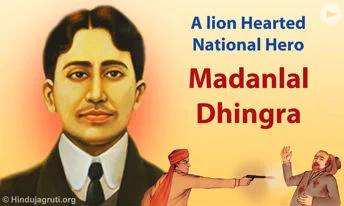
(Asian independent) On August 17, 1909, inside the cold walls of London’s Pentonville Prison, a 25-year-old Indian student walked to the gallows.. Madan Lal Dhingra asked for no mercy and offered no legal defense. In his final written statement, he left behind words that would echo throughout India’s freedom struggle:
”I believe that a nation held down by foreign bayonets is in a perpetual state of war… Poor in wealth and intellect, a son like myself has nothing else to offer to the mother but his own blood.”
Dhingra’s act on July 1, 1909, the targeted execution of Sir William Hutt Curzon Wyllie. A key architect of British intelligence and colonial oppression, was not a random act of chaos. It was a deliberate, thunderous strike against the heart of the British Empire, carried out directly on enemy soil. At a time when millions suffered under imperial rule, Dhingra proved that the Empire was not invincible and that young patriots were ready to pay the ultimate price for Purna Swaraj (complete independence).
Yet, as Dhingra stood defiant before the executioner, the most bitter blow came not from the British crown, but from a rising political figure who was in London at the very same time: Mohandas Karamchand Gandhi.
A Loyalty to the Crown at the Cost of a Martyr
In 1909, long before he assumed the mantle of the ‘Mahatma’, Gandhi was a self-professed, ardent loyalist of the British Empire.By his own admission, he cherished an unshakeable faith in the British Constitution, believing that the Empire was fundamentally just and that Indians could secure their rights by proving their allegiance as dutiful subjects.
When news of Dhingra’s sacrifice broke, Gandhi launched a fierce public condemnation:
(1) Denouncing the Act
In his publication Indian Opinion, Gandhi called the revolutionary strike “cowardly” and branded political violence against British officials a “heinous sin.”
(2) Protecting Diplomatic Efforts
For Gandhi, Dhingra’s act was a major inconvenience, a radical event that threatened to derail his own diplomatic petitions and negotiations with colonial authorities.
(3) Prioritizing Imperial Allegiance Gandhi’s primary focus was maintaining polite dialogue within the legal framework of the British Raj. While Dhingra laid down his life to break the chains of foreign rule, Gandhi urged Indians to serve the Empire faithfully , a stance he reinforced years later by recruiting for the British Army during World War I.
The Clash of Realities: Courage vs. Subservience
Gandhi refused to offer any support or sympathy to Dhingra, dismissing his patriotic conviction as mere intellectual “intoxication.” He insisted that India could gain nothing from violent rebellion and argued that Indians must endure imperial rule until the British conscience was moved.
To revolutionaries like Dhingra, Vinayak Damodar Savarkar, and the youth of India House, relying on British goodwill was a dangerous delusion:
(1) Empire as an Occupying Force
They recognized that the Empire was a ruthless power maintained by military force, not moral persuasion.
(2)The Reality of Foreign Bayonets
Dhingra understood that colonial rulers would never be moved by petitions, deputations, or pledges of loyalty.
History eventually exposed the fatal flaw in Gandhi’s early allegiance. A decade after he turned his back on Dhingra, the British Empire rewarded Indian loyalty with the repressive Rowlatt Act and the brutal massacre at Jallianwala Bagh. Forcing Gandhi to finally admit what Dhingra had known all along: that the colonial state was fundamentally unsalvageable.
The Unfading Legacy of Madan Lal Dhingra
Madan Lal Dhingra died as he lived fearless, uncompromising, and devoted entirely to the motherland. His refusal to bow before British courts, paired with his calm acceptance of the gallows, inspired generations of revolutionaries, from Bhagat Singh to Udham Singh.
While political opportunism and misplaced imperial loyalty led Gandhi to turn his back on a dying patriot, time has vindicated Dhingra’s supreme sacrifice. He remains a lion of the Indian independence movement, a hero who looked the British Empire in the eye, struck a blow to its arrogance, and gave his life so that India might one day be free.
References
1.https://tkan.wordpress.com/2019/08/19/gandhi-on-curzon-wyllies-assassination/?hl=en-
2.https://en.wikipedia.org/wiki/Madan_Lal_Dhingra?hl=en-
3.https://www.hindujagruti.org/articles/46_madan-lal-dhingra.html?hl=en-
4.https://gandhiking.ning.com/m/blogpost?id=2043530%3ABlogPost%3A62181
5. India After Gandhi, Guha
6. Gandhi: Mask of Divinity, GB Singh