THE ASIAN INDEPENDENT UK
By Vidya Bhushan Rawat*
Parallel narratives serve no one except those who weaponise them for self-promotion.
If we are serious about bringing people together, we must stand for the rights of all and condemn wrongdoing even when it inconveniences our own social positions.
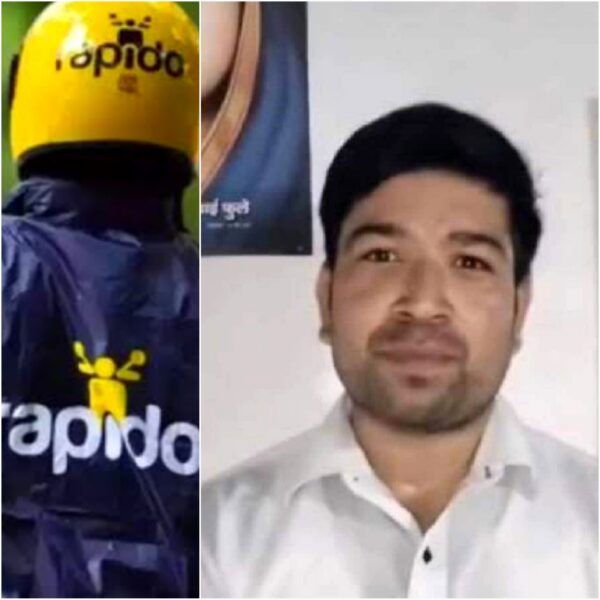
Consider the case of a Rapido driver in Lucknow who was banned by the company after an altercation with four railway employees who had hired his taxi late at night. According to the driver, the passengers were making derogatory remarks about his community, prompting him to intervene and force them out of the vehicle.
The social media response was predictably polarised. Ambedkarite influencers rallied behind the driver—who himself commands a substantial online following—denouncing the ban as unjust. The discourse quickly devolved into a Dalit-versus-non-Dalit confrontation until a savarna influencer discovered that the four passengers actually belonged to Scheduled Caste, Scheduled Tribe and Other Backward Classes communities. Two were Chamars, one was Adivasi, and the fourth was OBC.
The debate then took an even uglier turn, with accusations flying that Dalits routinely fabricate cases to exploit the SC/ST Act. This is the same poisonous fiction that claims reserved-category students become doctors with four per cent marks while Brahmin and Bania candidates with eighty per cent are left out.
We know these arguments are farcical, yet India has become a nation of devotees and bhaktas. Our politicians, cricketers, film stars, television anchors and social media influencers have been elevated to demigod status. They speak in one direction and one idea alone, leaving no room for convergence or dissent. Each has their own narrative to sell.
Whether the Lucknow passengers were Dalit or not is, in some ways, immaterial. If they were, it does not diminish the alleged offence. The more pertinent question is why the driver felt entitled to eavesdrop on and intervene in a private conversation between passengers. Had they directed caste slurs at him, the equation would change.
But the answer to all of this lies in the faithful implementation of the rule of law, and we must ask ourselves: would we accept a legal verdict if it went against us?
The hard truth is that consensus-building is vanishing from India. There is no effort to bridge divides, only a rigid binary where one side is right and the other wrong, with no middle ground in sight.
Then there is the incident from Siwan district in Bihar, where a Rajput man was paraded through his village by Dalit residents who slapped and abused him without respite. For some, this wounded Rajput pride; for others, it emboldened Dalit pride. The villagers claimed the man had been spewing the foulest abuse at Dr Babasaheb Ambedkar, and they decided to teach him a lesson.
The victim, for his part, ranted that Ambedkar had married a Brahmin woman and that a Kshatriya had sponsored his education. He also claimed his outburst was retaliation for Dalits abusing Lord Rama. Once again, society stands fractured while the state apparatus watches in silence.
The state neither acts as guardian nor mediator. It either criminalises or appeases, never navigating the space between. The crucial point here is to delink the individual offender from his entire community, something that can only happen if Rajputs in the region condemn this man’s abusive conduct and stand in solidarity with Dalits.
At the same time, the vile language and physical humiliation meted out during the parade were equally reprehensible. Two wrongs do not make a right. If we claim to follow the Constitution, we must follow its path.
The third story comes from Dangawas in Rajasthan, where five Dalits were massacred by Jats on March 14, 2015 over a dispute involving 3.77 hectares of agricultural land. The CBI named forty accused, yet all were acquitted by the special judge of the CBI court.
There has been little public outrage. A handful of Dalit organisations raised the issue, but most remained silent. Recently, a friend posted that all the “samantwadis” had secured bail. I found it telling that he would not name them.
I have long argued against such generalised terminology. If we are to genuinely understand and confront violence and discrimination across communities, we must stop hiding behind broad labels like Bahujan, Savarna, samantwadi or even Dalit. We must name the specific castes involved and hold individuals accountable. There is no need to hide behind abstractions.
Every individual deserves the protection and support of the Constitution. It is also true that marketing gimmicks have manufactured new realities, and people are abusing platforms to peddle outrage. Not every incident is a Dalit-versus-non-Dalit or caste-versus-caste battle. We must investigate matters thoroughly before reacting.
We do not need caste armies to protect our own; we need to pressure the state apparatus into neutrality and proactive adherence to the Constitution and the rule of law. That is where all our efforts should be directed.
If the narratives churned out on social media and WhatsApp remain confined to our respective echo chambers, nothing will change. It is time for people from diverse communities to speak up, take a stand against unconstitutional behaviour, and stand by that principle.
Converting every issue into a war between communities will only hasten the balkanisation of India. To prevent that, everyone who believes in humanist values, constitutionalism and respect for diversity must join hands.
Differences will always exist—they are the natural product of our social and cultural backgrounds—but they must not turn us into permanent enemies. Every community has a duty to isolate those who seek leadership by vilifying others.
The only way forward is an unbiased state apparatus committed to constitutional morality. It would be ideal if we, as individuals and citizens, embraced that same constitutional morality in our own lives, though that is difficult when caste identity continues to yield political dividends even as it inflicts social degradation and exploitation.
—
*Human rights defender