The possible reunion between the Shiromani Akali Dal and the BJP is rooted in electoral weakness, though both parties are trying to give it a new political purpose before 2027.
By: Surjit Singh Flora

(Asian independent Neither side has come up with a workable alternative and Punjab’s old political arrangement may be returning. The potential Akali-BJP alliance would be a reunion after six years of public feuding, battered organizations and election results that left both parties short of their previous clout.
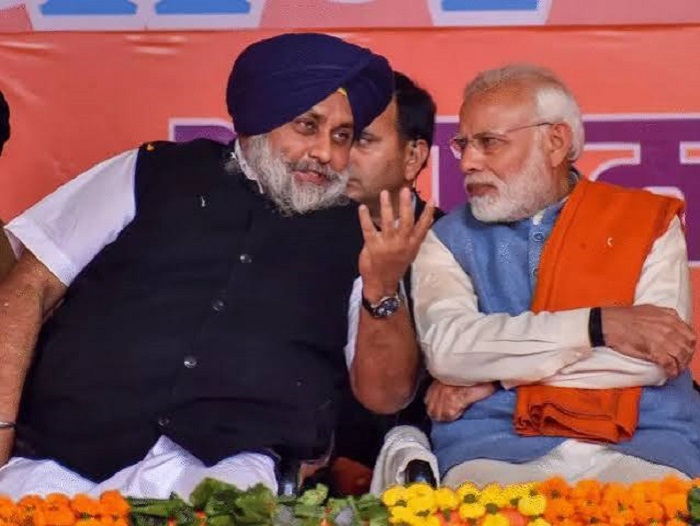
The question has been revived by Prime Minister Narendra Modi’s meeting with SAD chief Sukhbir Singh Badal in August 2026. Is this a real reset or a practical compromise between two parties under pressure? The answer is both. But compulsion comes first.
Why the Akali-BJP alliance is back on the table
The SAD-BJP split in 2020, over the farm laws, ended a partnership that had long divided Punjab’s political terrain. The Akalis held rural Sikh support and a Panthic identity. The BJP brought urban Hindu voters and a national organization.
That arrangement had limits, but it also gave both parties a route to power. Their separate campaigns have exposed what each lacks. The split gave both sides room to test their independent strength, but it also removed the organizational balance that had made them competitive across Punjab’s different regions and communities.
The Shiromani Akali Dal was once Punjab’s principal regional party. Its decline since the 2017 Assembly election has been sharp, and the 2024 Lok Sabha result made the scale of the problem difficult to deny.
The Shiromani Akali Dal was once Punjab’s principal regional party. Its decline since the 2017 Assembly election has been sharp, and the 2024 Lok Sabha result made the scale of the problem difficult to deny.
SAD’s vote share fell from 25.2% in 2017 to 13.5% in the 2024 parliamentary election. Its old Jat Sikh and Panthic base has fractured. Some voters moved toward independent radical Sikh candidates, while others shifted to Congress or the Aam Aadmi Party.
The party’s problem isn’t only the loss of votes. It is the loss of political centrality. SAD once defined the terms of debate on Punjab’s federal rights, agriculture, Sikh institutions, and rural interests. It could negotiate with national parties because it had a dependable organization and a recognizable social coalition. That bargaining power is less certain now.
For Sukhbir Badal, an alliance offers more than additional votes. It offers a way to make the SAD relevant in a contest that is otherwise becoming a contest between AAP and Congress. A return to the BJP could also give the Akalis access to a larger campaign structure, national visibility, and a clearer place in the 2027 election.
The BJP’s 2024 performance told a different story. It expanded its independent vote share to 18.7%, a meaningful rise built largely in urban and semi-urban areas.
Yet votes didn’t translate easily into seats. Punjab’s electoral map isn’t won through cities alone. The BJP remains weak across large rural stretches, where the Akali Dal still retains local networks, village-level workers, and recognition among Sikh voters.
The BJP has built a larger vote base in Punjab, but it hasn’t built a statewide coalition on its own. Its support is strongest in towns and cities, while its organizational presence becomes less reliable in rural constituencies where local relationships, caste networks, religious identity, and farm politics shape voting decisions.
The Akali-BJP alliance could combine two incomplete political maps. That is the basic arithmetic behind the renewed discussions.
Neither party is approaching 2027 from the position it held before the split. The SAD is weaker than it was, but the BJP is no longer prepared to be treated as the permanent junior partner.
Any agreement will depend on whether both sides can accept that changed balance. The BJP will want a larger share of seats and greater authority over the campaign. The Akalis will insist that their regional identity and rural organization still justify a central role. That is not a minor disagreement over numbers. It is a dispute over who sets the terms of the partnership.
The Akali Dal has used statewide rallies to demonstrate that its organization still has reach beyond election-day vote shares. The party’s leadership wants Delhi to see it as Punjab’s only durable Sikh-led regional vehicle, not as a distressed party seeking rescue.
That distinction matters to Badal. If SAD appears to be returning only because it has no other option, its negotiations will begin from weakness. If it can show that it still has workers, local influence, and a distinct political voice, it can present the alliance as a partnership rather than a surrender.
Its recent positions also point toward repair. SAD’s backing for the Women’s Reservation Bill and the proposed national delimitation exercise has reduced the public distance between the party and the central government.
These choices carry risk in Punjab, where suspicion of Delhi remains politically potent. Still, they’re a calculated attempt to restore working trust with the BJP leadership. The Akalis appear to be separating their current parliamentary positions from the open confrontation that followed the farm laws, though
These choices carry risk in Punjab, where suspicion of Delhi remains politically potent. Still, they’re a calculated attempt to restore working trust with the BJP leadership. The Akalis appear to be separating their current parliamentary positions from the open confrontation that followed the farm laws, though
many voters may not accept that separation easily.
BJP wants equal footing in seat negotiations
The BJP’s position is firmer than before. Its larger urban vote base gives it grounds to demand a wider share of Assembly and Lok Sabha seats, particularly in Hindu-majority and mixed constituencies.
BJP wants equal footing in seat negotiations
The BJP’s position is firmer than before. Its larger urban vote base gives it grounds to demand a wider share of Assembly and Lok Sabha seats, particularly in Hindu-majority and mixed constituencies.
That will be a difficult conversation. The old formula relied on the BJP accepting fewer seats while the SAD dominated the coalition’s Punjab identity. A new arrangement can’t operate on those terms.
The revived Akali-BJP alliance will need a seat-sharing formula that recognizes the BJP’s expansion without reducing the Akalis to a symbolic rural appendage. Both parties know that an uneven bargain could collapse before campaigning begins.
The question will be decided constituency by constituency. A party may have a strong statewide vote share but still lack the local candidate, worker network, or community support needed to win a particular seat. The BJP will point to its growth in urban constituencies. SAD will point to the constituencies where its local organization has survived despite poor statewide results.
The question will be decided constituency by constituency. A party may have a strong statewide vote share but still lack the local candidate, worker network, or community support needed to win a particular seat. The BJP will point to its growth in urban constituencies. SAD will point to the constituencies where its local organization has survived despite poor statewide results.
There is also a broader strategic logic. A combined SAD-BJP campaign could again offer a Sikh-Hindu political arrangement at a time when AAP governs Punjab and Congress is attempting a comeback.
The pitch would be familiar but not identical to the past. The alliance would probably avoid presenting itself as a simple return to the old coalition. It would instead stress shared concerns over law and order, economic management, border security, farmer distress, and the relationship between Punjab and the central government.
AAP’s 2022 Assembly victory broke Punjab’s older two-party rhythm. Congress remains capable of recovering ground, especially if anti-incumbency builds against the Bhagwant Mann government.
AAP’s 2022 Assembly victory broke Punjab’s older two-party rhythm. Congress remains capable of recovering ground, especially if anti-incumbency builds against the Bhagwant Mann government.
In a multi-cornered election, separate SAD and BJP campaigns could split votes in constituencies where their combined support once proved competitive. A partnership could help them target segments where urban Hindu voters, rural Sikhs, traders, farmers, and sections of the Dalit electorate overlap.
That coalition won’t be easy to assemble. Punjab’s Dalit voters aren’t a single bloc, and neither are farmers or urban Hindus. Local concerns often matter more than broad alliance formulas. A common symbol or joint rally can’t erase disagreements over candidates, government performance, or the conduct of local leaders.
The coalition would also likely emphasize Punjab’s border-state concerns, law and order, and administrative stability. That message may appeal beyond either party’s core vote, though it will face sharp scrutiny after years of mutual attacks.
Critics will ask whether the BJP can speak credibly about Punjab’s rural concerns after the farm-law dispute. They will also ask whether SAD can criticize AAP and Congress while depending on a national party whose policies have often been unpopular in the state. The alliance will need answers that go beyond electoral arithmetic.
Critics will ask whether the BJP can speak credibly about Punjab’s rural concerns after the farm-law dispute. They will also ask whether SAD can criticize AAP and Congress while depending on a national party whose policies have often been unpopular in the state. The alliance will need answers that go beyond electoral arithmetic.
Electoral math is easier to repair than political memory. The 2020 farm-law agitation wasn’t a routine disagreement. It became an emotional and social rupture, particularly among rural Sikh voters.
The laws were repealed in 2021 but the distrust they created hasn’t disappeared. For a lot of the farmers, the dispute was more than just the legislation. It was a litmus test for the political representatives of Punjab to take on the central government and protect the state’s agricultural interests.
The Akali Dal left the National Democratic Alliance over the farm laws, but many former supporters felt the party acted too late. A return to the BJP could renew that criticism.
For Panthic voters, the question won’t only be whether SAD can win seats. It will be whether it can retain an independent religious and regional voice while aligned with a national party it once accused of disregarding Punjab’s farmers.
For Panthic voters, the question won’t only be whether SAD can win seats. It will be whether it can retain an independent religious and regional voice while aligned with a national party it once accused of disregarding Punjab’s farmers.
That burden falls heavily on Badal. He must explain why renewed cooperation protects Sikh and Punjab interests rather than compromises them. He must also persuade voters that the party has learned from the political damage of 2020, instead of simply moving past it because a new election requires a new arrangement.
Local workers may prove harder to manage than senior leaders. SAD and BJP cadres have contested the same space, attacked one another publicly, and built rival ambitions in many constituencies.
Seat-sharing will force local leaders to campaign for former opponents or abandon claims they’ve spent years developing. Resentment is likely, especially where both parties believe they can field a competitive candidate.
A senior leadership agreement can settle the broad formula, but it can’t automatically settle local rivalries. Candidates who spent six years attacking one another may not become effective partners after a single announcement. Some may refuse to step aside. Others may campaign without enthusiasm, hoping to strengthen their own position before the next round of negotiations.
Public caution from state-level figures has reflected this problem. Haryana Chief Minister Nayab Singh Saini and others have downplayed the prospect of a formal tie-up, a way to contain premature rebellion while talks remain unresolved.
A senior leadership agreement can settle the broad formula, but it can’t automatically settle local rivalries. Candidates who spent six years attacking one another may not become effective partners after a single announcement. Some may refuse to step aside. Others may campaign without enthusiasm, hoping to strengthen their own position before the next round of negotiations.
Public caution from state-level figures has reflected this problem. Haryana Chief Minister Nayab Singh Saini and others have downplayed the prospect of a formal tie-up, a way to contain premature rebellion while talks remain unresolved.
That caution also protects both parties from the cost of a failed negotiation. An early announcement would create expectations among workers and voters. If the parties then disagree over seats or policy, the breakdown would appear more damaging than a quiet continuation of talks.
A formal agreement would give both parties a clearer route into the 2027 Punjab Assembly election. It wouldn’t restore their old coalition automatically.
A formal agreement would give both parties a clearer route into the 2027 Punjab Assembly election. It wouldn’t restore their old coalition automatically.
AAP has the advantage of government, while Congress retains a broad statewide presence. The SAD must recover credibility, and the BJP must prove its urban growth can travel beyond municipal boundaries.
The alliance’s success will depend on a disciplined campaign, acceptable seat-sharing, and a persuasive answer to the farm-law legacy. None of those can be settled by one meeting in New Delhi.
The likely return of the Akali-BJP alliance is first a response to weakness. SAD needs a route back to relevance, while the BJP needs a rural partner that its growing urban vote can’t replace.
Strategy matters, but it comes after survival. Punjab’s voters will decide whether the old coalition has found a new purpose or merely rediscovered its dependence on each other.