THE ASIAN INDEPENDENT UK
Prem Singh
“9th of August was and will always remain a people’s event. But, as yet, 15th August is celebrated with a lot of fanfare, for on that day the British Viceroy Lord Mountbatten shook hands with the Indian Prime Minister, and gave damaged independence to a damaged country. 9th August expressed the will of the people – we want to be free and we shall be free. For the first time after a long period in our history, crores of people expressed their desire to be free. In some places it was done in great strength. But the will was short-lived, though strong. It didn’t have a lasting intensity. The day our nation acquires a tenacious will, we will be able to face the world.” Dr. Ram Manohar Lohia
After playing an underground role in the Quit India Movement for twenty-one months, Lohia was arrested in Bombay on May 10, 1944. He was imprisoned first in Lahore Fort and later in Agra. In Lahore Jail, the British police subjected him to inhumane torture. Lohia was released in June 1946 after two years of imprisonment. It is a worth reflecting subject that why Lohia – who participated actively and with unwavering dedication in the movement – described August 9th as the ‘Day of the People of India’ and urged that it be celebrated with similar vigour.
Firstly, it is well known a fact that following the Congress party’s call for the Quit India Movement in Mumbai, all senior Congress leaders – including Gandhiji -were arrested on August 9th; the Communist leadership had turned against the movement upon aligning with the Soviet Union’s ‘People’s War’ stance; communal forces – such as the Hindu Mahasabha, RSS, and Muslim League – sided with British rule; and the Princely States were providing financial and military assistance to the British authorities to crush the movement. Meanwhile, those serving on the Viceroy’s Council remained aligned with British authority.
In such a critical hour, the Indian people themselves took charge of the movement and propelled it forward. Leadership capable of shouldering various responsibilities emerged from within the masses. Needless to say, this potential among the people had been cultivated through their long-standing participation in the struggle for the country’s independence.
Thirdly, the fact that August 9th stands as a day belonging to the Indian people in the history of the freedom struggle is evidenced by the movement’s nationwide scope; India’s diverse population – comprising both men and women – participated on a massive scale, displaying unprecedented courage and resilience. Even the people of the princely states played an active role in the Quit India Movement by establishing ‘Praja Mandals’. Citing the Russian revolutionary thinker Leon Trotsky, Lohia noted that while only one percent of the population participated in the Russian Revolution, as much as 20 percent of the country’s population took part in India’s August Revolution. The literary fiction across all Indian languages – including English – bears witness to the nationwide nature of the movement that erupted on August 9th. The representation of the movement that has retained its place in creative imagination could be found from that time to the present day.
Fourthly, the people fought against imperialist hegemony and oppression armed with the ‘will to freedom.’ The Viceroy had accused Congress leaders of plotting an armed rebellion during the Quit India Movement and alleged that the masses participating in the movement on a large scale were involved in violent activities. In a letter written to the Viceroy from prison, Lohia stated, “If we had planned an armed insurrection and our crowds were asked to resort to violence, believe me Mr. Linlithgow, Gandhiji would today have been securing a reprieve for you from a free people and their government.”
Fifthly, the Quit India Movement – which took place in the midst of the Second World War – became a focal point for various debates, disputes and even conflicts, particularly the conflict between socialists and communists. Political circles still witness accusations and counter-accusations regarding leadership of the movement and charges of betrayal against it. However, the Indian people while participating in the movement were ahead of both the progressive internationalists and the reactionary/communal revivalists of that era. The cycle of accusations should have ended after Lohia’s conviction that the movement belongs to the Indian people.
In fact, this conviction of Lohia that the 9th August belongs to the people of India is rooted in his political vision, which places the utmost importance on the role of ordinary people in nation-building. Being a true democrat, he advocated for a state that is truly of the people – a ‘people’s state.’ That is precisely why he has juxtaposed ‘the Day of the People’ and ‘the Day of the State’. Central to this belief is the idea that India’s independence was the outcome of the Indian people’s struggle. Consequently, ownership of the Indian state belongs to the people – not to corporate houses or the political and intellectual classes that facilitate them.
The statement by Lohia cited at the beginning of the article goes on to say: “Anyhow, this is the 25th anniversary of 9th August 1942. It should be celebrated well. Its 50th anniversary perhaps will be celebrated in such a way that 15th August will be forgotten, and even 26th January will be put into a shade, or will only equal it. 26th January [1930] and 9th August are events of the same class. One expressed the will to freedom and the other the will to fight for it.”
The 50th anniversary fell in August 1992. How could a state – one that had mortgaged the country’s very independence at the behest of the regulatory bodies of corporate capitalism, and had abandoned the values of constitutional secularism by demolishing a 500-year-old mosque – possibly retain the spirit of 9th August required to commemorate its 50th anniversary?
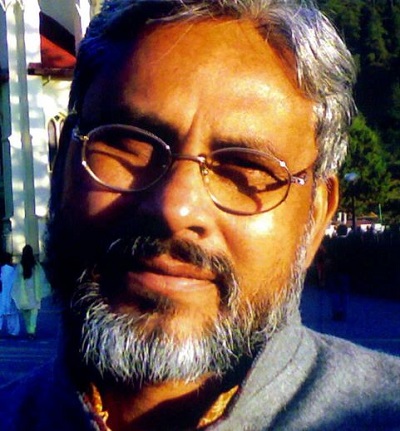
(The author associated with the socialist movement is a former teacher of Delhi University and a fellow of Indian Institute of Advanced Study, Shimla)