

THE ASIAN INDEPENDENT UK
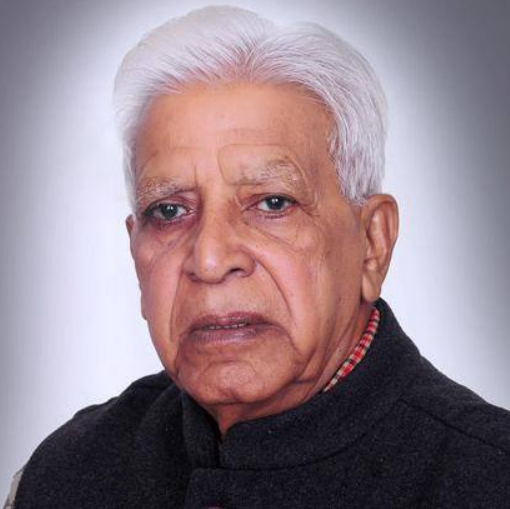
DR RAMJILAL, Social Scientist,
Former Principal, Dyal Singh College,
Karnal (Haryana, India).
Email [email protected]
Abstract:
The Kamboj are an ancient warrior-farmer community of India. During the mediaeval period, a section of the Kamboj community embraced Islam and came to be known as Muslim Kambojs. Settled across Punjab, Haryana, Western Uttar Pradesh, Rajasthan, and present-day Pakistan, this community—like other Indians—contributed to the struggle against British imperialism on every front between 1857 and 1947. Their participation ranged from the mass uprising of 1857 to peasant revolts and movements, Congress-led campaigns, and the Azad Hind Fauj (Indian National Army).
This study presents a systematic account of their contributions, organised chronologically and categorised by specific movements and geographical regions.
Details:
According to Dr Ramji Lal, the 1857 uprising began in the Meerut and Ambala cantonments. The Kamboj Nawabs of Meerut remained loyal to the British, whereas the Kamboj Zamindars of Bulandshahr became revolutionaries. Nawab Ahmadullah Khan Kamboj and Nawab Asadullah Khan Kamboj assisted in suppressing the rebellion but were subsequently attacked and looted; they later received honours from the British between 1885 and 1895 (Lal, Ramji, Dr., July 26, 2026).
In contrast, Azim Khan Kamboj, a prominent Zamindar of Bulandshahr, fought alongside Nawab Wali Dad Khan in the Battle of Mala Ghat on October 10, 1857; he was subsequently captured and executed. His son, Haji Munir Khan Kamboj, led the forces in the Battle of Gulaothi on July 29, 1857, where he was martyred. (Lal, Ramji, Dr. ,July 26, 2026).
Resistance to the popular uprising of 1857 was observed across several regions, including western Uttar Pradesh, Punjab, and Haryana. In areas surrounding western Uttar Pradesh, Ambala, Karnal, Kaithal, and the princely state of Patiala, Muslim Kamboj ‘zamindars’ (landowners) provided supplies, protection, and shelter to rebel freedom fighters (Azadi ke sipahi). During the Siege of Delhi—an uprising led by Bahadur Shah Zafar—British military records mention the “Kamboj Irregular Cavalry” in reference to the Muslim Kambojs of Panipat.
The role of Allah Dad Khan Kamboh, a Muslim lambardar (village headman) from Asandh, came to light during the 1857 Karnal uprising, he was accused of supplying horses to the rebels during this significant revolt. As a consequence of his actions, authorities confiscated his 400 *bighas* of land. Additionally, six Kamboh families in the Guhla-Cheeka area of Haryana were listed as “traitorous zamindars” for sheltering a supporter of Nana Rao Peshwa.
According to the 1860 Meerut Commissioner’s report, twelve Muslim Kambojs from the Behat police station area in Saharanpur district (Uttar Pradesh) were arrested on charges of allegedly funding the Wahabi movement. Despite these arrests and the associated persecution, the revolutionary zeal of the Kamboh community did not diminish.
Furthermore, the Kambojs were actively involved in the Kuka movement of 1872, led by Satguru Ram Singh. During this movement, Muslim Kambojs collaborated with Sikh Kambojs from the Raikot police station area in Punjab’s Ludhiana district. It is noteworthy that the name of Ibrahim Kamboh—accused of concealing weapons following the Malodh massacre—was included in an FIR registered at the Raikot police station.
From 1860 onwards, Muslim Kambohs participated in agrarian and Wahhabi movements in Punjab—predating the “Pagri Sambhal Jatta” movement—and raised issues concerning canal water rights. Furthermore, they significantly strengthened the Wahhabi and Mujahideen movements—linked to the networks of Ahmed Barelvi and the Patna centre—by providing financial support from Ambala and Saharanpur; some Kambohs were even arrested in connection with the Ambala Conspiracy Case of 1864. Muslim Kambohs associated with Sufi movements propagated the message in Kamboh villages around Panipat that serving the British was ‘haram’ (forbidden).
World War I began in 1914 and lasted until 1918. During the war, over 200 members of the Ghadar Party returned to Punjab from the United States and Canada; among them were 17 Muslim Kambohs from the Ferozepur and Montgomery districts. They were tried in the Lahore Conspiracy Case of 1915 (also known as the First Lahore Conspiracy Case).
The ‘Tehrik-e-Reshmi Rumal’ (Silk Letter Movement) also holds a significant place in the national movement; Haji Fazal Din Kamboh from Karnal was a member of the delegation that accompanied Ubaidullah Sindhi (alias Buta Singh Uppal) to Afghanistan, although his name does not appear in standard historical records. Their primary objective was to launch an attack on British imperialism in India from Kabul.
The Jallianwala Bagh massacre on 13 April 1919:
The Jallianwala Bagh massacre, which occurred on 13 April 1919, was a planned event in which around 1,800 people were killed, according to Lt Col Dr Henry Smith, the Civil Surgeon of Amritsar (April 1919). The famous martyr Udham Singh Kamboj, known as “Shaheed-e-Azam”, Udham Singh (Sunam); and the lesser-known, unsung hero of the freedom struggle, Chaudhary Muhammad Sharif Jora (Kamboh), from the village Olewal near Amritsar. Remarkably, both were eyewitnesses to the tragedy and survived. (From the wall of Chaudhary Tanveer Ahmad Dhot Kamboja, editor of The Kamboj Times (Urdu-Pakistan)). Udham Singh, a socialist revolutionary and nationalist, sought revenge for the massacre by assassinating Michael O’Dwyer at Caxton Hall, London, on March 13, 1939. He was later executed by hanging on July 31, 1940.
The Role of Muslim Kamboj in National Movements Led by Mahatma Gandhi:
Khilafat and Non-Cooperation Movements (1919–1922):
Under the leadership of Mahatma Gandhi, the Congress Party launched the Khilafat and Non-Cooperation movements (1919–1922); during this period, Muslim Kamboj ‘panchayats’ in Ambala, Yamunanagar, and Saharanpur collected funds in support of the Khilafat movement. The Khilafat Conference held in Karnal in 1921 was presided over by Chaudhary Ilahi Bakhsh Kamboj. A key aspect of this movement was non-cooperation with the government; many Indians resigned from government jobs and withdrew from government schools and colleges. In this context, Master Noor Mohammad Kamboj from the Karnal area resigned from his job to establish a national school. (Mittal, S.C. 1986)
Civil Disobedience Movement (1930):
The Civil Disobedience Movement was launched by the Congress in 1930 under the leadership of Mahatma Gandhi. Records from the Karnal District Jail register document the participation of Muslim Kambohs in this movement; the names of 23 Muslim Kamboh Satyagrahis are listed in the register. B. Aamna Kamboh courted arrest after manufacturing salt in Lahore.
Following this movement, ‘Individual Satyagraha’ was launched in 1940 under Mahatma Gandhi’s leadership during the Second World War. During this movement, Maulvi Ghulam Rasul Kamboh of Karnal district was sentenced to one year in prison.
In 1942, the Quit India Movement was launched under the leadership of Mahatma Gandhi, marking a pivotal moment in India’s quest for freedom. This movement garnered considerable support from both Hindu and Muslim communities across the nation. significantly unsettled the British Empire, with reports indicating that the Governor-General of India advised the British government that they had to either quit India or brace for severe repercussions. An important aspect of the Quit India Movement was the absence of communal riots, according to reports from state governments sent to the Ministry of Home Affairs. While the Muslim League did not officially partake in the movement, many Muslims actively participated in the struggle for independence.
The leading role was played by young Muslim Kambohs of Ambala. As a result, the Kamboh Mohalla of Ambala was declared a Disturbed Area, and on 14 August 1942, an FIR was registered for eleven youths in the police station. (FIR NO. 89/429). In this movement, Fatima B. Amina Kamboj (from Karnal) was detained and placed under 6 months’ house arrest for cyclostyling and distributing underground leaflets. (Home Political File No. 23/1930).
1923–1939: Congress, Journalism, the Peasant Movement, and Ahrar:
During the period from 1923 to 1939, Obaidullah Molvi, alias Buta Singh (Sialkot), and Mian Amiruddin Kamboh (Sheikhupura) participated as delegates in the 1929 Lahore Session of the Congress, where the resolution for Purna Swaraj (Complete Independence) was passed.
Between 1915 and 1922, Hakim Karam Ilahi Kamboh from Yamuna Nagar, Haryana, played a significant role in raising awareness among farmers about the oppressive policies of the British imperial government. He accomplished this by contributing numerous articles to the Urdu newspaper ‘Zamindar’, which was established in Lahore by Zafar Ali Khan. In 1935, the Urdu newspaper ‘Siyasat’ published an article titled “Muslim Kamboj of Punjab and Congress” (Punjab ke Muslim Kamboh aur Congress). This article confirmed that Muslim Kambohs led the Congress committees in thirty villages.
In addition to this activism, under the leadership of the Majlis-e-Ahrar, Muslim Kamboh youth from Yamuna Nagar and Jagadhri initiated a “Jail Bharo” (Fill the Jails) movement in opposition to pro-British forces. Notably, during this time, although the Unionist Party was in power in Punjab, the Muslim Kamboh community increasingly aligned itself with the Congress and the Kisan Sabha, particularly after 1937 (Yadav, K.C., 1988).
The Azad Hind Fauj (Indian National Army): 1942–1945:
Many Muslim Kamboj soldiers served the nation in the Azad Hind Fauj (Indian National Army, 1942–1945); among them, Captain Abdul Aziz Kamboj and Lieutenant Vilayat Ali Kamboj were martyred on the Bangkok front (Rangoon) in 1944. Havildar Major Yusuf Ali Kamboh brought honour to the community by sacrificing his life for the nation’s freedom during the military conflict at Imphal-Kohima. Lieutenant Shamshad Begum (Lahore) of the Rani of Jhansi Regiment was a nursing officer and served by providing nursing care. According to records from the National Archives in Delhi, there were more than 200 Punjabi Muslim Kamboj soldiers among the 45,000 troops who joined the Azad Hind Fauj (Bhargava, M.L. (1967)). Who’s Who of INA, Papers, F.No.601/INA, National Archives, New Delhi.)
Role of Muslims Kamboh women:
Women also played a significant role alongside men in the national movement leading up to 1947. During the 1857 uprising in North-Western India (present-day Uttar Pradesh, including Meerut and Muzaffarnagar), women—both Hindu and Muslim—made unprecedented contributions; Kamboj women were among them, though caste details were not recorded at the time. It is difficult to state with absolute certainty which specific Muslim Kamboj women participated in the 1857 revolution. Historical records confirm that B. Amna Kamboh participated in the Civil Disobedience Movement in Lahore in 1930 by manufacturing salt. In 1942, Fatima B. (Karnal) participated in the Quit India movement and was detained and placed under 8 months’ house arrest for cyclostyling and distributing underground leaflets. Lieutenant Shamshad Begum (Lahore) of the Rani of Jhansi Regiment was a nursing officer and served by providing nursing care.
Formation of Muslim League to The Lahore Resolution (March 22 — 24, 1940): Muslim Kambohs
The All-India Muslim League was founded in 1906 in Dhaka to protect Muslim political rights. Many Komboi Muslims, mainly agrarian landlords from Punjab, Haryana, and Uttar Pradesh, initially joined the league for community representation but also took part in the Congress Khilafat (1920-22) and anti-colonial peasant movements.
The Lahore Resolution (March 22–24, 1940) completely altered the course of the Muslim national movement; by providing ideological reinforcement to the Two-Nation Theory, it gave Muslims a concrete goal—a sovereign state known as Pakistan. Driven by the desire to establish a separate nation free from the fear of Hindu majority dominance, students, women, labourers, and the general Muslim public across British India began to rapidly rally behind the Muslim League and Muhammad Ali Jinnah.
The Lahore Resolution was a great divide not only for India, but also for the Muslim-Kamboj community. The Muslim-Kamboj community had a great split; some of the landed aristocracy supported the Lahore Resolution vis-à-vis Pakistan and consequently were divided within themselves.
The most important political personalities of the Kamboh community who joined the Muslim League were Nawab Mohammad Ismail Khan Kamboh (U.P. Member, Constituent Assembly of India, 1946-1950); Nawab Julfikar Ali Khan Ali Kamboh (Ferozepur); Khan Bahadur Chaudhari Fateh Ali Khan Kamboh (member, Punjab Legislative Council in the early 1920s, Ambala); Mian Abdul Aziz Kamboh (Lahore); Chaudhari Khurshid Ahmad Kamboh (Karnal); Mian Amrudin Kamboh (Sheikhupura); and Nawab Iftikhar Hussian (Mamdot Estate).
It is pertinent to refer to Nawab Mohammad Ismail Khan Kamboh of Meerut (U.P.), who was a prominent leader of the Muslim League in U.P.; elected to the Central Assembly, 1923 and 1926, and to the U.P. Assembly, 1937; the lone Kamboh member of the Constituent Assembly of India, 1946-50; a member of Parliament, 1950-52; took an active part in the Khilafat movement in U.P.; a prominent leader of the Muslim League, 1930-46; a member of the Working Committee of the All India Muslim League for a long time; president of the U.P. Muslim League; and a member of the League Action Committee, 1945-46. Despite being very close to Mohammad Ali Jinnah, he decided to stay in India and has made significant contributions in constituent assembly debates regarding minorities and in the field of education as vice-chancellor of Muslim University, Aligarh (1947–48).
The Aman Committee (1946):
The Aman Committee, also known as the Peace Committee, was established in 1946 by the Muslim Kamboh Panchayat in Yamuna Nagar. This committee played a crucial role in fostering peace and preventing communal riots by working collaboratively with members of the Sikh community. Their efforts were acknowledged in a report by the Deputy Commissioner of Yamuna Nagar, dated October 12, 1946.
The Partition of India 1947:
The aftermath of the 1947 Partition of India led to massive upheaval as British India divided into India and Pakistan, triggering one of history’s largest mass migrations. Millions moved to join their religious majorities, resulting in communal riots that caused up to a million deaths, widespread family separations, and economic disruption, with refugee camps straining resources. During this time, Chaudhary Khurshid Ahmed Kamboh ensured security for a caravan from Karnal to Lahore and founded the Kamboj Welfare Association in 1950 to help Muslim families. Chaudhary Ranbir Singh Hooda also advocated for the rehabilitation of displaced individuals in Parliament from 1949 to 1950.
In summary, the Muslim Kamboh community, though small in numbers, has significantly contributed to various movements in Indian history, thanks to their ancient legacy, agrarian roots, and connections to Sufi-Wahhabi networks that encouraged activism. Their participation is especially evident during the Revolt of 1857 against British rule. In 1942, they used cyclostyle machines to spread revolutionary literature and rally support for independence. Their involvement continued in 1944 with the Indian National Army.
The Partition of India in 1947 complicated their narrative, dividing the community and making it harder to document their history. However, sources from gazetteers to oral histories reflect their important contributions and sacrifices in the independence struggle.
Through a thorough examination of the Muslim Kamboh community’s role, it becomes clear that their journey reflects the inclusive and diverse character of the Indian freedom struggle, showcasing how even the smallest communities can leave a lasting impact on the larger narrative of a nation’s fight for liberty.
Read Research Sources and Records:
>Note.Dr. RAMJILAL is author of Political India 1935 -42: Anatomy of Indian Politics (1986, New Delhi).
>Lal.Ramji. Dr. (July 26, 2026), The Muslim Era (712 AD – 1857 AD): The Role of the Muslim Kamboh Community – A Review/https://theasianindependent.co.uk/the-muslim-era-712-ad-1857-ad-the-role-of-the-muslim-kamboh-community-a-review/
>Lal.Ramji.Dr.(July 26, 2026), The Muslim Era (712 AD – 1857 AD): The Role of the Muslim Kamboh Community – A Review//samajweekly.com/the-muslim-era-712-ad-1857-ad-the-role-of-the-muslim-kamboh-community-a-review/
>Mittal, S.C. (1986), *Khilafat Movement in Haryana.
>Home Political File NO 23/1930. National Archives of India, Karnal District Jail Records.
>Karnal District Gazetteer,1892-1918.
>Lahore Conspiracy Case,1915, National Achieves of India, New >https://en.wikipedia.org/wiki/Lahore_Conspiracy_Case_trial Delhi.
>https://en.wikipedia.org/wiki/Ubaidullah_Sindhi
>https://www.heritagetimes.in/silk-letter-movement-name-of-all-59-charged-by-the-british-for-waging-war-against-the-crown
>Yadav, K.C.(1988) Punjab’s Contribution to Freedom Struggle, Riyasat, Newspaper, 1935)
>Bhargava, M.L. (1967), Who’s Who of INA, Papers, F.No.601/INA, National Archives, New Delhi.
>Lal.Ramji. Dr.(January 22, 2025)Netaji Subhash Chandra Bose – Charismatic Great Personality: An Evaluation https://theasianindependent.co.uk/netaji-subhash-chandra-bose-charismatic-great-personality-an-evaluation/#google_vignette
>Home Political File 23/1930, National Archives of India, New Delhi.
>Punjab Police Abstract of Intelligence1915-1940.
>Oral History Interview No.342,Nehru Memorial Museum, New Delhi.
>Proceedings of AIML 27th Session ,Lahore ,1940, NAI, New Delhi-Deligates list-Chaudhary Khurshid Ahmad Kamboh and Mian Amiruddin Kamboh.
>https://en.wikipedia.org/wiki/Nawab_Mohammad_Ismail_Khan>https://nehruarchive.in/people/nawab-muhammad-ismail-khan
>Constituent Assembly Debates, Volume X1, 14 November 1949 – Oath by M. Ismail Khan.
> Fazl-ul-Haq. Hakim (1952),Tawarikh-e-Kambohan, Jamia Hamdard Library
AIR Jalandhar (1972). Our Freedom Fighters Series (1972)
>Proceedings of the Constituent Assembly from 1949 – 1950
>Lal.Ramji. Dr.(January 22, 2025)Netaji Subhash Chandra Bose – Charismatic Great Personality: An Evaluation/https://theasianindependent.co.uk/netaji-subhash-chandra-bose-charismatic-great-personality-an-evaluation/#google_vignette