THE ASIAN INDEPENDENT UK

Bal Ram Sampla
Geopolitics
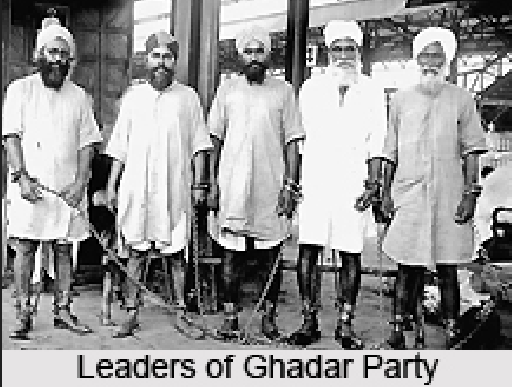
In the early 20th century, thousands of miles away from India, a group of immigrant workers and intellectuals started a revolution. Founded in North America in 1913, the Ghadar Party was created to overthrow British rule in India through armed rebellion.
While the British managed to defeat the party’s 1915 uprising, the movement’s core spirit, built on radical equality and brotherhood, did not die. Instead, it travelled back to Punjab, where returning revolutionaries transformed the fight against foreign rulers into a fight against domestic caste oppression, giving birth to the historic Ad Dharm movement.
1. The Formation of the Ghadar Party (1913)
At the turn of the century, thousands of men from Punjab moved to Canada and the United States. Most were former soldiers, farmers, and manual laborers who worked in lumber mills, on railroads, and on California farms. Alongside them was a smaller group of Indian students and intellectuals attending American universities.
Why the Party Was Built
Life in North America was tough. Indian immigrants faced intense racial discrimination, violent riots, and laws designed to prevent them from owning land or bringing their families. When they protested to local authorities, they were told that because India was a colony of Great Britain, they had no strong government to back them up.
Realizing that their dignity abroad depended on freedom at home, immigrant leaders decided to organize.
Key Founding Figures
In May 1913, meeting in Astoria, Oregon, and later establishing their headquarters in San Francisco, California, they formed the Pacific Coast Hindustan Association, soon known worldwide as the Ghadar Party:
(1) Baba Sohan Singh Bhakna
A Punjabi Sikh labourer and farm worker who became the party’s founding President.
(2) Lala Har Dayal
A brilliant scholar and strategist who became the party’s primary secretary and chief editor.
(3) Kartar Singh Sarabha
A 17-year-old student at UC Berkeley who managed the party’s printing press and became one of its chief organizers.
They set up their central headquarters, named the Yugantar Ashram in San Francisco and published a weekly newspaper called Ghadar (meaning “Rebellion” or “Mutiny”). Thousands of copies were printed in Punjabi, Urdu, Hindi, and Bengali, and smuggled to Indian troops and diaspora communities around the globe.
2. The Radical Practice of Equality Inside Ghadar
What made the Ghadar Party truly revolutionary was not just its weapons, but its culture. Back in India, British colonial policy intentionally divided people by religion and caste. Inside the Ghadar Party, those barriers were deliberately smashed.
(1). Abolishing Caste Boundaries
Inside the Yugantar Ashram, party members lived, slept, worked, and cooked together. Upper-caste intellectuals and lower-caste labourers shared communal kitchens (langar). For Dalit workers who had experienced untouchability in India, eating from the same dish as high-caste comrades was a life-changing experience. As activist Babu Mangoo Ram Mugowalia later recalled, California created a space where Indians saw each other as equals fighting a common struggle.
(2). Strict Secularism
The Ghadar Party enforced a strict rule against religious division. Members were Sikhs, Hindus, and Muslims, but the official party creed stated: “Our religion is patriotism.” Religious arguments were banned at headquarters, creating a united front against British imperialism.
(3). Immediate Independence
While political groups inside India were still writing polite petitions asking the British for reforms, the Ghadar Party called for total, immediate independence (Purna Swaraj) and equal rights for every citizen regardless of background or gender.
3: The 1915 Uprising and the Return Home
When World War I broke out in 1914, Ghadar leaders saw an opportunity. With British troops busy fighting in Europe, thousands of Ghadarites boarded ships from America back to India, intending to lead a mass military mutiny among Indian soldiers in British garrisons.
However, British intelligence infiltrated the party. Through spies and wartime emergency laws, the colonial government arrested hundreds of revolutionaries before the uprising could start. Dozens of leaders were hanged in the Lahore Conspiracy Trials, and hundreds were sent to the infamous Cellular Jail in the Andaman Islands.
The armed mutiny was crushed, but the survivors carried the Ghadar ideology back into the villages of Punjab.
4: How Ghadar Transformed into the Ad Dharm Movement
One of the Ghadarites who survived the crackdown was Babu Mangoo Ram Mugowalia. Born into a Dalit family in Hoshiarpur, Punjab, Mangoo Ram had suffered severe caste discrimination before emigrating to California in 1909.
When Mangoo Ram returned to Punjab in 1925 after a decade in hiding, he realized something striking: while the Ghadar Party had created equality among revolutionaries abroad, social oppression back in Punjab remained unchanged. Landless Dalit workers were still denied land ownership, forced into unpaid labour , and excluded from public places.
Mangoo Ram realized that national freedom from the British would mean very little to marginalized communities if they remained enslaved by the caste system. He contacted the Ghadar headquarters in San Francisco, explaining that the fight for freedom had to start at home. The Ghadar leadership gave him their full support.

5: The Ad Dharm Movement in Action (1926)
In 1926, Mangoo Ram alongside fellow activists founded the Ad Dharm movement in Jalandhar, applying Ghadar organizational techniques directly to the fight for Dalit rights.
(1). Identity & History
Rejected Hindu and Sikh religious authority, claiming Dalits were the original inhabitants (Moolnivasi) of India.
(2). Land Alienation
Campaigned against laws that legally barred non-agricultural castes from owning farmland in Punjab.
(3). Forced Labour
Organized strikes and village boycotts against forced, unpaid labour demanded by local landlords.
(4). Political Power
Successfully petitioned the 1931 Census to recognize “Ad Dharmi” as a distinct legal identity, creating an independent voting block.
The Ad Dharm movement adopted the Ghadar Party’s structure: they set up headquarters, published their own newspaper (Ad Danka), built schools, and organized mass political rallies across Northern India.
Conclusion
The story of the Ghadar Party and the Ad Dharm movement shows how a revolutionary idea can evolve and adapt:
(1). A Blueprint for Equality:
The Ghadar Party proved that Indians of all backgrounds, religions, and castes could work together as equals when given an egalitarian environment.
(2). A Dual Liberation:
By transitioning from national liberation (Ghadar) to social liberation (Ad Dharm), these activists expanded the definition of freedom to include both independence from foreign rulers and liberation from internal oppression.
Though the Ghadar Party failed to overthrow the British Raj by military force in 1915, its radical commitment to equality succeeded in planting the seeds for modern democracy, worker rights, and anti-caste political power in India.
References
1.https://youtu.be/jenOwmbpLNE?si=XSrKZ7U7mNvMRgt-
2.https://www.researchgate.net/publication/231925996_Ravidass_Deras_and_Social_Protest_Making_Sense_of_Dalit_Consciousness_in_Punjab_India
3.https://punjab.global.ucsb.edu/sites/secure.lsit.ucsb.edu.gisp.d7_sp/files/sitefiles/journals/volume16/no1/1-Ronki%20Ram16.1
4.https://openlibrary.org/books/OL4109305M/Religion_as_social_vision?hl=en-
5.https://www.saada.org/explore/archive/items/20101216-153?hl=en-
6.https://www.cambridge.org/core/journals/journal-of-asian-studies/article/abs/religion-as-social-vision-the-movement-against-untouchability-in-twentiethcentury-punjab-by-mark-juergensmeyer-berkeley-university-of-california-press-1982-x-282-pp-photographs-appendixes-list-of-interviews-glossary-of-indian-terms-bibliography-index-30/D25ECA1689650807686A6B254A597831?hl=en