THE ASIAN INDEPENDENT UK

Bal Ram Sampla
Geopolitics
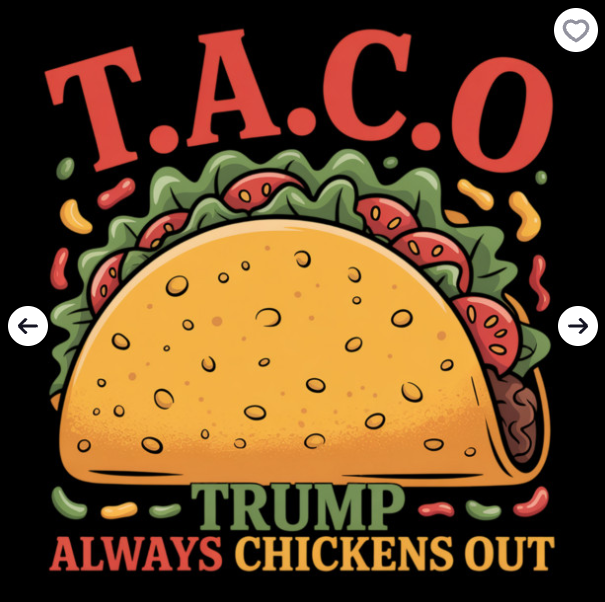
The “TACO” stands for “Trump Always Chickens Out.” Coined by Financial Times columnist Robert Armstrong, it is a piece of Wall Street slang used to describe a predictable pattern: President Donald Trump makes a highly aggressive threat (like massive tariffs or military strikes), the stock market panics and plunges, and then Trump walks back the threat, causing the market to violently surge upward.
While Wall Street traders look at this pattern as a highly profitable “buy-the-dip” strategy (known as the TACO Trade), to journalists, investigators, and critics, this exact behavior looks incredibly suspicious.
This pattern looks like potential stock market manipulation to some of the journalist:
1. Creating Artificial “Dips” and “Peaks”
In a normal economy, stock prices move based on company earnings, data, and unexpected world events. With the TACO pattern, the volatility is created entirely by the President’s words.
The Suspicion: Journalists worry that because these massive market drops and surges are triggered solely by social media posts or press announcements, it creates an environment ripe for manipulation. If anyone knows exactly when the President is going to threaten a country or when he plans to call it off, they can make billions of dollars in hours.
2. The Risk of Insider Trading
Every time a TACO cycle happens, a massive amount of money changes hands. For example, right before Trump announced he was canceling strikes on Iran, financial analysts noticed a sudden, massive surge in trading, investors betting heavily that oil prices would drop and stocks would rise, less than an hour before the public announcement.
The Suspicion: Journalists find this timing deeply suspicious. It raises the question of whether “insiders” such as wealthy donors, political allies, or business friends are getting advanced notice of the President’s sudden shifts, allowing them to buy stocks at a deep discount right before the guaranteed rebound.
3. Markets as a “Scorecard” rather than Policy
Trump is unusually open about treating the stock market as a personal scorecard of his success. He frequently takes credit for days when the market hits record highs.
The Suspicion: To a cynical journalist, the TACO behavior looks like a manufactured feedback loop. By intentionally making a threat that suppresses the market, the President sets up a situation where he can easily “save the day” by walking it back. The resulting market spike allows him to claim a political victory, even though he is simply fixing a problem that he created a few days prior.
Summary
To the President and his defenders, TACO isn’t manipulation—it is just “The Art of the Deal” negotiation style; you make an extreme threat to get leverage, and then you negotiate down. But to journalists, the fact that these dramatic public flip-flops consistently trigger multi-billion-dollar shifts in the financial markets creates a dangerous environment where people with inside knowledge can easily manipulate the system for immense private profit.
The wild up-and-down market swings are a direct consequence of using social media to conduct high-stakes war-and-peace diplomacy in real time. While critics and journalists point out that day-traders and insiders can easily exploit this volatility to make vast fortunes, there is no proof that market manipulation for his friends is the actual motivation behind the decisions.
References
1.https://www.theguardian.com/world/live/2026/jun/11/iran-war-news-us-strikes-donald-trump-stalled-peace-talks-middle-east-crisis?CMP=share_btn_url
2.https://www.cbsnews.com/live-updates/iran-war-trump-us-strait-of-hormuz-attacks/?hl=en-GB
3.https://www.cbc.ca/radio/asithappens/how-a-financial-columnist-coined-taco-to-describe-trump-s-tariffs-flip-flops-1.7547492?hl
4.https://instituteofgeoeconomics.org/en/research/2026041502/