

THE ASIAN INDEPENDENT UK

Bal Ram Sampla
Geopolitics
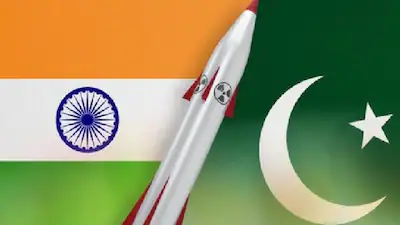
The latest report from the Stockholm International Peace Research Institute (SIPRI) highlights a massive shift in the nuclear balance between India and Pakistan. For years, Pakistan had a slightly larger nuclear arsenal than India.
However, the new numbers show that India has now surpassed Pakistan, holding an estimated 190 nuclear warheads compared to Pakistan’s 170.
More importantly, the report reveals that India has started keeping about 12 of its nuclear weapons fully assembled and ready for use, mostly on its submarines. This breaks from India’s old habit of keeping its nuclear bombs stored in pieces away from their missiles during peacetime.
This change sends a strong message to Pakistan, which has spent years threatening to use “tactical” (small, battlefield-ready) nuclear weapons first if a regular war broke out with India. Here is what this new reality means for Pakistan.
1. The Threat of Pakistan’s “First Use” Strategy
Pakistan’s military strategy has always been based on a “First Use” policy. Because India’s regular military (its army, tanks, and jets) is much larger and wealthier, Pakistan openly stated that it would use small nuclear weapons early in a conflict to stop an Indian invasion. Pakistan hoped this threat would make India think twice about ever launching a swift, conventional attack.
2. Why India’s Change Weakens Pakistan’s Bluffs
India’s new posture directly challenges Pakistan’s strategy in two major ways:
(1). Ready Second Strike: By placing ready-to-go nuclear weapons on submarines deep underwater, India ensures that even if Pakistan launched a surprise nuclear attack and destroyed India’s land bases, India’s submarines would survive to completely destroy Pakistan in response.
(2). Calling the Bluff: For a long time, Pakistan assumed India would take days to assemble its nuclear weapons during a crisis, giving international diplomats time to step in and stop the fighting. Now that India has weapons ready at a moment’s notice, the risk for Pakistan is much higher. Any small-scale nuclear launch by Pakistan could trigger an immediate, massive response from India.
3. The New Economic Reality
The SIPRI report also highlights an economic problem for Islamabad. Pakistan’s nuclear growth has stalled at 170 warheads, while India’s continues to rise. Pakistan is currently facing severe economic struggles, making it incredibly difficult and expensive to keep up with India in a nuclear arms race.
Meanwhile, India’s growing wealth allows it to build advanced technology like nuclear submarines and long-range missiles. While India’s primary focus is actually deterring a rising China, these advancements naturally leave Pakistan at a major disadvantage.
Conclusion
India’s new ready-to-use nuclear weapons mean Pakistan can no longer use loose nuclear threats as an easy shield. The stakes of starting a conflict are now higher than ever, forcing Pakistan to realize that its older strategy of nuclear blackmail has lost its power.
References
1.https://timesofindia.indiatimes.com/defence/news/in-big-shift-in-stance-india-may-have-deployed-12-n-warheads-its-n-warheads-up-to-190-from-180-sipri-report/articleshow/131619998.cms?hl=en-
2.https://www.udayindia.in/news/indias-nuclear-posture-enters-new-phase-as-sipri-reports-deployment-of-12-nuclear-warheads?hl=en-
3.India expands nuclear arsenal to 190 warheads, deploys some for first time: SIPRI https://www.theweek.in/news/defence/2026/06/09/india-expands-nuclear-arsenal-to-190-warheads-deploys-some-for-first-time-sipri.html
4.https://youtu.be/YoTCBVkgJuk?si=DXcaztRsODsYfA0G