THE ASIAN INDEPENDENT UK

Bal Ram Sampla
Geopolitics
As Canada tightens its grip on Khalistani extremism, a new hub has quietly emerged in Baku — backed by state-linked institutions, sustained by the Pakistan-Turkey-Azerbaijan axis, and designed to keep a flagging separatist movement alive on the world stage.
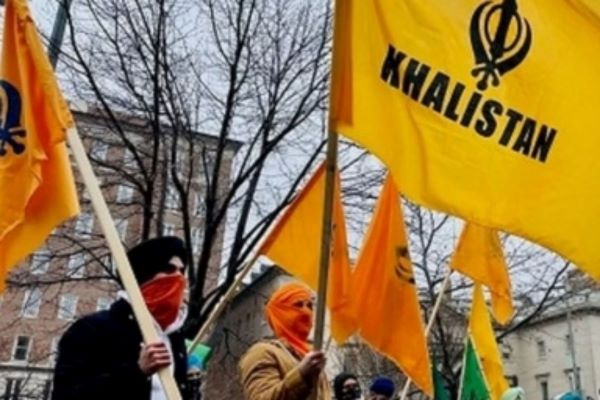
For nearly four decades, Canada served as the operational heartland of the Khalistan movement. Cities like Brampton, Surrey, and Mississauga became magnets for pro-separatist organizing, fundraising, and according to Western intelligence agencies , the planning of violence targeting India.
But the ground has shifted beneath the movement’s feet. A combination of diplomatic pressure, law enforcement action, and a fundamental change in Canadian political leadership has forced Khalistani networks to urgently seek new terrain. They appear to have found it in an unlikely place: the oil-rich, geopolitically ambitious nation of Azerbaijan.
Indian intelligence agencies are now tracking what officials describe as a deliberate “strategic pivot”. A reorganization of Khalistani networks away from scrutinized Western capitals and toward Baku, where state-linked institutions have rolled out a quiet but unmistakable welcome mat.
The Canada Factor: Why the Old Hub Fractured
The exodus from Canada did not happen overnight. It was the product of years of mounting pressure that finally reached a tipping point. The assassination of Hardeep Singh Nijjar in British Columbia in June 2023 and the subsequent diplomatic firestorm between Ottawa and New Delhi , accelerated scrutiny of Khalistani networks even as it briefly elevated their profile. Canadian security agencies began paying closer attention. The Canadian Security Intelligence Service (CSIS) publicly acknowledged that a small number of extremists were using Canada as a base for fundraising and planning violence in India.
The decisive shift came with the change of government in Ottawa. The departure of Justin Trudeau, under whose tenure India-Canada relations had collapsed to their lowest point in modern history, removed a key layer of political insulation the movement had enjoyed. Under Prime Minister Mark Carney, both governments have acknowledged Khalistani extremism as a shared national security threat and signaled cooperation in addressing it. In September 2025, Canadian police arrested Sikhs for Justice operative Inderjeet Singh Gosal on firearms-related charges, a signal that the era of near impunity was closing.
Baku Beckons: The Rise of a New Operational Hub
Azerbaijan was not an obvious choice. The country has a no Sikh population and no historical connection to the Khalistan movement whatsoever. Yet it has emerged, over the past eighteen months, as one of the movement’s most active international platforms. The reason lies not in demographics but in geopolitics.
Key Events in Baku
January 16, 2026 —Baku Initiative Group (BIG) hosts conference titled “Racism and Violence Against Sikhs and Other National Minorities in India.” Event includes a minute’s silence for slain Khalistani figure Hardeep Singh Nijjar. Prominent diaspora activists attend alongside Pakistani representatives.
March 2026 —BIG and Sikh Federation International (SFI) jointly publish “Beyond Borders: India’s Transnational Repression Against the Sikh Diaspora,” calling for a UN investigation into India and demanding sanctions on Indian intelligence chiefs.
May 17, 2026 —Azerbaijan President Ilham Aliyev personally receives Pakistan’s Punjab Chief Minister Maryam Nawaz Sharif in Baku, both sides praising the deepening Pakistan-Azerbaijan strategic partnership.
June 2026 —New seminar held at same Baku venue on “June 1984, Amritsar Events: India’s Transnational Repression Against Ethnic Minorities in the Context of Genocide,” with Pakistani and Khalistani-linked participants.
The January 2026 conference in Baku was a watershed moment. Titled “Racism and Violence Against Sikhs and Other National Minorities in India: The Reality on the Ground,” the event brought together several prominent figures from the Khalistani diaspora alongside Pakistani representatives.
Among the attendees identified by Indian investigative agencies was Moninder Singh, a leading figure in the Sikh Federation of Canada and a close associate of the late Nijjar. Also present were Prabjot Singh, legal adviser to the Sikh Federation International, and Dabinderjit Singh Sidhu — Senior Adviser to the Sikh Federation UK and a former associate of the International Sikh Youth Federation (ISYF).
Pakistan, Turkey, and Azerbaijan
To understand why Azerbaijan is providing a platform for Khalistani networks, one must understand the broader geopolitical alignment taking shape across Eurasia. Indian intelligence assessments and independent research by Disinfo Lab point to an emerging Pakistan-Azerbaijan-Turkey trilateral axis, bound together by shared adversaries and mutual strategic interests.
Pakistan
Long-standing patron of Khalistan networks; deepening strategic partnership with Baku; shared view of India and Armenia as regional rivals
Azerbaijan
Provides institutional cover via BIG; state-linked think tanks host anti-India conferences; leverages Khalistan issue to pressure New Delhi diplomatically
Turkey
Ideological and political backer; part of trilateral alignment; provides additional diplomatic shielding for anti-India narrative campaigns
Both Baku and Islamabad view Armenia as a common adversary — Azerbaijan fought a successful war to reclaim Nagorno-Karabakh in 2020 with crucial Pakistani and Turkish support. India, which has historically maintained warm relations with Armenia.
Pakistan has actively supported Azerbaijani narratives on the Armenia question, and in return, Azerbaijani institutions have progressively provided space for anti-India activities.
The hosting of Khalistan-themed international conferences by a country with virtually no Sikh population whatsoever is the clearest signal yet that it is a state-backed agenda, designed to serve the geopolitical interests of nations that view India’s growing regional influence as a threat to their own strategic calculations.
Think Tanks as Weapons
Perhaps the most significant evolution in Khalistani strategy is the shift from direct mobilization to narrative warfare. Rather than organizing rallies or funding operatives, the movement is increasingly investing in publications, legal reports, UN lobbying, and academic-style seminars that lend an air of legitimacy to separatist demands.
The March 2026 joint publication between BIG and the Sikh Federation International is a case study in this approach. The book, titled “Beyond Borders: India’s Transnational Repression Against the Sikh Diaspora,” calls for a United Nations investigation into India. SFI’s legal counsel, Prabjot Singh, separately drafted a report demanding personal sanctions against India’s intelligence chiefs. An escalation that signals the movement’s ambitions to deploy international legal mechanisms against New Delhi.
India’s Response
Indian security agencies are watching the Baku developments closely, though officials acknowledge the limitations of their reach in a country that does not share India’s security concerns. An Intelligence Bureau official, noted that Khalistan-linked groups are clearly “recalibrating their strategy in response to changing circumstances”.
New Delhi has so far relied on diplomatic channels to register its concerns.
But Azerbaijan presents a harder challenge than Canada or the United Kingdom. Unlike Western democracies, Baku operates outside the institutional frameworks , Five Eyes intelligence sharing, FATF oversight, mutual legal assistance treaties , that allow coordinated pressure on financing and operations. And with the Pakistan-Turkey-Azerbaijan axis actively deepening, the political will in Baku to accommodate Indian concerns appears limited.
The Khalistan movement is not what it was in the 1980s and 1990s, when it commanded mass mobilization, carried out spectacular acts of violence, and posed a genuine existential threat to Indian territorial integrity. It is smaller, more fragmented, and largely disconnected from sentiment on the ground in Punjab, where support for a separate Sikh homeland remains marginal. But the events in Baku reveal a movement that has learned to survive through adaptation, “pivoting from physical mobilization to narrative infrastructure, from a single hub to a distributed multi-country network, and from Western democracies to geopolitically convenient autocracies”.
For India’s security establishment, the challenge is to prevent that movement from finding permanent institutional shelter in the growing fault lines of a multipolar world and from successfully internationalizing a dispute that New Delhi has long insisted is a settled domestic matter.
References
1.https://www.newkerala.com/news/a/after-canada-shift-khalistan-groups-find-new-platform-563.htm
2.https://theshillongtimes.com/2026/06/04/after-canada-shift-khalistan-groups-find-new-platform-in-azerbaijan/
3.https://www.terrorismwatch.org/2026/06/azerbaijan-emerges-new-hub-for.html?m=1
4.https://organiser.org/2026/06/05/356786/world/khalistans-new-grazing-ground-azerbaijan-emerges-as-new-hub-for-turkey-pakistan-backed-anti-india-networks/
5.https://thedisinfolab.org
6.https://khalsavox.com/opinion/khalistan-travels-to-azerbaijan/