THE ASIAN INDEPENDENT UK

Bal Ram Sampla
Geopolitics
The United Nations maintains a special terrorism sanctions list known as the “1267 Regime” — named after the UN Security Council resolution that created it. Groups placed on this list face global asset freezes, travel bans, and arms embargoes enforced by all UN member states. It is far more powerful than any single country’s national terrorism list.
There is a catch, however. To get a group listed, the five permanent members of the UN Security Council — the US, UK, France, Russia, and China, must all agree. Any one of them can block a listing simply by objecting. This is called the veto power.
What Happened with the BLA?
Pakistan and China jointly asked the UN Security Council to list the Balochistan Liberation Army (BLA) and its suicide unit, the Majeed Brigade, under the 1267 regime. This happened first in September 2025, and then again in 2026.
Both times, the United States, joined by the United Kingdom and France blocked the request.
This surprised many people, especially in Pakistan, because the US had already designated the BLA as a Foreign Terrorist Organization under its own domestic law in August 2025. So why would the US list the BLA on its own national list but refuse to support the same at the United Nations?
Reason 1: The Legal Threshold Is Different
The UN 1267 list was originally created to target groups directly linked to Al Qaeda or ISIS (ISIL). Under its rules, a group must have a clear, documented connection to one of these two organisations to qualify for listing.
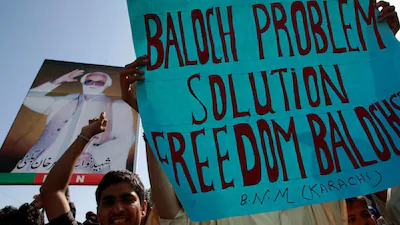
The US and its Western allies argued that the BLA does not meet this standard. The BLA is a Baloch separatist movement, it wants independence for the Balochistan region from Pakistan. It is not a jihadist group and has no known organisational ties to Al Qaeda or ISIS.
In short, the US position is: “We consider the BLA a terrorist group, but not the kind of group this particular UN list was designed for.”
Reason 2: Geopolitics, China Is Involved
This is where it gets more complicated. China and Pakistan are very close allies, largely because of the China-Pakistan Economic Corridor (CPEC) , a massive infrastructure investment worth tens of billions of dollars. The BLA has repeatedly attacked Chinese workers and Chinese-funded projects in Balochistan, making it a direct enemy of Chinese interests.
The West has long been suspicious of China’s use of the UN 1267 list for its own geopolitical purposes. China has previously used the same mechanism to block the listing of groups that attack India , most notably holding up the listing of Masood Azhar, the leader of Jaish-e-Mohammed, for years. The West sees a pattern where China pushes for listings that serve its interests while blocking those that serve others.
By refusing to support China and Pakistan’s joint request, the US and its allies are essentially pushing back against what they see as China’s selective use of the UN terrorism framework.
Reason 3: The BLA Has Sympathisers in the West
The Baloch independence movement has a degree of sympathy in Western human rights circles. Balochistan is Pakistan’s largest but poorest province. There are well-documented allegations of enforced disappearances, extrajudicial killings, and the suppression of Baloch political activists by the Pakistani state. Human rights organisations have raised these concerns for years.
While Western governments do not endorse the BLA’s violence, some within Western policy circles are reluctant to use the full weight of international law to crush a movement that also represents a genuine political grievance. A UN listing would freeze assets and severely restrict the BLA’s ability to operate globally , consequences some in the West are not yet comfortable imposing.
Reason 4: Strategic Leverage
By not supporting the UN listing, the US retains diplomatic leverage over Pakistan. Washington can use the threat or the promise of supporting a future UN listing as a bargaining chip in negotiations over trade, military cooperation, intelligence sharing, or other strategic interests.
If the US fully delivers everything Pakistan wants up front, it loses influence. Keeping Islamabad in a position where it still needs something from Washington is, from a purely strategic standpoint, useful.
The Contradiction
The situation creates an obvious contradiction: the US says the BLA is dangerous enough to be banned under American law, but not dangerous enough to warrant a global UN listing. Critics especially in Pakistan argue this is hypocritical and undermines the credibility of both the US and the international counter-terrorism framework.
For Pakistan’s Army Chief General Asim Munir, who cultivated close ties with the Trump administration and celebrated the US domestic designation as a diplomatic victory, the UN block is a significant setback. It shows that American goodwill has clear limits and that those limits are drawn where China’s influence and Western strategic interests collide.
References
1.https://www.yahoo.com/news/articles/us-designates-baloch-separatists-terror-050339040.html
2.https://dnd.com.pk/pakistan-believes-delay-is-not-a-verdict-as-us-once-again-blocked-proposal-to-designate-bla-under-un-1267/329775/
3.https://www.businesstoday.in/world/story/us-uk-france-block-pakistan-chinas-bid-to-sanction-balochistan-liberation-army-at-the-un-494759-2025-09-19
4.https://www.globalsecurity.org/security/library/news/2019/07/sec-190702-sputnik01.htm