SR Darapuri, National President, All India Peoples Front

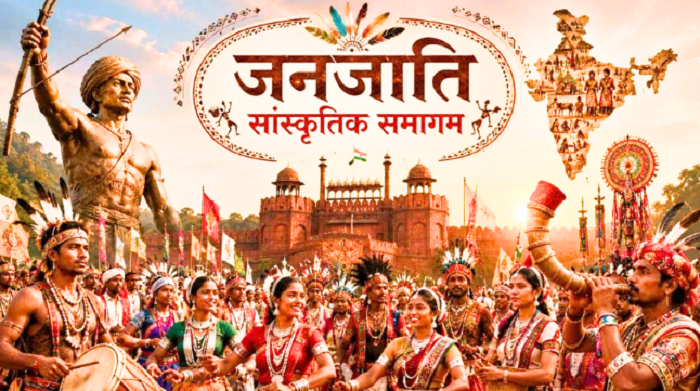
(Asian independent) Recently, on May 24, 2026, a Tribal Cultural Conclave was organized by the RSS in Delhi. During this event, demands were raised to create a rift within the tribal community and to exclude tribals who have converted to Christianity from the list of Scheduled Tribes. Through this initiative, an attempt was made to foster the misconception that if a tribal individual converts to Christianity, they should be stripped of the reservations and other benefits accorded to tribals as a Scheduled Tribe. In this regard, the constitutional position is that religion serves as no criterion for individuals belonging to the Scheduled Tribes category. There are distinct criteria for determining their identity—criteria which are discussed in detail in this article—so that the RSS’s attempt to sow division and conflict among tribals on the basis of religion can be fully understood.
The tribal communities of India constitute one of the most diverse and historically significant sections of Indian society. Officially recognized as “Scheduled Tribes” (STs) under the Constitution of India, these communities possess distinct social, cultural, linguistic, and historical identities. India is home to more than seven hundred tribal groups spread across different regions, particularly in Central India, the Northeast, the Himalayan belt, and parts of South India. The question of how tribal communities are identified and whether religion plays any role in such identification has been a matter of academic, constitutional, and political discussion for decades.
The identification of tribal communities in India is not primarily based on religion. Rather, it is linked to historical, cultural, ethnic, geographical, and socio-economic factors. Tribal identity is understood as a socio-cultural category rooted in a distinct way of life and a history of marginalization. Religion may influence tribal culture in some contexts, but it is not the constitutional criterion for recognizing a community as a Scheduled Tribe.
Historical Background of Tribal Identification
The process of identifying tribal communities began during the colonial period. British administrators and anthropologists classified certain communities as “tribes” because of their relative geographical isolation, distinct customs, traditional occupations, and different social organization from caste-based Hindu society. Colonial ethnographers often treated tribes as “primitive” or “backward,” reflecting the racial and evolutionary theories prevalent at that time.
After independence, the framers of the Indian Constitution recognized that tribal communities had suffered from historical neglect, exploitation, displacement, and lack of access to education and economic opportunities. Therefore, special constitutional protections were provided to them under the category of Scheduled Tribes.
However, the Constitution did not provide a precise definition of the term “tribe.” Instead, Article 342 empowered the President of India to specify which communities would be recognized as Scheduled Tribes in consultation with state governments and the Parliament.
Criteria for Identification of Scheduled Tribes
Although there is no rigid constitutional definition, certain criteria evolved through administrative practice and committee recommendations. The most influential among them was the Lokur Committee (1965), which suggested the following characteristics for identifying tribal communities:
Primitive traits, Distinctive culture, Geographical isolation, Shyness of contact with the larger community and Backwardness
These criteria reflected the anthropological thinking of that period. However, modern scholarship criticizes some of these expressions, especially terms such as “primitive,” as colonial and derogatory. Contemporary understanding places greater emphasis on cultural distinctiveness, historical marginalization, and community identity rather than notions of primitiveness.
Today, tribal communities are generally identified through the following features:
Distinct ethnic and cultural identity, Traditional customs and social practices, Separate languages or dialects, Strong connection with forests, hills, or specific territories, Community-based social organization and Historical deprivation and socio-economic marginalization
Examples of major tribal communities include the Gond Tribe, Santhal Tribe, Bhil Tribe, Munda Tribe, and various Naga Tribes. Each of these communities has its own language, customs, myths, rituals, and traditional institutions.
Constitutional and Legal Framework
The Constitution of India provides several safeguards for Scheduled Tribes. Article 342 authorizes the identification of ST communities. The Fifth Schedule provides for the administration and protection of tribal areas in central and peninsular India, while the Sixth Schedule grants autonomy to tribal areas in parts of Northeast India.
Additional safeguards include:
Reservation in education and government employment, Political reservation in Parliament and state legislatures, Protection against exploitation and land alienation and Special development programs for tribal welfare
The constitutional approach recognizes tribal communities as historically disadvantaged socio-cultural groups requiring affirmative action and protection.
Relationship Between Tribal Identity and Religion
Religion is not an official criterion for the identification of Scheduled Tribes in India. A tribal community retains its ST status regardless of the religion practiced by its members. Tribal identity is linked to ancestry, ethnicity, culture, and historical experience rather than to any specific religion.
Tribal communities in India follow a wide variety of faith traditions. Many continue to practice indigenous religions based on nature worship, ancestor worship, and animistic beliefs. Others have adopted Hinduism, Christianity, Buddhism, or Islam over time.
For example:
A large number of tribes in Northeast India are Christian, many tribal groups in Jharkhand, Chhattisgarh, and Odisha follow Sarna or other indigenous faith traditions, some tribal communities have incorporated Hindu rituals and deities into their cultural life, small sections have embraced Buddhism or Islam.
Despite these differences, their constitutional recognition as Scheduled Tribes remains unaffected because the basis of recognition is socio-cultural and historical rather than religious.
This position differs from the Scheduled Caste category where constitutional provisions historically linked eligibility to certain religions. In the case of Scheduled Tribes, no such religious restriction exists.
Debate Over Tribal Religious Identity
Although religion is not a constitutional criterion, tribal religious identity has become an important political and cultural issue in contemporary India. There are debates regarding whether tribal communities should be regarded as followers of independent indigenous faiths or as part of the broader Hindu fold.
Two terms often appear in this debate:
“Adivasi,” meaning original inhabitants or indigenous people. “Vanvasi,” meaning forest dwellers
Many tribal movements, scholars, and activists prefer the term “Adivasi” because it emphasizes the distinct historical and indigenous identity of tribal peoples. On the other hand, organizations associated with Rashtriya Swayamsevak Sangh often use the term “Vanvasi,” arguing that tribal communities are culturally connected with the wider Hindu civilization.
Critics argue that such approaches may dilute distinct tribal identities and assimilate tribal religions into mainstream Hinduism. Supporters contend that these efforts strengthen national integration and social unity. This debate reflects larger questions about identity, culture, indigeneity, and political representation in India.
Contemporary Challenges
Tribal communities today face numerous challenges despite constitutional protections. These include:
Displacement due to mining, dams, and industrial projects, Loss of forests and traditional livelihoods, Poverty and lack of access to quality education and healthcare, Cultural assimilation and erosion of indigenous languages and Political marginalization and exploitation
At the same time, tribal movements across India are increasingly asserting their rights over land, forests, culture, and religion. Demands for recognition of separate tribal religions in the census and protection of indigenous traditions have gained importance in several states.
Conclusion
The identification of Tribals or Scheduled Tribes in India is fundamentally based on socio-cultural distinctiveness, historical isolation, ethnic identity, and socio-economic marginalization. Religion is not the determining factor in tribal recognition. Tribal communities may follow indigenous faiths, Hinduism, Christianity, Buddhism, Islam, or other religions, yet their constitutional status as Scheduled Tribes remains intact.
The Indian constitutional framework recognizes tribal communities as unique cultural groups deserving protection, autonomy, and affirmative action. At the same time, debates over tribal identity, religion, and cultural assimilation continue to shape contemporary political and social discourse in India. The challenge before Indian democracy is to ensure that tribal communities can preserve their distinct identities while enjoying equality, dignity, and development within the broader national framework.