By: Surjit Singh Flora

(Asian independent) Separation talk has become a recurring theme in Canadian politics and community leaders. On one side are voices in Alberta and Quebec that have long pressed for more autonomy. On the other are critics who see those demands as a test of how much strain Confederation can carry. The debate now reaches beyond provincial borders, and it often pulls in outside movements with their own agendas.
The Khalistan movement is one example. It is a separatist campaign that seeks a sovereign Sikh state called Khalistan, or the “Land of the Khalsa,” in India’s Punjab region. Militant activity in India has largely faded, but the cause remains active in the diaspora. Groups such as Sikhs for Justice and Babbar Khalsa International still push the issue abroad through advocacy and, in some cases, extremist networks.
Recently, Canadian Security Intelligence Service had named Canada-based Khalistani extremism a national security threat. CSIS warned that a small number of extremists were using Canada as a base for support work, fundraising, and violent activity overseas, even if they were not actively planning attacks inside Canada. That assessment has added strain to Canada-India relations.
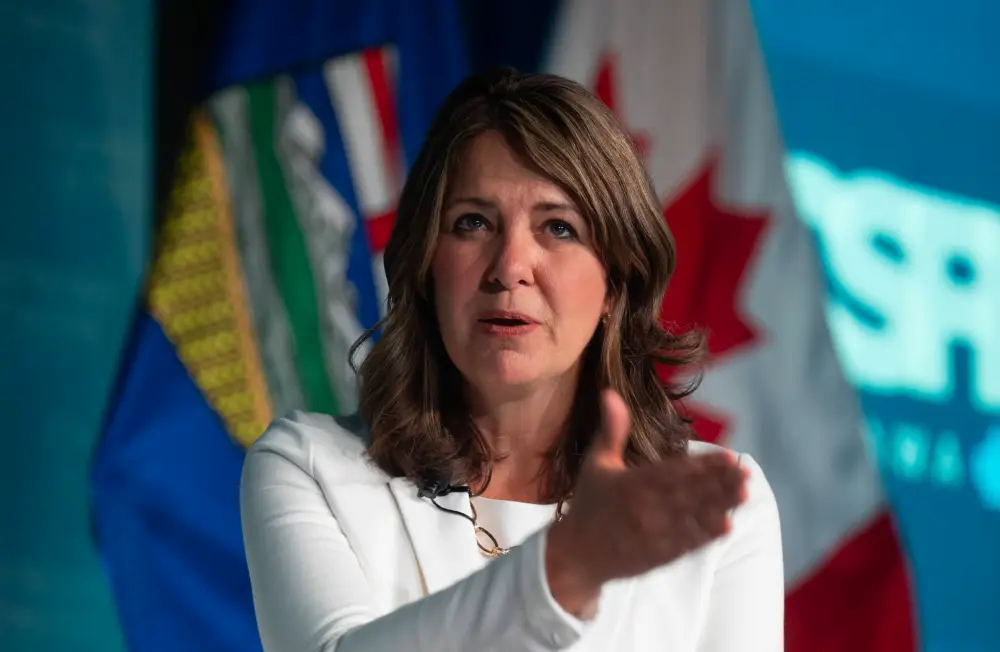
While Danielle Smith has become one of the sharpest dividing lines in Canadian politics. Supporters see the Alberta premier as a blunt defender of provincial rights. Critics see a leader whose style widens the gap between Alberta and the rest of the country.
That split grows out of long-running tension between Ottawa and the provinces. It also reflects Smith’s push for more provincial power and her hard-edged approach to federal policy. Her allies call it practical Self-defense. Her detractors see a threat to national unity. Much of the reaction depends on how much trust people place in the federal government.
The strongest criticism focuses on the Alberta Sovereignty Within a United Canada Act, which passed in late 2022. Opponents say the law gives Alberta a tool to resist federal rules it dislikes. In their view, that makes national law feel optional when it conflicts with provincial goals.
For critics, the act is more than a policy device. It suggests that Alberta is willing to test the limits of Confederation. The law lets the province push back against federal measures it sees as overreach, and supporters describe that as protection. Detractors see something else, a signal that one province can choose which federal decisions it will accept.
Smith’s tone adds to the dispute. Critics hear a combative message that sets Alberta against Ottawa. That style can rally her base, but it also hardens positions and makes compromise harder.
She does not openly campaign for separation. Even so, repeated talk of autonomy can make separatist ideas sound less extreme than they once did. In a federation that depends on trust, that language puts many Canadians on edge.
For many Albertans, Smith’s appeal is easy to explain. They believe Ottawa has ignored their concerns for years, especially on energy, jobs, and local control. Her message gives those voters a voice they think they lost in the national debate.
That frustration helps explain why her politics connect. Supporters see a premier speaking for people who feel shut out by central Canada. They read her tone as direct, not divisive.
Her focus on oil and gas is central to that support. Alberta’s energy sector still shapes jobs, investment, and public revenue, so her backers want a premier who pushes back when federal policy feels too restrictive.
Smith has said she wants a stronger Alberta inside Canada, not outside it. Supporters treat that as ordinary federalism, where provinces push back when they think Ottawa has gone too far. In that view, disagreement is part of Confederation.
The same approach can look brave to some and reckless to others. The difference often comes down to political values, trust in Ottawa, and how much tension a federation can handle before it starts to fray.
Smith’s approach has turned a policy fight into a wider test. It raises a basic question about how far a premier can press provincial interests before national unity starts to bend.
The argument over Danielle Smith is really about that larger question. Some Canadians see a defender of Alberta’s place in Confederation. Others see a leader who makes the country feel more divided. That split now defines the debate around her, and it is unlikely to fade soon.