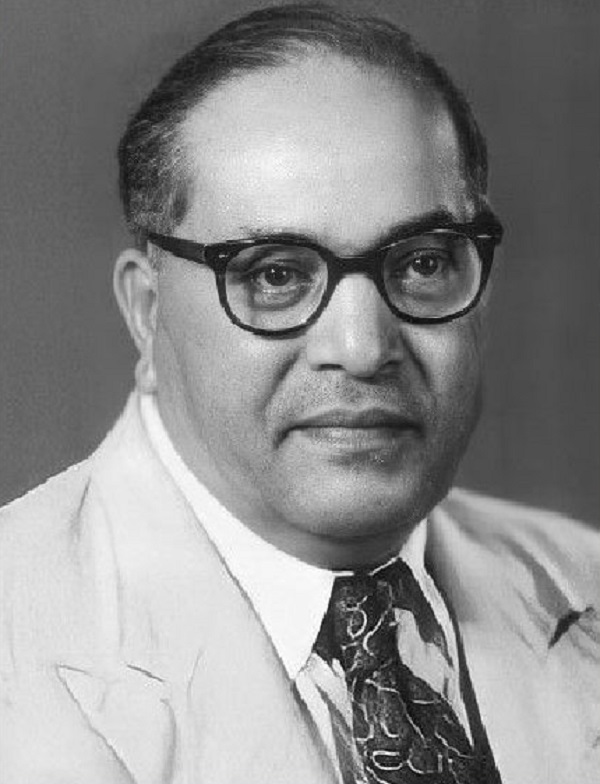
SR Darapuri, National President, All India Peoples Front
(special on 1 May International Workers Day)

(Asian independent) Bhimrao Ramji Ambedkar played a foundational and often underappreciated role in shaping labour welfare policy in modern India. His contributions were not limited to constitutional ideals but extended deeply into practical labour reforms during his tenure as Labour Member in the Viceroy’s Executive Council (1942–1946). His work laid the groundwork for many rights and protections that Indian workers continue to benefit from today.
- Institutional and Policy Leadership
As Labour Member under British India, Ambedkar was effectively the Labour Minister. In this capacity, he transformed labour governance from a colonial, exploitative framework into a more welfare-oriented system. He emphasized the need for state intervention to protect workers from unregulated capitalism.
He was instrumental in strengthening the International Labour Organization framework within India, aligning Indian labour policies with international standards.
- Reduction of Working Hours
One of Ambedkar’s most significant achievements was the introduction of the 8-hour workday in India. Before this reform, industrial workers often laboured for 12–14 hours a day under harsh conditions.
This reform brought India in line with global labour standards and marked a major shift toward humane working conditions.
- Social Security Measures
Ambedkar strongly believed that political democracy must be accompanied by economic security. He advocated for and initiated several social security measures, including:
Maternity benefits for women workers, Compensation for workplace injuries and Provident fund schemes
These measures later influenced legislation such as the Employees’ State Insurance Act, 1948 and the Employees’ Provident Funds and Miscellaneous Provisions Act, 1952.
- Protection of Women Labour
Ambedkar was a strong advocate for gender justice in labour. He introduced policies ensuring:
Paid maternity leave, Restrictions on underground work for women in mines and Equal wages and improved working conditions
His approach was progressive for its time and aligned with his broader vision of social justice.
- Trade Union Rights and Industrial Relations
Ambedkar recognized the importance of collective bargaining and supported the growth of trade unions. He worked toward:
Legal recognition of Trade Unions, Mechanisms for industrial dispute resolution and Promotion of tripartite labour conferences (government, employers, workers)
His efforts helped institutionalize dialogue and reduce industrial conflict.
- Minimum Wages and Fair Conditions
Although the Minimum Wages Act, 1948 was enacted after independence, Ambedkar’s ideas significantly influenced its framework. He consistently argued that labour is not a commodity and must be compensated fairly to ensure a dignified life.
- Labour Welfare Funds and Housing
Ambedkar advocated for welfare funds to support workers’ housing, health, and education. He emphasized that industrial development must include provisions for workers’ well-being beyond the workplace.
. Constitutional Vision for Labour Welfare
As Chairman of the Drafting Committee of the Indian Constitution, Ambedkar embedded labour welfare into the Directive Principles of State Policy (Article: 39, 41, 42 and 43), including:
Right to work, Just and humane conditions of work, Living wage and Public assistance in cases of unemployment, sickness, and old age
These principles reflect his belief that democracy must ensure social and economic justice.
- Broader Philosophical Contribution
Ambedkar’s labour philosophy was rooted in dignity, equality, and social justice. Influenced by thinkers like Karl Marx but distinct in approach, he rejected violent revolution and instead advocated constitutional methods for achieving labour rights.
Conclusion
Dr. Ambedkar’s contribution to labour welfare was transformative. He shifted the focus from mere economic productivity to human dignity and social justice. Many of the labour protections in contemporary India trace their origins to his vision and policy initiatives.
He exhorted the workers to unite not only to fight for Workers Rights but also to unite to win political power.
His work reminds us that labour welfare is not just an economic issue but a moral and constitutional imperative central to a just society.