THE ASIAN INDEPENDENT UK

Bal Ram Sampla
Geopolitics
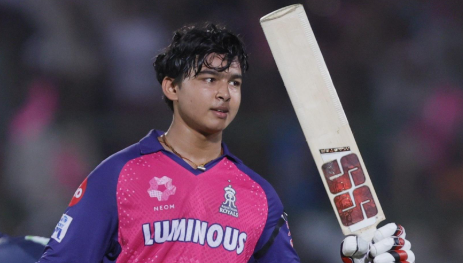
On a memorable day in Harare, Zimbabwe, fourteen-year-old Vaibhav Suryavanshi played one of the greatest innings in cricket history. His 175 runs off just 80 balls in the U19 World Cup final against England didn’t just break records—it destroyed them. The English bowlers had no answer as he hit the ball to every part of the ground.
World Cup finals are where cricket legends are born. But no one expected a fourteen-year-old to produce the highest individual score in any ICC tournament final. This wasn’t just beating the U19 record. Suryavanshi scored more runs than anyone else has ever scored in any ICC final—even more than the greatest players in senior cricket.
His innings set a new standard for excellence. He didn’t just break the old records. He created new ones that will stand for years to come.
The Numbers Tell the Story
The statistics are incredible. Fifteen fours and fifteen sixes—perfect balance between power and placement. Even more amazing: 150 of his 175 runs came from boundaries. He wasn’t running between wickets or playing defensive shots. He was hitting boundaries almost every ball.
His strike rate was over 218. This means he scored more than two runs for every ball he faced. He never let the bowlers settle. Every over brought more boundaries, more punishment for England.
The fifteen sixes he hit set a new record for the most sixes in any Youth ODI innings. To hit fifteen balls over the boundary shows incredible power and consistency. You need perfect timing, smart shot selection, and nerves of steel to keep attacking in a World Cup final.
He reached 150 runs in just 71 balls—the fastest 150 in Youth ODI history. This wasn’t luck or easy bowling. This was a batsman at the peak of his powers, playing the innings of his life when it mattered most.
England Fought Hard
England didn’t give up easily. Caleb Falconer scored a brilliant 115 off 67 balls. In any other match, his innings would have been the headline. He gave England hope that they could chase down even this huge target.
The match saw 722 total runs scored—the highest ever in Youth ODI history. Both teams played attacking cricket. Both teams showed great skill. The pitch was good for batting, and both teams took full advantage.
But England lost by 100 runs. The key moment came when they lost four wickets for just three runs. In such a high-scoring match, they couldn’t afford any setbacks. The pressure created by Suryavanshi’s massive score meant England had to keep attacking every ball. When wickets fell quickly, their chase collapsed.
India’s Sixth World Cup
This victory gave India their sixth U19 World Cup title. No other country has won this tournament more times. India’s success in youth cricket comes from strong grassroots programs and excellent coaching systems.
The U19 World Cup has always been important for spotting future stars. Many of today’s great players first showed their talent in this tournament. Suryavanshi might be the most exciting discovery yet. At just fourteen years old, he’s younger than most U19 players, but he played with the maturity of someone much older.
He was named Player of the Tournament. While his final innings will be remembered forever, he played well throughout the competition. India went through the entire tournament unbeaten, and Suryavanshi was a key reason why.
Batting Technique
Suryavanshi’s batting showed what coaches call “clean hitting.” This means striking the ball with such precision and power that it races to the boundary or sails over it. He didn’t need to slog or swing wildly. His technique was very good—staying balanced while generating huge power.
Modern cricket encourages young players to attack and score quickly. But Suryavanshi took this to a new level. He kept attacking for 80 balls without making a mistake. Most players, even experienced ones, struggle under World Cup final pressure. Suryavanshi thrived in it.
His mental strength was as impressive as his physical skills. He never looked nervous. He never played a rash shot. He just kept hitting boundaries, ball after ball, until England had no answer.
He possess excellent technique for white ball cricket but for red ball cricket he will need to tighten his defence and shot selection.
What’s Next?
The challenge now is helping Suryavanshi develop into a senior player. Many young talents shine at youth level but struggle when they move up. The bowling gets better, the pressure increases, and not everyone can handle it.
But Suryavanshi has all the right tools. His technique is solid. His mental strength is clear. His range of shots is impressive. If he’s given time to develop without too much pressure, he could become one of India’s great batsmen.
For now, we should simply celebrate what happened in Harare. A fourteen-year-old boy played one of the greatest innings in youth cricket history. He led his country to World Cup glory and broke multiple records in the process.
Conclusion
Great sporting moments are those that seem impossible, that force us to rethink what can be achieved. Vaibhav Suryavanshi’s 175 off 80 balls was exactly that. It was complete carnage for England’s bowlers, but it was also beautiful batting—a masterclass delivered on the biggest stage in youth cricket.
England tried their best. Falconer’s century showed real fighting spirit. But the scoreboard pressure was too much. Chasing at nearly nine runs per over from ball one, with no room for mistakes, England eventually crumbled.
India’s sixth U19 World Cup title shows their strength in developing young talent. But more than that, this tournament will be remembered for one extraordinary innings. Suryavanshi announced himself to the cricket world in the most dramatic way possible.
Years from now, when people talk about great World Cup final innings, Suryavanshi’s name will always come up. Those who watched it in Harare will never forget it. It was, quite simply, one of the greatest innings ever played by someone so young. A truly remarkable performance that made history.
India 411- 9 50 overs
England 311 40.2 overs