THE ASIAN INDEPENDENT UK

Bal Ram Sampla
Geopolitics
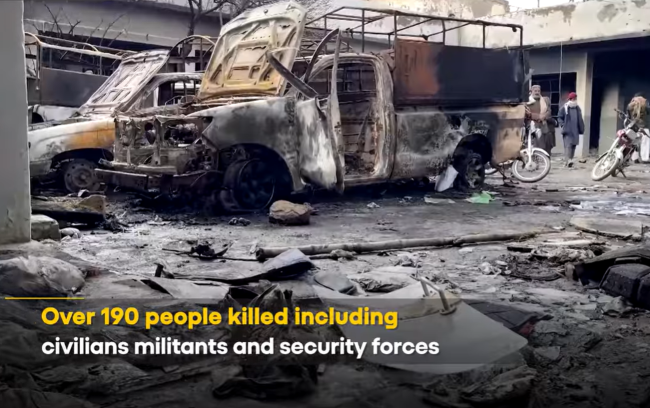
On a Saturday morning in 31st January 2025, Balochistan exploded. Not in one place, but in twelve cities simultaneously. Armed militants attacked military camps, freed prisoners, destroyed railway tracks, and walked openly through the streets of Quetta, the provincial capital. Videos showed fighters patrolling neighbourhoods that should have been under government control. The message was clear: Pakistan is losing Balochistan.
Yet Pakistan’s most powerful man, General Asim Munir, has spent recent months doing something very different. He has been traveling the world, shaking hands with presidents, and collecting titles. In June, he became the first Pakistani army chief to have lunch with a U.S. president without also being Pakistan’s head of state. President Trump called him “my favourite field marshal.” In May, Munir was promoted to Field Marshal. In December, he became Pakistan’s first Chief of Defence Forces with a five-year term, lifetime immunity, and control over all military branches.
While Munir collected these honors, Balochistan slipped further from Pakistan’s grasp. The numbers tell a grim story. In 2025 alone, there were 1,557 security incidents in Balochistan, including 10 suicide bombings. A Pakistani lawmaker admitted in parliament that in parts of Balochistan, the national anthem cannot be sung and the flag cannot be raised in schools. A rebel commander boasted that many areas have become “no-go zones” for Pakistan’s security forces.
The January attacks showed just how vulnerable the state has become. Twelve coordinated strikes across twelve cities. Militants entering military camps in Quetta, Pasni, Gwadar, Noshki, and Dalbandin. At least ten soldiers killed, though the rebels claim the number is higher. Over one hundred militants killed, according to the army, though this number is impossible to verify. What is certain is that for hours, armed groups controlled parts of Pakistan’s largest province while the military scrambled to respond.
This is not a new problem. Balochistan has faced insurgency for decades. The Baloch people, who live in Pakistan’s largest and poorest province, have long complained of being ignored, exploited, and oppressed. Their province is rich in natural gas, minerals, and sits on the strategically vital Gwadar Port. Yet most Baloch people remain desperately poor. They see outsiders benefiting from their resources while they get nothing.
Pakistan’s response has always been the same: more military force. Send in the army. Kill the rebels. Arrest the suspects. Blame India for stirring up trouble. But this approach has failed for fifty years, and it is failing now. You cannot bomb your way out of a political problem. You cannot shoot people into loving their country.
Meanwhile, General Munir has been busy elsewhere. He has made solo diplomatic visits to Sri Lanka, Indonesia, Libya, and multiple trips to the United States, often without the Prime Minister. He is expected to travel to Washington again soon to discuss sending Pakistani troops to Gaza. For Munir, the priority seems clear: international prestige matters more than domestic security.
Even during the January attacks, Pakistan’s provincial Chief Minister was in Islamabad meeting with the World Bank President. He only cut his trip short when the scale of the crisis became undeniable. This reveals the mindset of Pakistan’s leadership: foreign validation is more important than protecting their own people.
The disconnect is stunning. Balochistan represents 44 percent of Pakistan’s territory. It borders Iran and Afghanistan. It hosts China’s flagship Belt and Road project at Gwadar Port. Losing control of Balochistan would be a catastrophe for Pakistan’s territorial integrity and strategic position. Yet the army chief spends his time collecting medals and taking photos with foreign leaders.
There is a deeper problem here. The Pakistani military has always seen itself as above civilian politics, as the true guardian of the nation. But what kind of guardian abandons his home while it burns? What kind of protector prioritizes his own glory over the safety of his people?
General Munir is not the first Pakistani general to prefer international affairs over solving domestic problems. The military has always been more interested in foreign policy, nuclear weapons, and rivalry with India than in addressing the real grievances of ordinary Pakistanis. But rarely has the gap between image and reality been so wide.
When militants can freely roam the streets of a provincial capital, when they can storm military installations, when they can hijack trains with four hundred passengers, when a rebel commander can openly call for mass uprising, the state has failed. No amount of diplomatic success can hide this failure.
Balochistan does not need another military operation. It needs political solutions. It needs economic development. It needs respect for local identity and culture. It needs its resources to benefit its own people. It needs dialogue, not bullets. But dialogue requires attention, and attention is something Pakistan’s leadership seems unwilling to give.
General Asim Munir may enjoy his time in the international spotlight. He may relish being Trump’s “favourite.” He may take pride in his new titles and expanded powers. But history will judge him by a simpler measure: Did he protect Pakistan’s territorial integrity? Did he address the grievances that fuel rebellion? Did he choose substance over spectacle?
Right now, the answer is clear. While Balochistan burns, Pakistan’s most powerful general is elsewhere, chasing glory on the world stage. And every day he remains distracted, the fire spreads a little further.
The tragedy is not just that Balochistan is slipping away. The tragedy is that those responsible for keeping it seem not to care, as long as their own status keeps rising. Pakistan deserves better leadership. Balochistan deserves better. But wanting better and getting better are two very different things.
And so the cycle continues: attacks, military operations, claims of militants killed, promises of security, and then more attacks. Meanwhile, the general boards another plane to another capital for another meeting, another handshake, another photograph. And Balochistan burns.
References
1.https://www.aljazeera.com/news/2026/1/31/suspected-separatists-kill-8-pakistani-policemen-in-coordinated-attacks
2. https://www.aljazeera.com/news/2026/1/31/suspected-separatists-kill-8-pakistani-policemen-in-coordinated-attacks
3.https://www.republicworld.com/world-news/10-pakistani-security-personnel-killed-as-bla-fighters-attack-7-cities-in-balochistan-situation-in-quetta-tense
4.https://www.ksat.com/news/world/2026/01/31/coordinated-attacks-by-baloch-separatists-kill-10-security-personnel-in-pakistan/
5.https://ctc.westpoint.edu/the-baloch-insurgency-in-pakistan-evolution-tactics-and-regional-security-implications/
6.https://organiser.org/2025/07/22/303911/world/asim-munir-tightens-grip-pakistan-slips-into-soft-coup-as-army-chief-sidelines-pm-sharif-civilian-rule-diminishes/