
THE ASIAN INDEPENDENT UK
“If speaking the truth is rebellion, then yes—I am a rebel.” — Brar
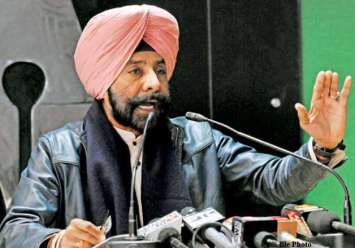
Jagmeet Singh Brar raises the issue of neglect of Punjab
Gurbhinder Guri, Journalist-
In Punjab’s political landscape, there are certain names remembered not so much for the offices they held, but for their attitude, statements, and confrontations. Jagmeet Singh Brar is one of them.
He was neither a conventional leader who quietly “walked the party line,” nor someone who defined his identity merely by electoral wins and losses. Brar’s politics has been a politics of questions—questions that often made his own party uncomfortable.
Birth, Background, and an Inherited Link with Politics
Born on 23 May 1958 in Sri Muktsar Sahib district of Punjab, Jagmeet Singh Brar’s connection with politics was no coincidence.
He is the son of Sardar Gurmeet Singh Brar, who served as a minister in the Punjab government. As a result, he closely observed the corridors of power, electoral politics, administrative structures, and internal party tensions from an early age.
But while many legacy politicians quietly merge with the system, Jagmeet Singh Brar chose a different path—one of speaking out, confronting authority, and openly expressing dissent.
Education and a Legal Mindset
Jagmeet Singh Brar received his higher education from Punjabi University, Patiala, and studied law (LLB).
This legal background shaped his political approach—favoring logic, constitutional principles, and rights over emotional slogans. Whether in Parliament or on party platforms, he often presented arguments grounded in legal reasoning, which frequently clashed with conventional political rhetoric.
Political Rise within the Congress
Brar’s primary political identity remained associated with the Indian National Congress.
Within the party, he was among those leaders who spoke not only during elections but also on internal party issues. While staying in the Congress, he:
Questioned the centralization of leadership
Spoke out against the neglect of Punjab
Opposed blind dependence on “high-command culture”
These positions made him popular among grassroots workers, but simultaneously widened the distance between him and the top leadership.
1999: Lok Sabha Victory and a Major Political Signal
The 1999 Lok Sabha election proved to be the most significant turning point in Jagmeet Singh Brar’s political career.
He was elected as a Member of Parliament from the Faridkot constituency. This victory was not merely about winning a seat—it reflected the prevailing public mood in Punjab’s politics at the time.
Brar projected himself as an MP who:
Spoke on farmers’ issues
Raised Punjab’s concerns before the central government
Followed the people’s line, not just the party line
Role in Parliament: An MP Who Spoke Up
In Parliament, Jagmeet Singh Brar earned a reputation as an active and outspoken MP.
He raised issues such as:
The agrarian crisis
Punjab’s economic condition
Centre–state relations
Weakening of the federal structure
He was not among those MPs who merely marked attendance and remained silent.
Conflict with the Party: When Dissent Became a Crime
Over time, tensions between Jagmeet Singh Brar and the Congress high command continued to grow.
He openly stated that:
There was a lack of internal democracy within the party
Decisions were being made by a few individuals rather than elected representatives
Punjab’s voice was not reaching Delhi effectively
These statements were deeply uncomfortable for the Congress leadership.
2016: Expulsion from the Congress
In 2016, the Congress party expelled Jagmeet Singh Brar.
The party accused him of indulging in anti-party statements. Brar’s response was clear and uncompromising:
“If speaking the truth is rebellion, then yes—I am a rebel.”
His expulsion became a major subject of debate in Punjab’s political circles.
After Congress: Political Drift or Independence?
After leaving the Congress, Jagmeet Singh Brar:
Worked for some time with the Trinamool Congress
Later joined the Shiromani Akali Dal as well
Critics described this as “changing parties,” while Brar described it as a “search for a political platform.”
He consistently maintained that, for him, issues mattered more than party affiliations.
Jagmeet Singh Brar is widely regarded as:
Sharp-tongued
Fearless in speech
A leader willing to confront the system
He neither practices politics to please the media nor compromises with power.
Public Perception
In villages—especially in the Malwa region—many people still see Jagmeet Singh Brar as:
“A leader who speaks the truth”
“Someone not afraid of the high command”
“A voice for Punjabi concerns”
The Larger Question
Jagmeet Singh Brar’s politics leaves behind a crucial question:
Is every act of dissent an act of rebellion?
He may not have remained close to power, but he certainly remained close to questions.
For Punjab’s politics, Jagmeet Singh Brar has been:
A challenge
A warning
And a name that cannot be ignored