THE ASIAN INDEPENDENT UK

Dr. Ramjilal, Social Scientist,
Former Principal, Dyal Singh College,
Karnal (Haryana, India).
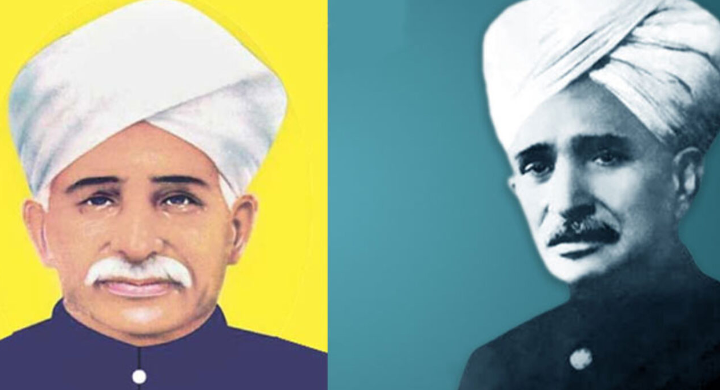
Sir Chhotu Ram (Born Richhpal, Garhi Sampla-Rohtak – November 24, 1881 – January 9, 1945) was a great figure in the politics of the Indian subcontinent in the first half of the 20th century, a leading statesman, a brilliant student, a staunch Arya Samaji, social reformer, a competent lawyer, a nationalist and opponent of hypocrisy, a source of inspiration for the downtrodden, a fearless, energetic, devout, honest, and tenacious leader.
Birth and Education: His parents’ names were Khushiram and his mother’s name was Shrimati Sarla Devi. His father, Sukhram, inherited 10 acres of land from his father, Chaudhary Ratan Singh, but it was arid and unproductive. Poverty was prevalent in the family, and making ends meet was extremely difficult. His father died in 1905 due to drowning in debt. The death of his father and the family’s poverty left a deep impression on Sir Chhotu Ram’s life and thinking.
Chhotu Ram entered primary school in 1891. After passing primary school from a school 12 km away from his village, he left the school in Jhajjar to enrol in the Christian Mission School in Delhi. Due to the family’s poor financial condition, his considered his options and contacted a moneylender in the market. He, along with his father Chaudhary Sukhiram, reached Sampla market, but Chhotu Ram faced humiliating behaviour from the moneylender, which he could never forget throughout his life. Regarding this insult, he said this in 1942:
‘I was born in a rural environment, which gave me a deep understanding of the hardships, trials, and unrest of the rural population. This insight could not fail to influence the course of my psychological and moral development. This, along with the invisible and continuous work of India and a deep emotional love for the Jat community into which I was born, warmed my heart.’ Due to the impact of hardships and poverty from his early life, Chhotu Ram’s outlook became rebellious and revolutionary.
While Chhotu Ram was studying at the Christian Mission School, Delhi, he led a students’ strike against the behaviour of the boarding house authorities and achieved success. As a result, he came to be known as ‘General Robert’ in the school. After passing his intermediate examination in 1903, he enrolled in St. Stephen’s College, Delhi. After receiving his graduate degree in 1905, he worked as an assistant private secretary to Raja Rampal Singh of Kalakankar. While there, he also edited the English newspaper ‘Hindustan’. He left the job due to the behaviour of Raja Rampal Singh. After some time, in 1911, he obtained an LLB degree from Agra Law College and started practising law with Chaudhary Lal Singh in the same year.
Philanthropic Support: His education was made possible through scholarships and the support of the wealthy philanthropist Seth Chhajju Ram Lamba. This is why he embraced education as a powerful tool for social change.When he held a ministerial position in undivided Punjab, he dedicated a significant portion of his salary to student scholarships.
Family Life
Chhotu Ram was married to Gyano Devi at the age of 11. He had two daughters – Bhagwani Devi and Rampyari. Having no son, his legacy is being carried forward by Chaudhary Birender Singh (grandson) and Brijendra Singh (great-grandson) – a father-son duo – who are working for the welfare of farmers and agricultural labourers.
Influences on Sir Chhotu Ram’s life and thought:
Every individual is a child of their contemporary circumstances. Chhotu Ram was no exception. His thinking was profoundly influenced by the contemporary socio-economic, political, religious, and cultural conditions, which are described below.
- Family’s Economic Circumstances: Born into a poor Jat farmer family in Garhi Sampla, Rohtak, he personally experienced and witnessed the “humiliating conditions” faced by the farming community. This early experience instilled in him a deep sense of empathy and dedication towards the upliftment of farmers, who were often marginalised and exploited. Due to the family’s poverty, his family was heavily indebted, and his father died due to this debt. This had a profound impact on him. This is why he later successfully passed the Debt Relief Act in the Punjab Legislative Assembly, freeing farmers from the exploitation of moneylenders.
- Influence of Contemporary Rural Life: He was born and raised in a rural environment, and the economic and social conditions during his rural life were deplorable. His observations during his legal practice in Rohtak confirmed that the plight of farmers and the financial hardships of rural society stemmed from the exploitative landlords, moneylenders, and the arbitrary tax policies and economic exploitation of the British government. This injustice motivated him to fight for the rights of farmers and successfully liberate them from debt.
- Influence of Social Conditions: Lack of education, superstition, and practical difficulties of life also influenced Chhotu Ram’s thinking. At that time, due to the dominance of Jats (Hindu Jats, Jat Sikhs, and Muslim Jats) in North India, lack of education, conservatism, superstitions, fatalism, and outdated cultural practices were significantly impacting their lives, just as they were affecting other communities. It is impossible to imagine that these prevailing practices would not influence the lives of thinkers like Chhotu Ram.
4. Influence of famous texts: ‘Satyarth Prakash’, Bhagavad Gita, and ‘Hitopadesha’. Influenced by the principles outlined in Swami Dayanand Saraswati’s famous book ‘Satyarth Prakash’ and the rules of the Arya Samaj, he became a member of the Arya Samaj. The Arya Samaj’s emphasis on education for all castes, the eradication of social evils like caste discrimination, and the promotion of social service aligned with his goal of improving the welfare of the rural population. This is why he urged people from other castes, including Jats, to also become members of the Arya Samaj. He also adopted the principle of Karma from the Bhagavad Gita, a renowned Hindu religious text, and applied it to practical life. He embraced the principles and teachings of Vedic religion, as well as the lessons and moral precepts of ‘Hitopadesha’.
5.Hatred and humour by the urban people: what to talk about poor and weak people, even the economically prosperous villagers, including Jats were looked upon with hatred and humour by the urban people. They used to address the rural people as a rustic, Mascara, Pumpkin, etc. In fact, young Chhotu Ram considered these comments towards rural people to be insulting and contemptuous. This is why, over time, a powerful passion arose for the educational, social, and economic upliftment of his community, and he began to take action. It is impossible to think that these prevailing retrogressive practices would not have an influence on the life of thinkers like Chhotu Ram.
6. Influence of Mahatma Gandhi and Jawaharlal Nehru’s personality and thought: He initially joined the Indian National Congress ( INC) in 1916 but left in 1920 due to disagreements over the Non-Cooperation Movement, as he believed that the peasant community could not afford to directly confront the government at that time. Despite severing ties with the Indian National Congress, he remained influenced by the personalities and thoughts of Mahatma Gandhi and Jawaharlal Nehru throughout his life.
- Influence of Sir Fazl-i-Husain, Sir Sikandar Hayat Khan and Chaudhry Lal Chand: In 1923, Chhotu Ram co-founded the National Unionist Party with Fazl-i-Husain, Sir Sikandar Hayat Khan, and Chaudhry Lal Chand. The main objective of this party was to establish Hindu-Muslim-Sikh unity and protect the interests of farmers, peasants, and labourers. Chhotu Ram considered Fazl-i-Husain his political mentor. The National Unionist Party believed in achieving its main objectives through constitutional means and legislative action ,rather than through movements and strikes.
In brief, because of all these impacts, Sir Chhotu Ram became the messiah (Also known as ‘Chhote Ram’-God) of the farmers, the benefactor (Deen-bandhu) of the Dalit community, and a hero (Rahbar-e-Azam) for the Muslims
– Continue ……..