
THE ASIAN INDEPENDENT UK

Bal Ram Sampla
Geopolitics
How It All Started: From Friendship to Fallout
When Donald Trump returned to the White House in January 2025, things looked good between him and Indian Prime Minister Narendra Modi. They had built a strong personal relationship during Trump’s first term. Modi even campaigned for Trump in Houston in 2019, and Trump praised Modi as someone “the whole world loves.”
Modi was one of the first foreign leaders to visit Trump after his second inauguration in February 2025. He came bearing gifts—promising to buy more American weapons, lower some Indian tariffs, and crack down on illegal immigration. The two leaders smiled for the cameras and talked about their friendship.
But within months, everything fell apart. By August 2025, Trump had slapped a crushing 50% tariff on Indian goods. By late 2025 and into 2026, Trump was making mocking remarks about Modi, like the recent “May I see you please, sir” story about Apache helicopters—a story that appears to be exaggerated or false.
What Went Wrong
The relationship collapsed because of three major incidents where Modi refused to go along with what Trump wanted:
1. Modi Said No to Trump’s Trade Demands
Trump wanted India to open up its farming and dairy sectors to cheap American imports. This was a red line for Modi. Indian farmers are a powerful political force, and Modi’s party had just lost significant seats in the 2024 elections. He couldn’t afford to anger them further.
Modi offered some concessions—lowering tariffs on motorcycles, chemicals, and industrial goods—but he refused to compromise on agriculture. Trump saw this as Modi not being willing to make a “real deal.”
2. Modi Kept Buying Russian Oil
This was the biggest issue. After Russia invaded Ukraine, India started buying huge amounts of discounted Russian oil. Trump saw this as India helping Putin fund his war machine. He imposed tariffs specifically to punish India for these purchases.
Modi refused to stop. From India’s perspective, they were getting cheap energy for their economy and maintaining their independence in foreign policy. But Trump took it personally—he felt Modi was choosing Russia over America.
3. The Pakistan Mediation Fiasco
This was the breaking point. In May 2025, India and Pakistan had a four-day military conflict. When it ended, Trump immediately took credit, claiming he had mediated a ceasefire and prevented a nuclear war.
Modi was furious. India has a long-standing policy of refusing outside mediation on Pakistan, especially regarding Kashmir. When Trump called Modi in June 2025 to discuss it, Modi flatly contradicted him, saying there was no American mediation—the ceasefire came from direct talks between the two countries’ militaries.
Making matters worse, Trump then invited Pakistan’s army chief to the White House for lunch the very next day. Trump also invited Modi to stop by for dinner, but Modi suspected Trump wanted to orchestrate a meeting between him and the Pakistani general. Modi refused the dinner invitation.
After that phone call, everything changed. Trump started publicly attacking India, the tariffs went up, and the warm words disappeared.
Why Trump Is Frustrated
Trump is used to getting his way through personal relationships and deal-making. He thought his friendship with Modi would translate into Modi doing what America wanted. But Modi has consistently refused to “toe the US line” on three critical issues:
(1) On trade:
Modi won’t sacrifice Indian farmers and industries to please Trump
(2) On Russia:
Modi won’t give up cheap oil and India’s strategic autonomy
(3) On Pakistan:
Modi won’t let Trump play mediator and won’t accept being “re-hyphenated” with Pakistan as equals
The Real Issue: Modi Won’t Play Trump’s Game
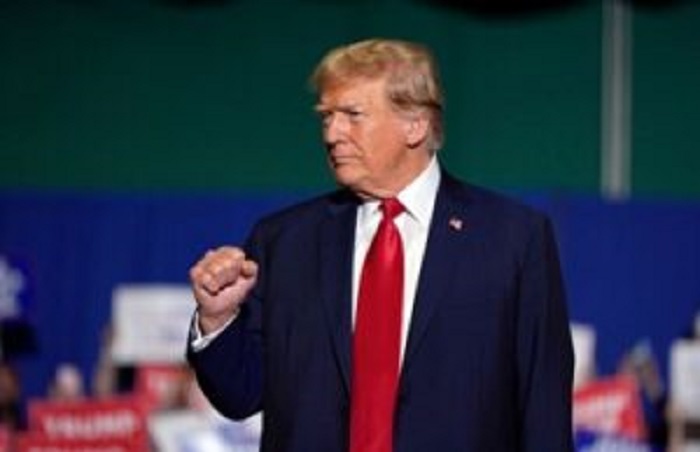
Trump likes to portray himself as the great dealmaker who gets other leaders to submit. His stories often feature foreign leaders calling him “sir” and asking for his help, positioning himself as the dominant figure.
Modi is doing the opposite. He’s:
(1)Publicly contradicting Trump’s version of events
(2)Refusing dinner invitations at the White House
(3) Standing firm on India’s co re interests
(4) Not responding to Trump’s provocations with anger or apologies
(5) Quietly diversifying India’s partnerships with Russia, China, and Europe
This silence and defiance are probably what frustrates Trump most. He’s used to people either praising him or fighting back loudly. Modi is doing neither—he’s simply saying “no” and moving on. When Trump tells his exaggerated stories or makes mocking remarks, Modi doesn’t engage. He just continues pursuing India’s interests.
For Trump, this is deeply frustrating. He can’t bully Modi into submission with tariffs, can’t charm him with personal flattery, and can’t embarrass him into responding. Modi has basically shown that India doesn’t need American approval to pursue its goals.
The Bigger Picture
What’s really happening here is a clash between two different visions of how the world should work:
Trump believes in transactional relationships where America’s economic and military power gives it the right to make demands. He expects other countries to adjust their policies to benefit America, especially when there’s a personal relationship involved.
Modi believes in “strategic autonomy”—the idea that India should make decisions based on its own interests, not because a more powerful country tells it to. India has spent decades trying to be seen as an independent major power, not as someone’s junior partner.
The slight remarks Trump keeps making
like the “May I see you please” story—are Trump’s way of trying to cut Modi down to size. By portraying Modi as subservient and desperate for Trump’s attention, Trump is trying to save face after failing to get what he wanted.
But these stories probably ring hollow to people who know what actually happened. Modi didn’t grovel for Apache helicopters (India had already ordered and received them years ago). Modi didn’t beg Trump to mediate with Pakistan (he explicitly rejected it). And Modi isn’t unhappy because of tariffs alone—he’s unhappy because Trump is trying to dictate India’s foreign policy.
Conclusion
Trump continues to make slight remarks about Modi because Modi has consistently refused to do what Trump wants. Unlike many other world leaders who either praise Trump effusively or fight with him publicly, Modi has chosen a third path: polite but firm refusal, followed by silence.
For someone like Trump who craves attention and validation, this silent defiance is perhaps the most frustrating response of all. So Trump tries to reshape the narrative with stories that portray Modi as weak or desperate. But the facts tell a different story—one of an Indian leader who has decided that his country’s interests matter more than pleasing the American president, regardless of the personal or economic costs.
The relationship between Trump and Modi has gone from “bromance” to breakdown, and it doesn’t look like either man is willing to back down.
President Trump has ‘greenlit’ the ‘Sanctioning Russia Act of 2025,’ threatening at least 500% tariffs on countries like India and China that import Russian oil. Will it impose 500%
Tariffs on a democratic country?
References
1.https://www.lowyinstitute.org/the-interpreter/how-india-us-relations-unravelled-trump-modi-timeline
2. https://www.aljazeera.com/news/2025/6/18/indias-modi-maintains-there-was-no-us-mediation-in-pakistan-ceasefire
3.https://tribune.com.pk/story/2560375/tense-trump-modi-call-triggered-us-india-fallout
4.https://www.trtworld.com/article/4d3af91546b9
5.https://www.republicworld.com/india/sir-may-i-see-you-please-asked-modi-watch-trump-s-new-claim
6.https://www.business-standard.com/economy/news/trump-500-percent-tariff-india-sanctioning-russia-act-2025-crude-oil-import-126010800277_1.html