THE ASIAN INDEPENDENT UK

Bal Ram Sampla
Geopolitics
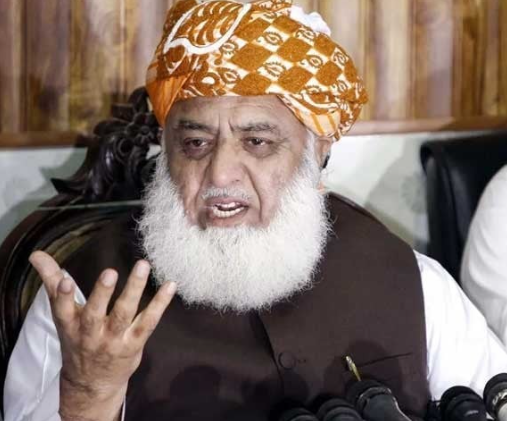
Maulana Fazlur Rehman, the chief of Jamiat Ulema-e-Islam-Fazl (JUI-F), recently made statements that have caused significant controversy in Pakistan. Speaking in Karachi, he raised a simple but deeply uncomfortable question about Pakistan’s military actions in Afghanistan.
Fazlur Rehman pointed out a basic contradiction in Pakistan’s position. He asked: if Pakistan believes it has the right to attack militant targets inside Afghanistan, then how can it protest when India claims the same right to strike inside Pakistan? His question was direct—”Why do you object when India targets you?”
This comparison was aimed at highlighting what many see as a double standard. Pakistan regularly condemns Indian actions as violations of sovereignty, yet conducts its own cross-border operations against the Tehrik-i-Taliban Pakistan (TTP) hiding in Afghan territory.
Why This Truth Is Embarrassing
The embarrassment for Pakistan’s military and government comes from the mirror Fazlur Rehman has held up to their policy. For years, Pakistan has insisted that state sovereignty is sacred and that no country has the right to conduct military operations on another’s soil without permission. Yet Pakistan itself has launched strikes in Afghanistan without explicit Afghan government approval.
This creates an awkward position. When India points to militant groups operating from Pakistani territory—just as Pakistan points to TTP operating from Afghanistan—the logic becomes identical. If Pakistan’s strikes are justified because Afghanistan hosts groups that attack Pakistan, then by the same reasoning, India could claim justification for strikes on Pakistani soil.
The military establishment responded by calling Fazlur Rehman’s comparison “wrong and inappropriate.” Defense Minister Khawaja Asif argued that Pakistan’s situation is different because it acts in self-defense. But this explanation doesn’t resolve the fundamental contradiction—India makes exactly the same self-defense argument.
The Deeper Problem
What makes this particularly uncomfortable is that it exposes a problem Pakistan has long struggled with: the presence of militant groups on its soil that target other countries. For decades, Pakistan has denied or downplayed the existence of such groups, even as evidence mounted. When other nations complained, Pakistan demanded respect for its sovereignty.
Now Pakistan finds itself in the same position it once put others in—dealing with a neighboring country (Afghanistan under Taliban rule) that either cannot or will not stop militants from using its territory to attack Pakistan. The shoe is on the other foot, and it fits uncomfortably.
Fazlur Rehman’s statement cuts through diplomatic language and political spin to expose this reality. Whether one agrees with his politics or not, the logical inconsistency he identified is real. Pakistan cannot credibly claim absolute sovereignty when it suits its interests, then violate another country’s sovereignty when facing security threats.
The Political Implications
This controversy comes at a sensitive time. Relations between Pakistan’s civilian government and military leadership are complex, and Fazlur Rehman has been critical of Army Chief General Asim Munir. His remarks can be seen as both a genuine policy critique and a political attack on the military establishment.
The fact that such criticism can be voiced publicly shows Pakistan’s democratic space still allows dissent. However, the angry official response also shows how sensitive these questions remain. No government or military wants to be caught in obvious hypocrisy, especially on matters of national security and sovereignty.
Conclusion
Fazlur Rehman’s remarks are controversial precisely because they contain an uncomfortable truth. They force Pakistan to confront contradictions in its own policies—claiming rights for itself that it denies to others, condemning actions abroad that mirror its own behavior.
Whether Pakistan’s security establishment likes it or not, the question has been asked and cannot be easily dismissed. The only way forward is either to accept genuine international standards applied equally to all nations, or to acknowledge that sovereignty is sometimes conditional when security threats are involved—a position that would undermine decades of Pakistani diplomatic arguments.
The embarrassment lies not in Fazlur Rehman asking the question, but in the fact that there is no good answer that doesn’t expose Pakistan’s inconsistent position. Sometimes the most controversial statements are controversial precisely because they’re true.
References
1.https://thediplomat.com/2024/01/can-pakistans-maulana-fazlur-rehman-mend-ties-with-the-taliban/
2.https://www.pakistantoday.com.pk/2024/01/06/fazl-says-to-take-up-ttp-issue-during-visit-to-kabul-tomorrow/
3.https://www.tribuneindia.com/news/afghanistan/jui-f-chief-maulana-fazlur-rehman-offers-to-mediate-between-pakistan-and-afghanistan-to-ease-border-tensions
4.https://www.rferl.org/a/pakistan-taliban-jui-ttp-fazlur-rehman-afghanistan/33047761.html