THE ASIAN INDEPENDENT UK

Bal Ram Sampla
Geopolitics
For years, councils in areas with large South Asian communities have faced a difficult problem: paan spitting in public spaces. Despite the serious health risks and costly environmental damage, enforcement action has been criticized as too little, too late.
The Medical Evidence is Clear
The health dangers of paan are well-established and severe. Paan contains betel nut and often tobacco, which together create serious health risks. Regular users face increased chances of oral and throat cancers, with these risks being similar to those from smoking cigarettes. The substance also causes oral submucous fibrosis, an incurable condition that can eventually prevent jaw movement.
Beyond cancer risks, paan affects nearly every organ system. It damages cardiovascular health, increases the risk of metabolic syndrome and obesity, and harms the lungs, liver, and digestive system. For pregnant women, using paan significantly raises the risk of stillbirth, premature birth, and low birth weight babies. Despite being highly addictive with around 600 million users worldwide, paan receives far less attention than other harmful substances like tobacco or alcohol.
The Environmental and Financial Burden
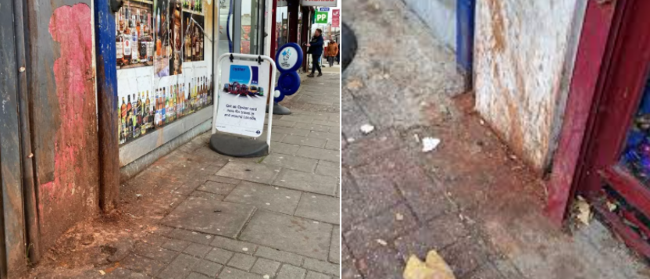
The environmental impact is substantial and visible. In Wembley and similar areas, reddish-brown stains cover pavements, flower beds, telephone boxes, and street furniture. These stains are extremely difficult to remove, with even high-powered pressure washers unable to fully eliminate them.
Brent Council spends over £30,000 annually just to clean up paan stains. This money comes from public funds that could be spent on other community services. The unsightly stains create an impression of neglect and poor hygiene in affected neighborhoods, potentially impacting local businesses and community pride.
Why Has Action Been Delayed?
Paan has deep cultural roots in South Asian communities, dating back over 2,000 years. In India and Bangladesh, offering paan to guests is a traditional courtesy and mark of respect. It plays a role in religious ceremonies, festivals, and social gatherings. For many immigrant communities, paan represents a connection to their heritage and cultural identity.
Councils may have been reluctant to be seen as attacking cultural practices, especially given the UK’s commitment to multiculturalism and respect for diverse traditions. There is a genuine concern about appearing discriminatory or insensitive to minority communities. However, this cultural sensitivity, while well-intentioned, may have prevented timely action on a genuine public health and environmental problem.
The Electoral Considerations
Research shows that South Asian communities, particularly those of Indian heritage, have high voter registration and turnout rates, sometimes exceeding those of the white British population. In constituencies with significant South Asian populations, this voting bloc can be decisive in local elections.
Opposition politicians have directly accused the Labour council in Brent of delaying action for electoral reasons. Liberal Democrat councillor Paul Lorber claimed that enforcement measures were announced suddenly just before an election, suggesting they were more about winning votes than genuine long-term concern. He stated that people had been dealing with the paan problem for years while the council “looked the other way.”
The Challenge of Community Mobilization
Political parties and community leaders play an important role in mobilizing South Asian voters. Research indicates that South Asian communities living in ethnically concentrated areas are more effectively mobilized than those in diverse neighborhoods. This creates a situation where community leaders have significant influence, and political parties seek their support.
If community leaders or influential members view enforcement against paan as culturally insensitive or targeting their community, this could affect voting patterns. Politicians may fear being seen as hostile to South Asian cultural practices, potentially losing crucial electoral support.
Fear of Being Labelled Discriminatory
In the current political climate, accusations of racism or discrimination can be politically devastating. Councils may have feared that cracking down on paan spitting would be portrayed as specifically targeting South Asian communities, even though the action is justified by legitimate health and environmental concerns.
This fear may have led to paralysis, where councils knew action was needed but worried about how it would be received politically. The fact that the crackdown eventually happened suggests the problem became too visible to ignore, forcing councils to act despite political risks.
Is Vote Bank Politics at Play?
While there is proof that electoral calculations delayed action, several factors suggest politics played a role:
1. Timing of enforcement
The sudden announcement of strict enforcement measures just before elections raises questions about motivation
2. Years of inaction
Opposition councillors claim they had been calling for action for years with no response
3. The importance of the South Asian vote.
In constituencies where South Asian voters are numerous and well-organized, their electoral impact is significant
4. Pattern of avoidance
The council’s apparent reluctance to address a clear public health problem despite mounting evidence suggests non-public health factors were influencing decisions
Conclusion
The delayed action against paan spitting appears to result from multiple factors: genuine cultural sensitivity concerns, fear of being labelled discriminatory, the challenge of addressing practices with deep cultural roots, and likely some degree of electoral calculation. The medical evidence for harm is overwhelming, and the environmental costs are substantial and ongoing.
What is clear is that public health and environmental concerns should take priority over political considerations. While respecting cultural diversity is important, practices that cause serious harm to both individuals and communities cannot be ignored simply because they are traditional. The key is to address these issues with education, compassion, and clear communication about health risks, while enforcing reasonable rules about public hygiene.
Going forward, councils must act proactively on public health issues regardless of political sensitivities. Providing support programs to help people quit paan, alongside enforcement measures, shows a balanced approach that respects people while protecting public health and spaces.
References
1.https://www.dailymail.co.uk/news/article-15341109/London-council-paan-cleaning-South-East-Asian-people.html?ito=native_share_article-top
2.https://northlondonnews.co.uk/local/brent/brent-council/brent-council-30k-paan-stains-cleanup-in-wembley-sparks-fines/
3.https://www.tandfonline.com/doi/full/10.1080/10826084.2020.1753772
4.https://www.desiblitz.com/content/betel-leaf-face-ban-uk
5.https://en.wikipedia.org/wiki/Betel_nut_chewing
6.https://www.vice.com/en/article/i-tried-to-get-my-buzz-on-at-londons-betel-stands/
7.https://www.drugs.com/npc/betel-nut.html
8.https://www.webmd.com/vitamins/ai/ingredientmono-995/betel-nut